Full article about Santana de Cambas: sun-scorched silence, bread-soup scent
Wander adobe hamlets where lamb sighs over embers and 743 neighbours share whispered bird-calls
Hide article Read full article
Where the afternoon sun scorches like forgotten bread
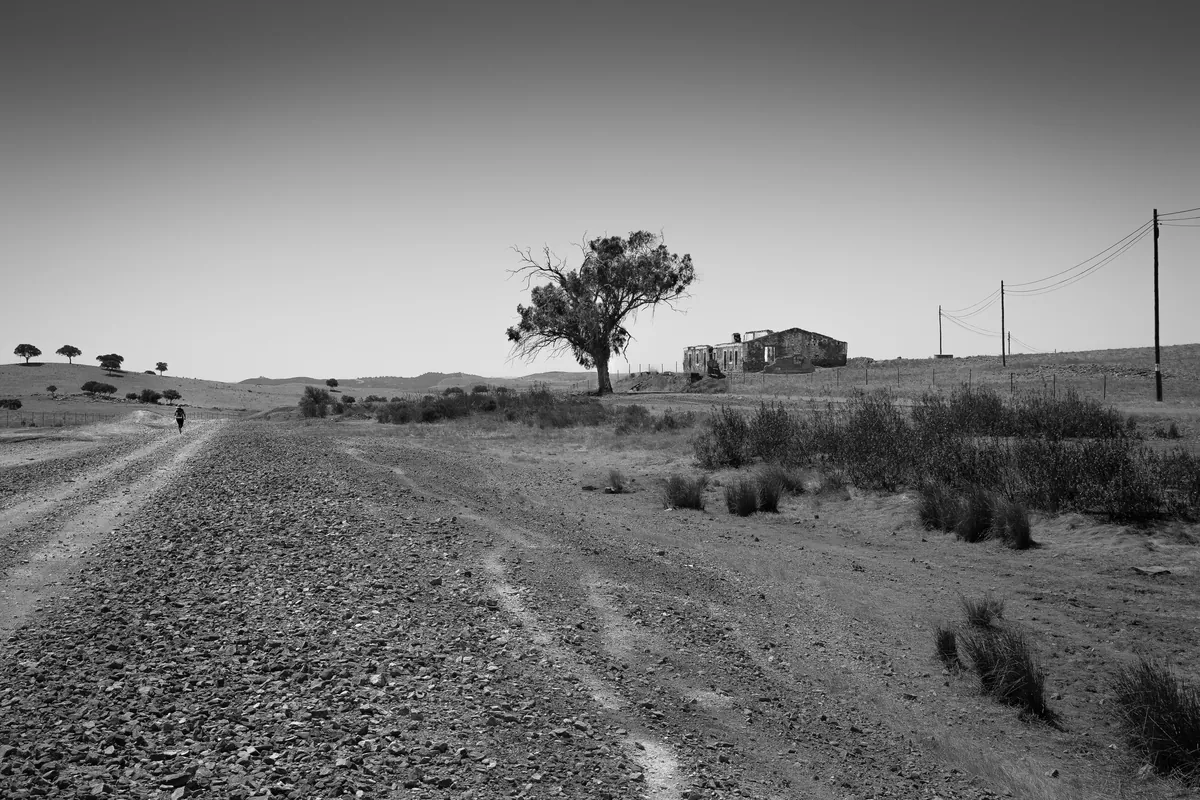
The light arrives timidly, then decides to stay for good, browning the hills the colour of over-baked crust. Holm oaks toss a miserly circle of shade – just enough for three village dogs to sleep nose-to-tail – and no more. Santana de Cambas behaves like the aunt who never married: she can identify every passerine by note, but chooses whether to share the information. The parish spreads across 166 km² – larger than the entire municipality of Porto – yet only 743 neighbours appear on the roll, including José of the Goats who clocks in at the café every Saturday precisely at eleven.
The places that pass for a centre
There is no high street, only scattered knots of houses with names that sound invented until you see them painted on a whitewashed wall: Barro Branco, Alto da Eira, Vale de Ferro. Adobe share-croppers’ cottages still stand, their mud-brick walls bulging as if trying to dissolve back into the soil. Doorways are shoulder-high; generations of grandchildren have left scalp cells on the lintels. In the courtyard women once swapped gossip from behind embroidered headscarves; now they trade WhatsApp voice notes, yet someone still drags a wicker chair outside when the day exhales its last heat.
What lunch tastes like
Three commandments. One: lamb must sigh over embers for the length of a morning. Two: olive oil must seep through bread faster than butter ever could. Three: cheese must surrender to the knife without persuasion. Albertina – aunt to half the village – makes her coriander açorda (bread soup) with plants she watered at dawn; if your eyes don’t smart, she shrugs, heaven had no say in it. Wine travels in five-litre jerrycans from the co-op in Mértola, purchased beside the diesel pump after you ask who pressed the grapes. Menus are fiction; you eat what was slaughtered yesterday, drink what was bottled last month.
Ways to pass a day (breathing counts)
The Ribeiro de Cambas footpath starts politely, then tilts upward until you bargain with yourself about ever drinking again. The reward is a granite pool where the water stays January-cold year-round and where, in 1973, Zé Manel slipped in drunk and never came up. Locals insist he was fleeing his mother-in-law. Climb to the keep of Mértola’s castle and the parish unrolls below like a torn patchwork: cork stripes, wheat stubble, the Guadiana glinting as if reluctant to reach the sea. Abandoned wineries still harbour barrels stencilled ‘1960’; the wine inside evaporated long ago, leaving only a rust-red tattoo on the wood.
Arriving – and the reasons you don’t leave
Lisbon is two and a half hours away if you obey the sat-nav, longer if you let the landscape dictate the rhythm. Rule one: make peace with dust. Rule two: wear shoes already beyond redemption. Rule three: leave your watch in the glove box. Time here does not vanish; it stretches like bread dough. Just when you decide the catalogue of wonders is complete, a red fox trots across the tarmac, or the air fills with the coconut scent of rockrose burning, or José of the Goats offers to show you the eagle owlet whose location he guards like a state secret.
You do not come to Santana de Cambas to boast to Lisbon friends about “a weekend in the Alentejo”. You come when you need silence that tastes of late-harvest olive oil, when you want constellations that still compete with porch lights. You drive away with a jumper that smells of woodsmoke, a phone that never found reception, and the unsettling certainty that pockets of the world exist where hurry remains an alien tongue.