Full article about São João dos Caldeireiros: sulphur springs & cork-oak silenc
São João dos Caldeireiros, Mértola: soak in sulphur springs, taste peppery olive oil, walk cork trails beneath griffon vultures.
Hide article Read full article
The first thing that hits you is the smell: a struck-match whiff of sulphur rising from the spring as if someone had uncorked a two-day-old bottle of Perrier. At Águas Santas the water pushes straight out of the schist at a constant 18 °C, cold enough to anaesthetise your fingers in the time it takes to strike a match. Local faith in its curative power is absolute; my hangover surrendered after one tin cup.
Why “Caldeireiros”?
The name remembers the lime-burners who once fed the whole Alentejo. Men quarried the limestone, stacked it in terraced ovens and kept the fires going for days until the rock collapsed into white powder. The ovens are gone – only shallow craters remain, as if a shower of small meteors had pock-marked the ridge – but the parish kept their label. Today 442 souls occupy a territory large enough for a small city, their houses clamped together like veteran domino players on a Lisbon park bench, each door worn into its own 200-year-old squeak.
Between ridge and river
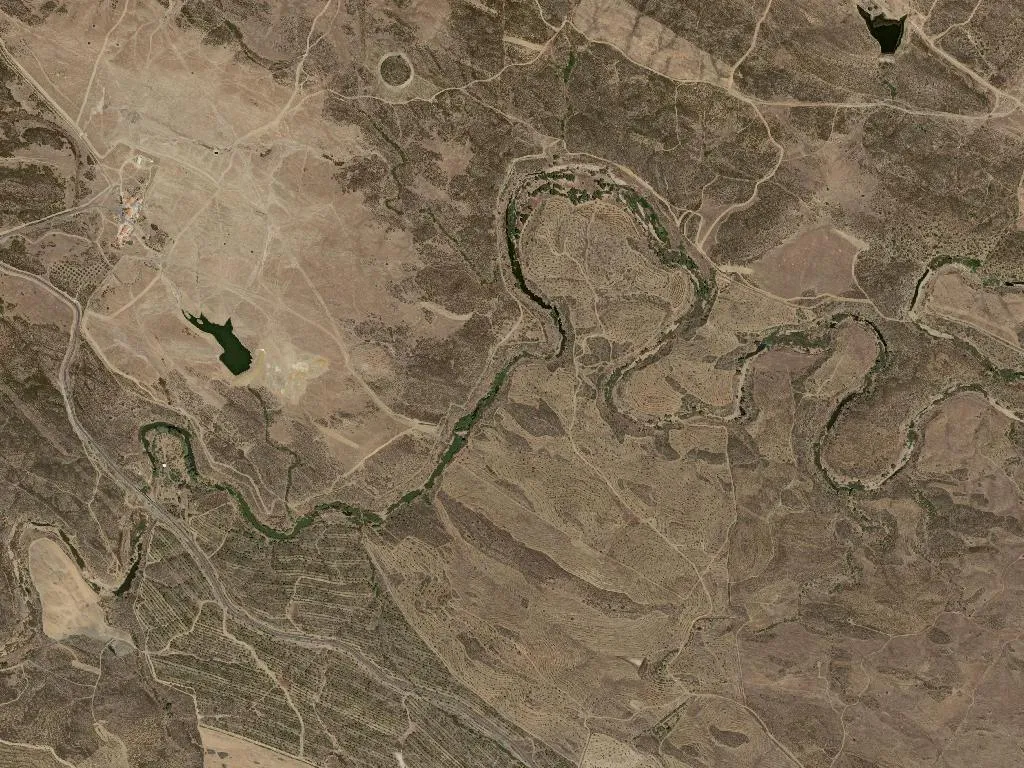
This is cork-country wilderness inside the Guadiana Valley Natural Park, where griffon vultures outrank humans. The Carreiras stream is a dry incision for most of the year – a crack through the loaf – but the thermals it creates are perfect for raptors. Look up: wings the span of a bath-towel plane overhead, tilting without a flap. At dusk the track down to the Guadiana belongs to wild boar; their hoofprints in the dust look like oversized fingerprints pressed into dough.
What you eat (and drink)
Olive oil so peppery it makes you cough is poured from unmarked bottles; the DOP Serpa cheese arrives with a cave-damp rind that smells of wet slate. Lamb is lamb, not mutton: shoulder slow-simmered until it collapses under the spoon, begging for more bread to mop the juices. In March and April wild asparagus tips are folded into migas, the bread-based hash absorbing their iron bitterness to slice the richness of presunto. Finish with pão de rala – an almond-sweetened loaf – and coffee the colour of sump oil. If the requeijão is fresh, ask for seconds; Grandma may appear with a complimentary dish of arroz doce, but only if she’s in the mood.
After dark
The lights go out and the sky becomes the planetarium you remember from school trips, only full-scale. The Milky Way is so bright it looks like torn mother-of-pearl spilled across slate. Daytime silence is so complete you can almost hear your own pulse; night-time adds the single bass-note of Zé’s dog barking at the moon for the hell of it. Mértola – half an hour away by car – feels metropolitan by comparison: traffic, restaurants that close at 22:00, people who weren’t born here. By 21:00 São João has already pulled the iron bolt across its door; the metallic clack ricochets off the stone like a dropped coin in an empty cistern.
Tomorrow the spring will cough up another 18-degree breath, and the 442, the ruined ovens and the wheeling vultures will still be here – stubborn as a coat left on its hook since the revolution.