Full article about Amareleja: Europe’s Hottest Village Bakes in 47 °C Glory
Medieval walls, olive groves and DOP Serpa cheese amid Alentejo’s fiery plain
Hide article Read full article
The tarmac already shimmers before noon. In Amareleja, light doesn’t simply illuminate—it scorches. The Alentejo’s whitewashed walls bounce back a heat so dense it feels tactile, turning this parish of 2,030 souls into a natural furnace that once registered Europe’s highest temperature: 47.4 °C on 1 August 2003, a record that stood for almost two decades. Yet to label the place merely “hot” is to overlook the centuries pressed into its cobbles, the medieval stone of its mother church, and the olive groves that roll away to a horizon the colour of burnt paper.
Stone, lime and a medieval memory trail
Igreja Matriz de Nossa Senhora da Conceição squats at the village centre, five hundred years of sermon and sigh absorbed into its walls. A Manueline doorway gives way to a gilded, baroque interior—architectural whispers of kings who refashioned the building as fashions changed. King Dinis granted Amareleja its first charter in 1295; Manuel I renewed it in 1512, confirming the settlement’s strategic value after the Reconquista. The seventeenth-century wars of Restoration halved the population, but they could not dent the agricultural vocation that still defines this 108 km² parish—the largest in Moura municipality.
Fragments of medieval battlements survive along Rua da Cadeia and Rua de São Sebastião, no longer needed to keep out armies. The small Capela de São Sebastião, rebuilt after the 1755 earthquake, completes the ecclesiastical inventory, while traditional montes—farmsteads such as Monte da Apariça and Monte Novo—break the plain, together with stone olive-presses on the Herdade da Comenda and water-mills on the seasonal Alamo stream. Everything here once grew, ground or grazed something.
Deep-Alentejo on a plate
Serpa DOP cheese, handmade at the Queijaria Familiar since 1920, and Baixo-Alentejo IGP lamb are more than certificates of origin; they are edible heirlooms. In the kitchen of Restaurante “O Aparição”, açorda—a bread-thickened soup—soaks up oil from the local olive-growers’ co-op and coriander from backyard plots. Migas, crumbs fried in lamb fat, accompany wood-oven roast kid; tomato soup with a poached egg wards off cooler nights. Black pigs, reared on acorns in the montado cork forest of Herdade do Azinhal, re-emerge as chouriça at Talho Central, as cured hams in family cellars, as smoked loins on winter tables. Dessert is a masterclass in density: trembling sericaia (cinnamon-dusted egg custard) at Café “O Ponto de Encontro”, honey cake heavy with muscovado from Padaria “Sol de Amareleja”, Dona Fernanda’s queijadas and the lard-and-egg sweetness of toucinho-do-céu at “Dolce Amarela”.
Cork, olives and a silence you can walk through
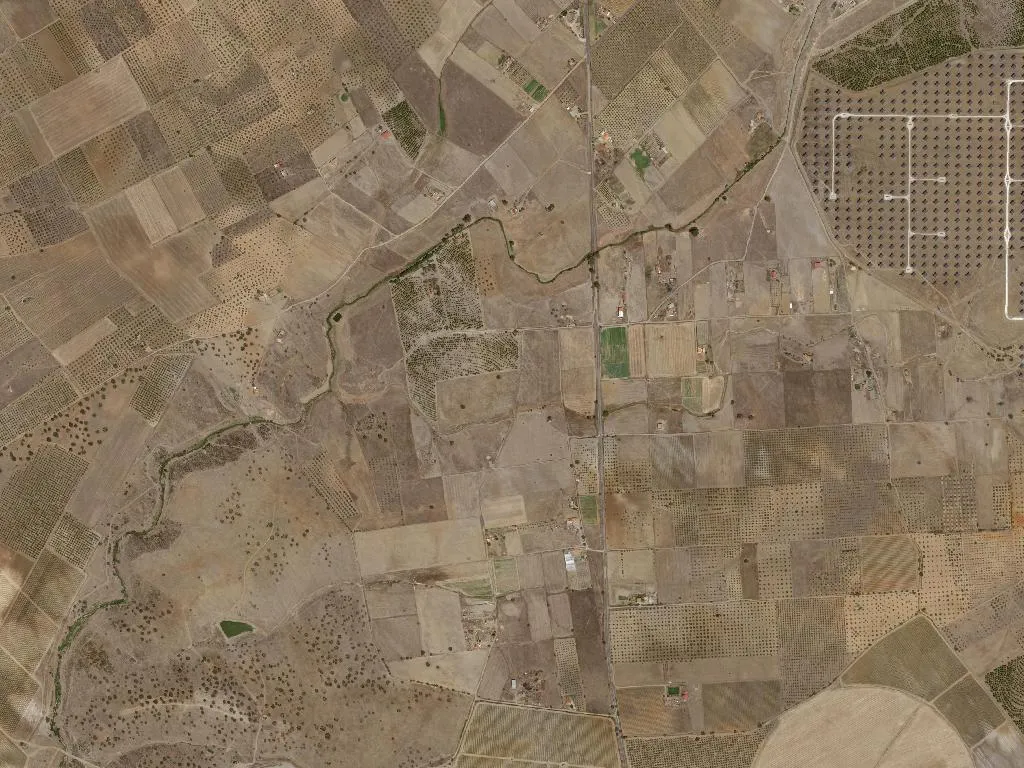
Low hills ripple gently, interrupted by cork oak and holm oak montado—34 % of the parish under tree cover according to CORINE Land Cover. There are no permanent rivers, only winter streams such as Ribeiro de Álamo and Ribeiro do Caril, plus irrigation reservoirs like Barragem do Alvito that mirror an incandescent sky. Olives occupy 41 % of the farmland—250,000 registered trees whose grey-green foliage flashes silver whenever the wind changes its mind. At an average 176 m above sea level, the views stretch wide; booted eagles and griffon vultures ride thermals, wild boar leave overnight calligraphy in the Serra de Amareleja, rabbits vanish among rock-roses and rosemary.
Walking the unmarked tracks demands respect for the sun but repays with a silence so complete you hear your own pulse. No way-marked trails, no official nature reserve—just the willingness of Sr. António of Monte Novo or Zé da Apariça, both in their seventies and working this soil since fourteen, to open a gate and point: “Follow the dry stone wall until the lone cork oak, then turn left.”
Learning to live at the extreme
The 2021 census counted 574 residents aged over 65—28 % of the population—against 249 children under fourteen. A density of 18.7 people per km² translates into streets where the church clock marks time, where rooms face north in search of cool, and where cafés “Central” and “Amareleja” host slow conversations about olive yield or the pork price per kilo.
Around 18:30 the mercury finally loosens its grip—35 °C feels almost gentle—and shadows lengthen across the uneven paving of Rua Direita. The air acquires a different texture: still warm, but breathable. That is the hour when Amareleja reveals its true climate, measured not in records but in rhythm. Life here proceeds to the toll of the 7 a.m. bell and the 10 p.m. curfew that once sent villagers indoors and still echoes through empty lanes. Extreme heat is not endured; it is inhabited—without hurry, without drama—one deliberate sunrise at a time.