Full article about Bicos: Alentejo’s Silent Sweet-Potato Ridge
Whitewashed Bicos hides in dust, sheep bells and ocean-washed light above Aljezur’s sandy loam.
Hide article Read full article
Dust, salt and sheep
Road dust hangs in the air long after the last utility van has passed, settling like pale icing on the low olive crowns. The Atlantic is 25 km away, yet its light washes over these inland folds of the Sudoeste Alentejano natural park, bleaching walls and softening edges as though the breeze still carries spray.
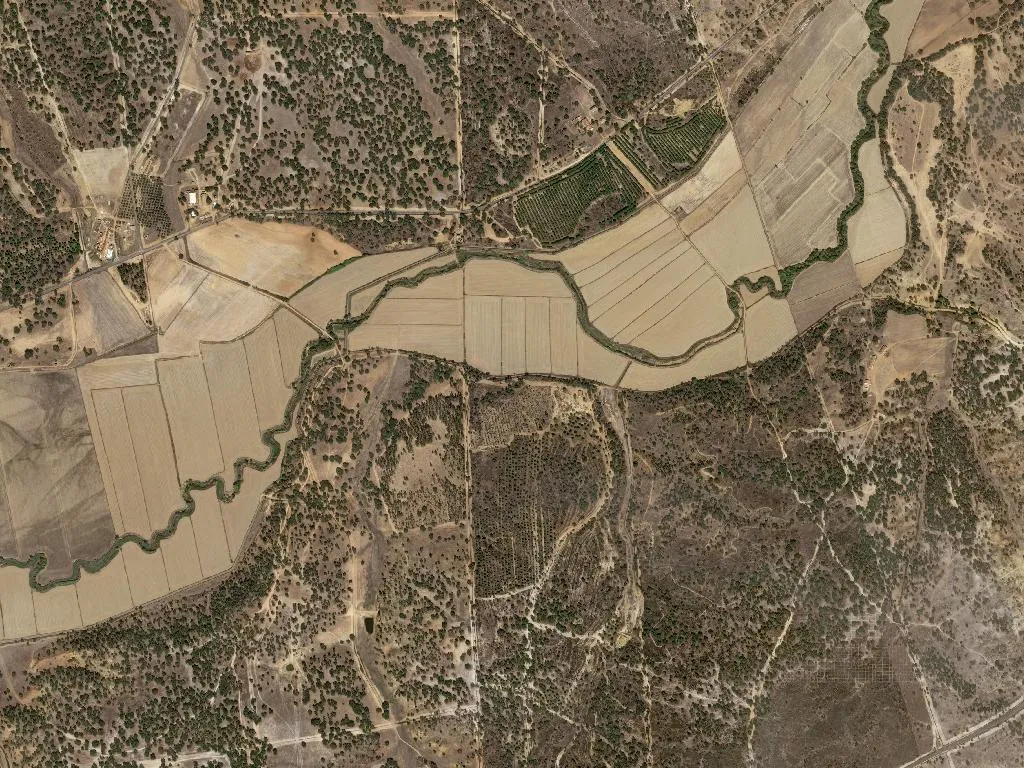
Bicos occupies a single 63-metre swell of sandstone and sand: a scatter of white-washed houses, a church tower, and fields scored with the parallel ridges of sweet-potato drills. In winter, Iberian ewes crop the grass between the rows; in summer the earth is turned, exposing ochre seams that smell faintly of the ocean.
Working ground
Five thousand protected hectares are parcelled into holdings so small that tractors look like toys against the slope. Here the IGP sweet potato of Aljezur sweetens in sandy loam; lambs labelled Borrego do Baixo Alentejo graze on wild thyme and rosemary; and wheels of thistle-rennet Serpa DOP cheese quietly bloom in stone cellars. Nothing is showy; everything has a paper tag and a protected status.
No signposts
There are no viewpoints, no gift shops, no way-marked trails—just a single tarmac thread that narrows when two cars meet. Dry-stack walls corrugate the hillsides; vineyards tilt south; the scent of oak smoke drifts from bread ovens at dawn. Visitors are housed in four modest casas agrícolas booked by word of mouth.
Plate and place
Lunch is served at a formica table: clay-pot lamb shoulder with coriander and chunks of orange-fleshed potato, followed by thick slabs of Serpa on sourdough Alentejano bread, the rind still bearing the imprint of wicker matting. No tasting menus, no foam—just produce that travelled less time than the wine.
The hour between sounds
By midday the tractor engines fall silent. A single bell note arcs over the scrub of rockrose, mastic and cork oak, then dissolves. For a few minutes the only movement is a red-rumped swallow tracing the invisible line between two farms, and the slow lift of dust settling back onto the leaves.