Full article about Pine Shadows & Spring Water: Boavista dos Pinheiros
Born in 2001 from schist, pines and a 1,236-signature petition, this Alentejo parish breathes histor
Hide article Read full article
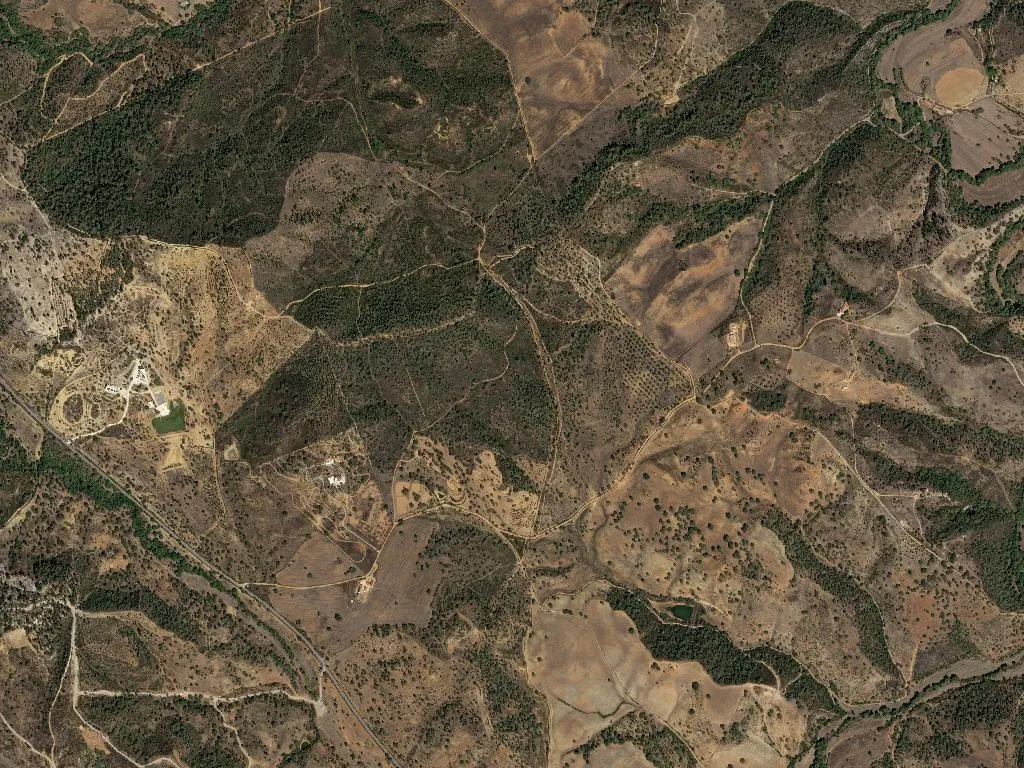
Road dust clings to the verges of the Mira valley long after the last white van has passed. Somewhere beyond the pines – a regimented green first drilled into the schist hills in 1926 by political prisoners of the Salazar regime – you can still hear the whisper of Pipa spring, the same vein of water that has fed José Marques’ vegetable plot since 1958. At an almost imperceptible 76 m above sea level, Boavista dos Pinheiros is Portugal’s newest parish on paper: born by decree on 19 April 2001, when 37.8 km² were sliced away from the motherships of São Salvador and Santa Maria. Yet the place feels older than its birth certificate, stitched together by pine shadows, irrigation channels and the smell of wet schist at dusk.
A parish that still squeaks like new shoes
Spring 2001 delivered more than almond blossom. It delivered self-government to 1,847 residents who, since their first petition to Odemira town hall in 1993, had grown tired of driving half an hour to discuss a pothole. Horácio de Oliveira Gonçalves, a cobbler by trade, became the inaugural parish-council president with 73 % of a 62 % turnout – figures still parsed over bica at Café Central, a linoleum-and-fado institution open since 1987. There are no Visigothic ruins or Manueline spires here; the heritage is archival. Maria do Céu, 78, keeps the original petition – 1,236 signatures in fading ballpoint – folded in a bureau drawer next to her television remote.
The closest thing to a monument is the Water Park, inaugurated 15 May 2004 on the bones of the old treatment plant that, between 1974 and 1999, turned the Mira’s sediment into potable supply for Odemira and Salvador. Children career between 3.2 hectares of Portuguese oaks planted the following year; pensioners occupy the bench where António “Tozé” once monitored pressure gauges, remembering the week the taps ran brown. The park doubles as the environmental-education hub for the entire Southwest Alentejo and Vicentine Coast Natural Park, 18 km away but ecologically inseparable.
Factory hum and hoe rhythm
Locals call the place the “industrial lung of Odemira”, a phrase coined by mayor Jorge Valente in 2008 after the council estate swallowed 22 hectares. Thirty-seven firms have arrived since 2003 – Simoldes moulding plastics, Iberol bottling olive oil, Frutineves packing 1,800 tonnes of greengage plums each summer. The dichotomy is seamless: at 07:45 the company bus idles beside Café Regional; at 08:00 Henrique’s chickens still scuttle across the dirt track separating the depot from his two-hectare market garden. Those 37 square kilometres generate 14 % of Odemira’s GDP, an official figure that surprises no one who has seen the articulated lorries nose-to-tail on the EN393.
August brings the three-day Festa em Honra de Nossa Senhora da Boavista. The bandstand on Praça 19 de Abril books the same Lisbon GNR wind ensemble that has holidayed here since 1987; the set list has not changed either. Attendance hovers around 3,500 – counted by the local PSP – modest by Portuguese standards, but every handshake is genealogical. In May the second-Sunday fair reassembles the same 72 stalls: Antónia’s printed cloth, Zé “da Serra’s” 12-month cured cheese, gossip paused only long enough to ask after a grandchild now working in Rotterdam.
Walking by water and pine
Footpaths here follow the hydrology, not the way-marketing budget. The Pipa trail drops 2.3 km to the river through strawberry-tree scrub and the resinous snap of pine bark. The Carrascal route passes a spring that dried in 2012, its name now a memorial. Fonte Santa still collects trickling water where women scrubbed shirts until 1978, the stone lip polished smooth by decades of knuckles. Straight-line distance to the Mira is four kilometres, but the river coils so extravagantly that the actual walk feels double. Along the banks, Portuguese willows knit a green wall; on the north slopes, wild pines throw long shadows over eucalyptus planted in 1998 for the Frutineves packing crates.
Silence here has viscosity: thickened by resin, cooled by spring water that emerges at 14 °C from cracks in Cambrian schist. The only reliable soundtrack is boot tread on needles and, at dusk, the soft hydraulic sigh of drip irrigation switching on.
When the sun skims the ridge, gilding the 1926 plantations and lengthening shadows across allotments watered by timers since 2015, Boavista dos Pinheiros reveals itself in miniature: the creak of D. Idalina’s 1963 pine-wood gate, the ribbon of white smoke from Zé “do Prego’s” eucalyptus fire, the sweet breath of watered schist mingling with the cork-oft of a centuries-old oak that survived the 2003 wildfire. Monuments are unnecessary; the valley exhales at its own cadence – young on paper, ancient in gesture – and every spring still answers to the name whispered by parents to children long before cartographers drew the ink lines.