Full article about Colos: Where Sheep Dust Clouds Meet Cork-Scented Wind
Slow days, bronze lamb and Serpa DOP under endless Alentejo skies
Hide article Read full article
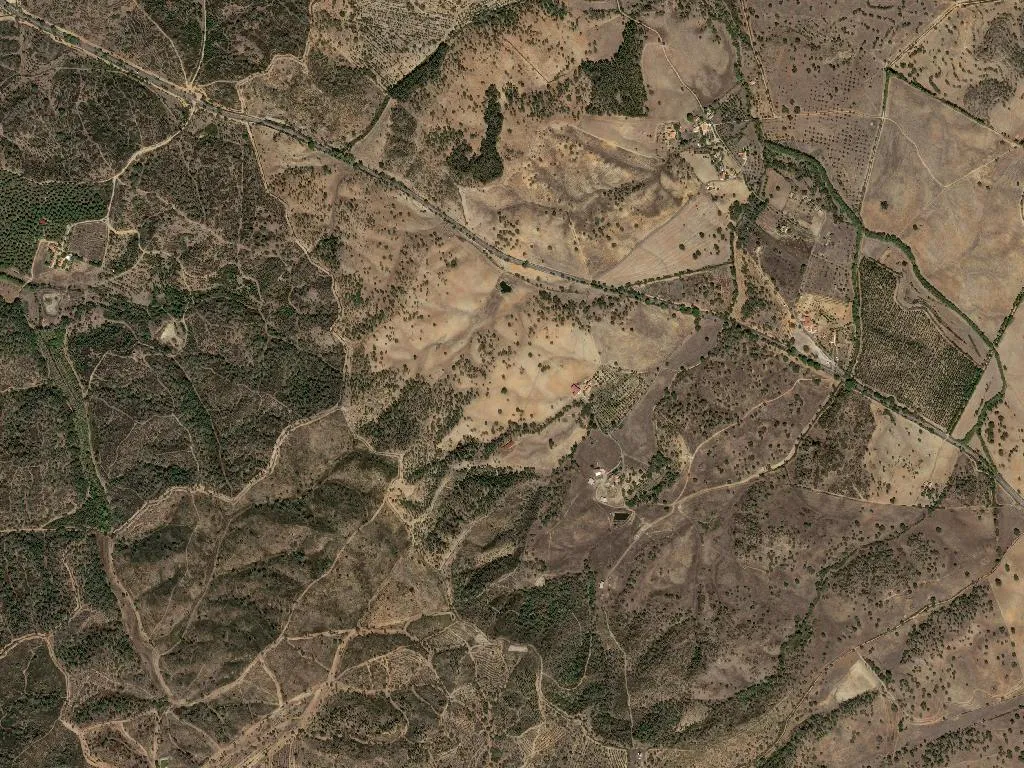
The wind combs the low hills around Colos unhindered, dragging with it the smell of sun-baked earth and the faint iodine tang of cork-oak resin. Tarmac dissolves into ochre grit; the only punctuation on the road is a distant buzzard mewing overhead. At 158 m above sea level, Baixo Alentejo drops all pretence: mile upon mile of montado savannah, sheep treading their own dust clouds, horizons that exhale so slowly you feel the day lengthen.
What the flock feeds
Eight-hundred-and-twenty souls share just over 100 km² here—roughly 12 hectares apiece. Cork oaks stand at polite intervals like spectators, while sheep graze the understory that flavours their milk. That milk becomes Serpa DOP, a cheese whose velvet paste tastes of parched clover and milk still holding the warmth of the udder. Split a young wheel at quinta das Fontainhas and you’ll understand why no one hurries the ripening.
Sunday fire, weekday coals
Colos cooks from the flock upwards. Borrego do Baixo Alentejo IGP—milk-fed lamb—spends four hours in a wood oven until the skin lacquers into a brittle bronze shell. Roasted potatoes swim in the dripping, scented with thyme and rosemary that grows wild on the verge. Aged cheese is later shaved into açorda alentejana, the bread soup that turns stale crusts into something spoon-coating. On market day, orange-fleshed sweet potatoes from Aljezur arrive in net sacks; they’ll be roasted, chipped, or folded into custard tarts that never see a menu.
Inside the park, if not beside the sea
Technically Colos sits within the Southwest Alentejo and Vicentine Coast Natural Park, though the Atlantic is only a suggestion on the wind. Dirt tracks slide east toward São Martinho das Amoreiras, threading valleys where rockrose glints gun-metal grey. Golden eagles quarter the thermals for rabbit; after rain, a viperine snake scribbles across the road to the winter stream. Along its banks, tamarisk fronds are still cut and woven into the baskets that line every porch.
A road that prefers walking
The EN393 corkscrews through estates whose trunks are date-stamped in white paint—2019, 2015, 2011—each digit marking a harvest. At Curva do Vale, Café O Forno will pull you an espresso for ten cents if you bring your own toast. José Maria will open his maturation cave, but only after you abandon the car and walk the final kilometre: “People must like using their legs,” he warns. There are no brown heritage signs, no audio guides; instead, Célia in the grocery halves a wafer of cheese so you taste before you buy, and the village priest still fires the bread oven at 4 a.m. so the crust sings in time for Mass.
Demography writes its own quiet: 277 pensioners, 61 children. Silence settles after lunch the way night settles elsewhere. Yet that suspension is what keeps the rituals intact—dawn herding, hand-milking by António whose fingers no longer close fully but still know the rhythm. When the sun tilts and side-lights the cork trunks into a copper grid, the wind lifts again, carrying the church bell that strikes seven without fail. Distance here is measured not in kilometres but in generations who have walked the same dust before you.