Full article about Luzianes-Gare: where the train sighs but no one alights
A one-track Alentejo halt of 374 surnames, cork-scented lamb and silence
Hide article Read full article
The railway that won’t leave
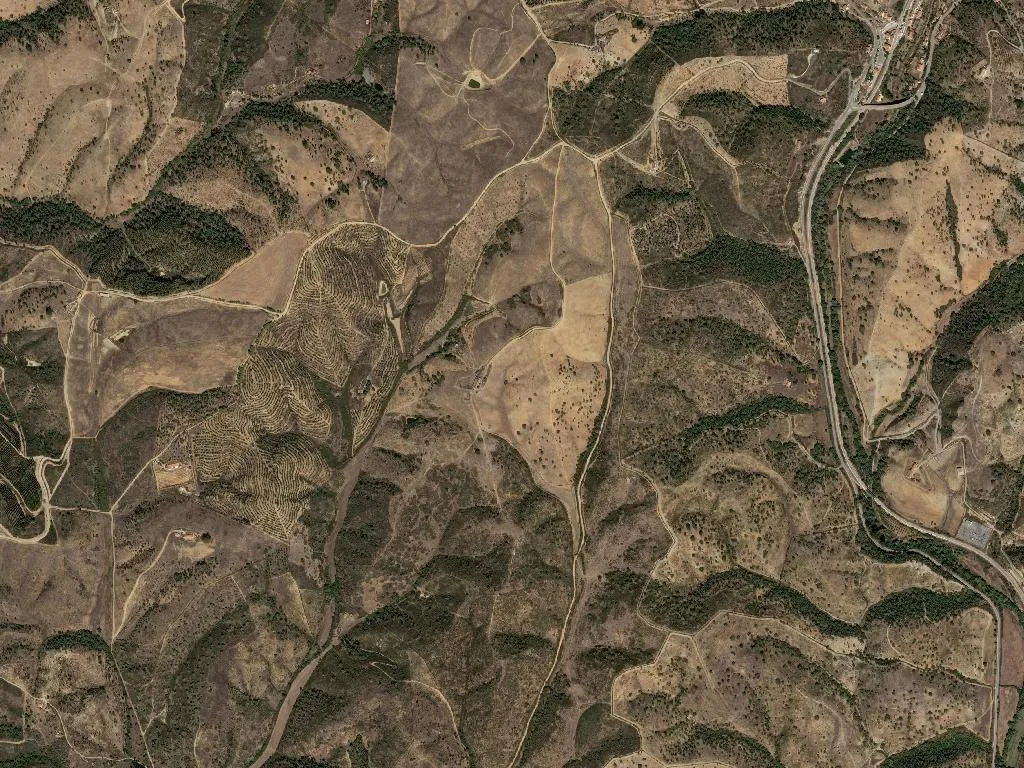
The single-track line that slices through Luzianes-Gare behaves like the village widow who still crosses the street every evening to check if the café lights are on. Nobody remarks on it, yet its presence is the reason the hamlet exists at all: in 1899 the Royal Portuguese Railway needed a place where steam engines could draw breath before the long climb to Aljustrel. The halt they built gave 374 people a surname and a skyline.
Today the population is spread so thin—four souls to the square kilometre—that the parish council hands out hunting-dog licences faster than birth certificates. The station waits like a forgotten rendezvous: modern diesels hiss, doors clack, no one steps off except the odd rambler who has mis-read the timetable. Locals call it a “pass-through place”, then go home to the same wool their grandmothers spun, the same ewes that graze the ten-thousand-hectare cork estate.
What the soil still serves
Lamb here carries a birth certificate: Borrego do Baixo Alenteijo PDO, milk-fed and heather-scented. You taste the scrubland—rockrose, arbutus, wild thyme—because the animals walk kilometres to find it. Sweet potatoes thrive in the warm, iron-rich earth; the variety is identical to that of coastal Aljezur, minus the Atlantic breeze that normally tempers the sugar. Serpa cheese, barely twenty minutes east, arrives on kitchen tables still wrapped in the cloth used to press it; EU frontiers mean nothing to a ewe.
Village arithmetic
There are 121 seats reserved for pensioners in the parish hall, only 32 high-chairs in the whole civil parish. Interpret that as you wish. Streets are wide because no planner ever argued they should be narrow; houses stay single-storey because the north wind, funnelling down from the Serra do Mendro, already has enough height. Accommodation totals two dwellings: Casa do Guarda, a converted railwayman’s cottage with green shutters, and, well, the other one. Both are booked solid during the August Perseids—stargazers like the 182 m altitude and the zero light pollution.
Commerce is three-dimensional: Zé’s café (coffee, brandy, rolling tobacco), the grocer (closes at six sharp), and the ticket machine that sometimes prints. The nearest Continente hypermarket is 28 km away in Odemira; the school bus can slow the journey by twenty minutes, depending on how many children remember their rucksacks. Residents set their internal clock to the 17:23 regional to Faro—after that, silence is official.
Dusk lowers a lavender filter across the platforms. Wood smoke drifts from chimneys, a pointer barks once, the rails tick themselves cool. Luzianes-Gare is neither beginning nor end; it is the unplanned pause that stretches into a week. You arrive because the train stops, and discover the timetable was negotiable all along.