Full article about Sabóia, where Atlantic wind learns Alentejan names
Cork-oak highlands breathe ocean air, grandparent stories and strawberry-tree scent
Hide article Read full article
Where the wind knows every name
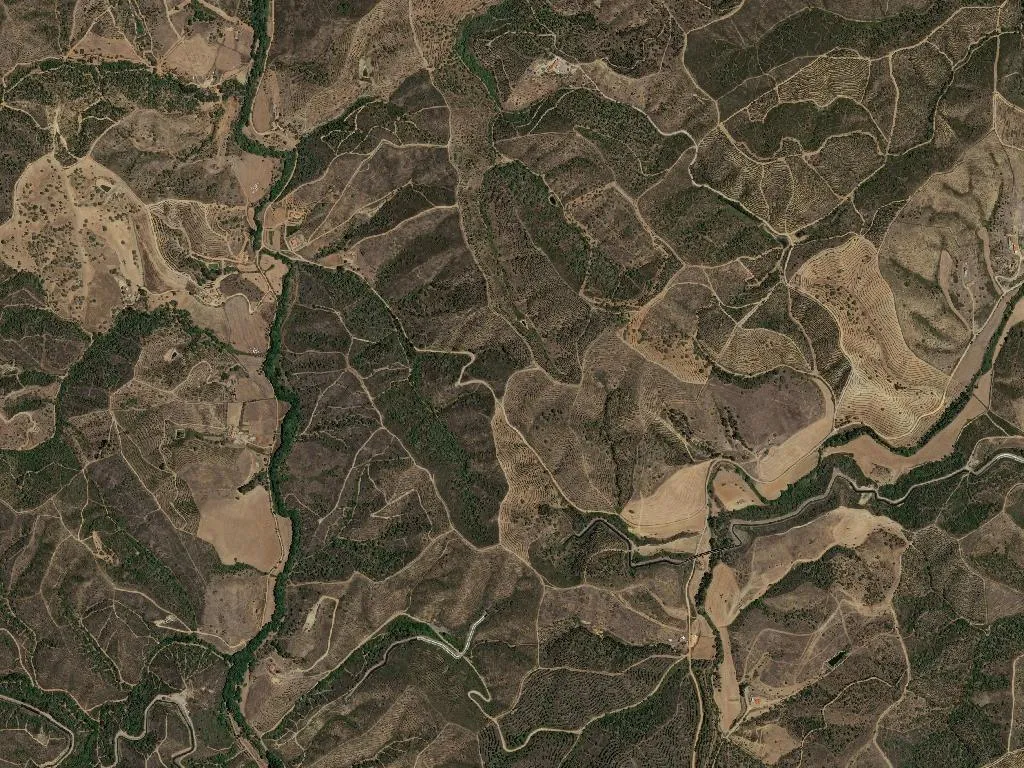
The Atlantic breeze slips up the Mira valley as casually as a neighbour borrowing sugar, carrying salt on its breath long before the ocean appears. In Sabóia, 133 m above sea level and 40 minutes from the nearest cliff, the air begins to taste of seaweed and freedom. Switch the engine off and the soundtrack is immediate: cicadas, a distant chain-saw, the soft collapse of cork bark onto woodland litter. Fifteen thousand hectares of cork oak, eucalyptus and strawberry-tree scrub roll out like a badly tucked blanket; human beings are simply outnumbered.
Between two worlds
This is the hinge of southern Portugal — too far east for full-blown coastal tourism, too far west for the Alentejo’s wheat-field monotony. The Southwest Alentejo and Vicentine Coast Natural Park nudges the parish from the south, but the bureaucratic border is meaningless to the storks that commute daily between estuary and nesting posts on electricity pylons. Between April and May the temporary streams still remember how to run; by August they retreat underground, leaving white boulders polished like bone. Rock-rose perfumes the air for free, while schist—thin, flaky, the colour of burnt toast—becomes whatever the place needs: boundary wall, barbecue, front-door sculpture.
Demographics in real time
Census data lists 922 inhabitants, 389 of them over 65. Translation: if you ask for directions at nine o’clock, the man leaning against the counter can recall when the main road was still dirt. Children number 58; they catch the yellow bus to Odemira at 08:30 and return with homework, playground Portuguese and the faint bewilderment of bilingual six-year-olds whose grandparents speak only Alentejano. Stand still and the view swivels: look north and you see the Sobro de Monte hill; look south and you see the same hill, slightly smaller, as if the landscape is shrugging.
What you’ll eat (no tasting menu required)
The lamb that later stars at Serpa’s festivals is butchered here first. In the single tavern, thick slices are lifted from a simmering pot and placed in deep bowls; bread crust replaces cutlery. The cheese arrives warm if you arrive before eleven—ask for “half a ball” and they’ll slap a wedge of Amarelo de Beira DOP onto the counter with a curl of home-churned butter. Sweet potatoes grow on the river terraces, not the sandy ridges of Aljezur; the grocer-baker roasts them in her bread oven so the skins blister and the flesh collapses into something tasting suspiciously like custard. Coffee is Delta brand, drawn from a machine older than the waitress, but the water comes from a borehole and costs nothing.
Where to sleep (alarms discouraged)
There are three legal guest rooms; there are also Amélia and Joaquim. Amélia leaves a loaf on your step at seven; if you want eggs, help yourself and post the coins through the chicken-wire into the ashtray. Joaquim’s spare room sits above his tractor repair shed—shower cubicle the size of a confessional, balcony the size of a tennis court, Wi-Fi available only if you stand beside the wardrobe with one arm raised. When the sun drops behind the schist ridge, the stones exhale the day’s heat and an invisible church bell tolls eight-thirty. No performance, no playlist—just the metronome of a village that still measures distance in cicada clicks and time in the slow crumple of cork.