Full article about São Salvador e Santa Maria: Wheat, Cork & River Echoes
Hilltop sanctuary and Mira-shaded hamlet share olives, lambs and empty wheat in Odemira.
Hide article Read full article
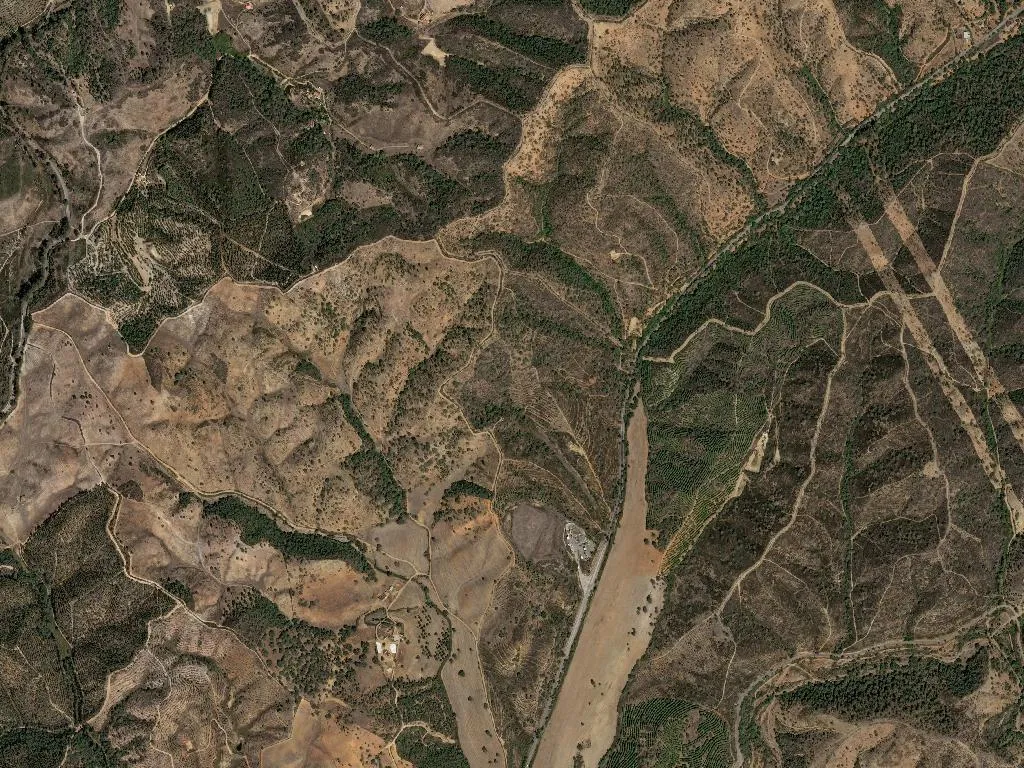
The tarmac buckles into loose laterite where holm-oak trunks stand charcoal-black against wheat-coloured grass. Beyond the last farm gate, only the cork-lined crowns move, nodding like elderly witnesses to every passing shadow. This is São Salvador e Santa Maria, a parish stitched together from two medieval villages and now spread across 120 km² of Baixo Alentejo—an area the size of Guernsey, yet home to barely 3,400 souls.
Two parishes, one topography
Medieval bishops fused São Salvador’s hill-top sanctuary with Santa Maria’s river-side settlement so that tithes, not topography, decided the boundary. Their twin mother churches—one blistered by the wind on a rise, the other shaded by eucalyptus on the Mira valley floor—still mark time. At dawn the bells roll across terraces planted with olives; at dusk they answer each other across 8 km of empty wheat. Between them the Mira slips south-west, a green artery that keeps the maize plots alive long after the summer has baked the surrounding plains to dust.
Footprints on the Historical Way
The Rota Vicentina’s Historical Way enters the parish above Santa Clara-a-Velha dam and exits four days later on the cliffs of Cabo Sardão. Inside São Salvador e Santa Maria it is simply a line of x shaped way-marks painted on slate gateposts: past abandoned wheat-threshing circles, through gates where black pigs nose for acorns, beside dry-stone walls fuzzed with lichen. Walk it early and the only company is the soft knock of a shepherd’s staff and, further on, the Atlantic beginning to salt the air.
A table with credentials
Distance forces the kitchen to be honest. Lamb (Borrego do Baixo Alentejo DOP) grazes the same montado you walked through; the cheese that finishes the meal is Serpa DOP, cloth-bound and matured in cool cellars until it can be spooned like butter. Sweet potatoes come from the sandy triangle around Aljezur, 40 km west, and appear again for dessert as pão de rala—yolks, sugar and almond pressed into a loaf that slices like marzipan. Order an açorda and the bowl arrives steaming, coriander sharp, egg yolk just set: farm bread turned into soup because the farm had nothing else to spare.
Between river and ocean
Below the road bridge the Mira widens into a tidal mirror. Night herons feed at first light; otters leave prints in the mud. Rent a kayak at the weir and you can drift 12 km downstream to where the river mouth meets the surf at Vila Nova de Milfontes—Atlantic water cold enough to make your shoulders sing after the slow glide through reeds. Come back at dusk and the same track delivers you to Almograve beach, where the sand is so clean it squeals underfoot and the only evening illumination comes from the lighthouse at Cabo Sardão flashing white every ten seconds.
When the sun finally drops behind the cork ridges, the temperature falls like a stone in a well. Somewhere over the invisible village the church bell tolls, the note flattening as it crosses the valley. You realise the sound has been travelling for almost a minute before it reaches you—enough time to remember that here space itself is a form of hospitality.