Full article about São Teotónio: raspberries bleed at dawn
Cape Verdean creole, Chinese IPAs and red-earth rollers before the Atlantic
Hide article Read full article
São Teotónio: Where Alentejo Meets the Sea
The air smells of salt and rockrose at the same time — a perfume you catch only here, thirty minutes before the ocean appears. By seven o’clock in São Teotónio’s small square, the Central café is already humming: Cape Verdean creole bouncing off Mandarin syllables while neon sun-hats drip onto Formica tables. A white van from Frutas Dourantes unloads raspberries that bleed crimson onto the cement — the first stain of the day.
Spread across 347 km² and home to 8,699 souls, the parish is mathematically sparse — 25 people per km² — yet on Monday mornings the Intermarché car park feels like a regional congress. You walk in knowing three faces; you leave with five phone numbers and an invitation to a Saturday churrasco.
The Geometry of a Vast Territory
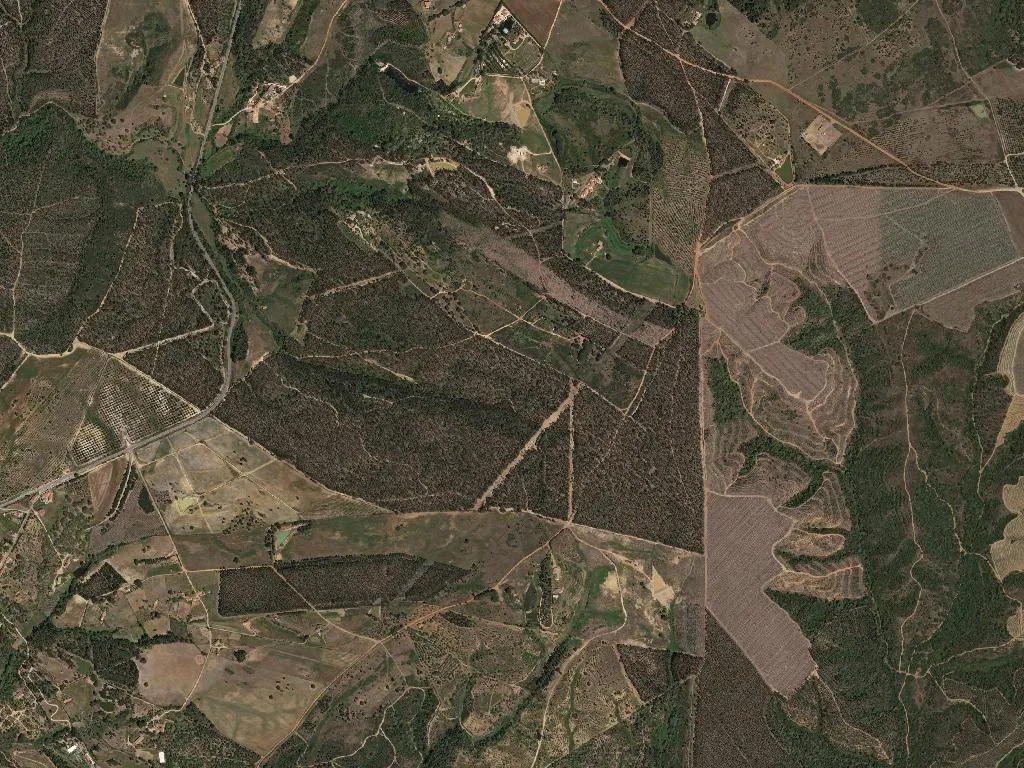
The land is not the flat, wheat-gold table-top people expect from Alentejo. It rolls like red swells, snapping suspension springs on the old Renaults that still outnumber new 4x4s. The national road from Odemira kinks at the junction to the ER-123, the exact place where local memory places the accident that took Jaiminho ten years ago. Three winter rivers — Santa Clara, São Teotónio and Rogil — are simply stones and dry thistle by July, when the light turns metallic and even shade feels hot.
The Southwest Alentejo and Vicentine Coast Natural Park is not a polite green stripe on the municipal plan. It is the ranger who fines you for playing music on Amália beach, the form you must complete to plant three tomato plants, the official who explains why you cannot rebuild the garage that your grandmother never had permission for in the first place.
Demographics and the Soil that Feeds Them
Since the first plastic greenhouses arrived in the early 1990s, the colour chart of the town has shifted. There is now a Chinese shop selling massage sticks and chopsticks next to the agricultural co-op, and the health-food store stocksIPAs no local tongue can pronounce. Ukrainian children who arrived as babies now swear in Alentejano dialect, and the August fair for Nossa Senhora da Graça serves both bifana sandwiches and chilled bowls of borscht.
Lamb is still grazed under holm-oak montados; you eat it at Tasquinha do Zé, where Maria brings the frying pan straight from the burner and bread baked two doors down. Sweet potatoes come from Vale de Janela, a scatter of houses whose football field feels like the edge of the known world. Queijo Serpa is sold by the smallholder who appears outside the pharmacy on Friday evenings, a yellow Bic lighter dangling from his belt to slit open the vacuum pack.
Everyday Life as Experience
There is no castle, no interpretative centre, no gift shop. Instead, Café Rosa hosts accordion night every Tuesday, and the butcher still slices spare ribs on a bandsaw older than the assistant wielding it. Of the 156 registered lodgings, most are grandmothers’ houses reborn with Wi-Fi and slate nameplates: “Casa da Oliveira”, “Monte da Paz”. The Canadian-run hostel ferments sourdough for three days; Dona Alice’s bakery produces a loaf in twenty minutes that tastes of 1978.
When the sun drops behind the serra, stored heat clings to whitewash like a cat refusing to leave. Across the lane Susana is grilling sardines in her garden; the smoke drifts through your window and suddenly you are ravenous. In the bar, Joaquim and Manuel continue the same goal-line dispute they began in 1983. No crowds, just the woman who has shuffled the same purple flip-flops since 2003 and the mongrel that walks you to the corner because once, years ago, you offered a crust of toast.
Outsiders should know: the Atlantic is twenty minutes away, but pack a towel — the wind welds sand to sun-cream. The lane to Praia da Amália is where every sat-nav surrenders; everyone misses that bend. Bring water, bring sunscreen, and the understanding that you are entering a place that was once ocean, once forest, and will be both again the moment the next greenhouse retracts.
The Sound that Lingers
At 22:37, when the café shutters close and Manel’s dog retires, a hush settles. Stand beside the church wall (never the council wall — the bulb there blew in 1998) and you will hear nothing. Nothing that smells of rockrose and last night’s hearth, nothing that suggests the world has ended just outside your gate and left only you and the constellations. Then the blood begins to ring in your ears and you realise silence itself is audible — a frequency you carry back to city traffic, a private reminder that elsewhere, time is simply different.