Full article about Vale de Santiago: Alentejo’s silent cork-scented parish
White church, wheat earth, 823 souls—sleep in a hayloft, wake to lamb and thistle cheese
Hide article Read full article
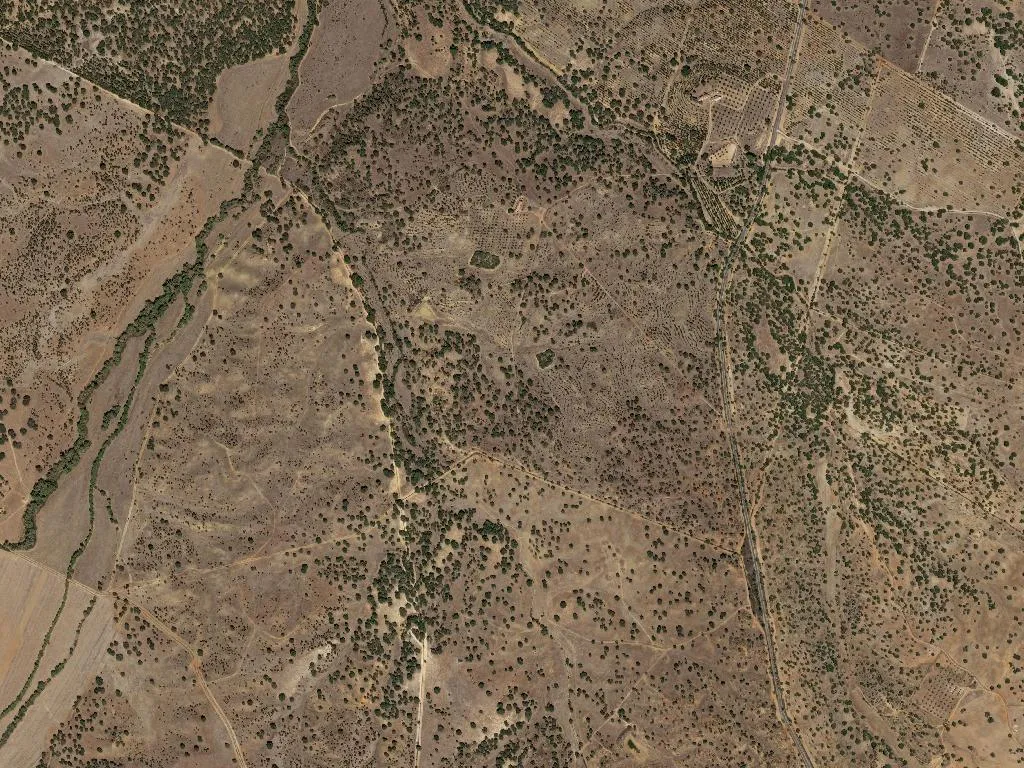
The tarmac buckles and straightens across 66 km² of interior Alentejo, tracing a narrow corridor between wheat-coloured earth and the luminous green of young pasture. At each bend the white single-steeple of Santiago’s 16th-century church reappears, its bell marking time the way a metronome keeps count for the light itself—languid at dawn, razor-sharp at noon, uncertain once the sun slips behind the cork oaks.
By the numbers
823 residents. 54 children under 14. 284 over 65. Scatter those figures across a grid of country lanes and you understand why the parish measures neighbourhood in kilometres, not metres; why the cattle grids feel like frontier posts; why silence carries the density of cork.
What the plate tells you
- Batata Doce de Aljezur IGP – sweet potatoes baked in the residual heat of wood-fired bread ovens
- Borrego do Baixo Alentejo IGP – lamb scented with the cistus and lavender it grazed on
- Queijo Serpa DOP – thistle-rennet sheep’s cheese, buttery, faintly sharp, always served at farmhouse temperature
Arriving and staying
Eight legal beds: five cottages, two rural rooms, one converted hayloft. Take the N120 from Odemira, switch to the municipal 514, and surrender to the GPS hiccups—signage is sporadic, but the horizon is reliable. No high season, no queues, no rate surges; a text two days ahead is contract enough.
Beyond the cartography
Come late afternoon, low sun ignites the whitewash and the world reduces to three sounds: a dog announcing the day’s end, a single-cylinder tractor returning from the fields, eucalyptus leaves clicking like bone china. Then the first autumn rain releases the scent of wet schist and straw, and the entire parish exhales.