Full article about Santa Luzia: Where the 1891 Bell Still Rules the Plain
Santa Luzia, Ourique—hear noon bell ring 5 km, follow 14-km chapel trail, eat clay-pot lamb and 60-day Serpa cheese in Alentejo’s quiet heart.
Hide article Read full article
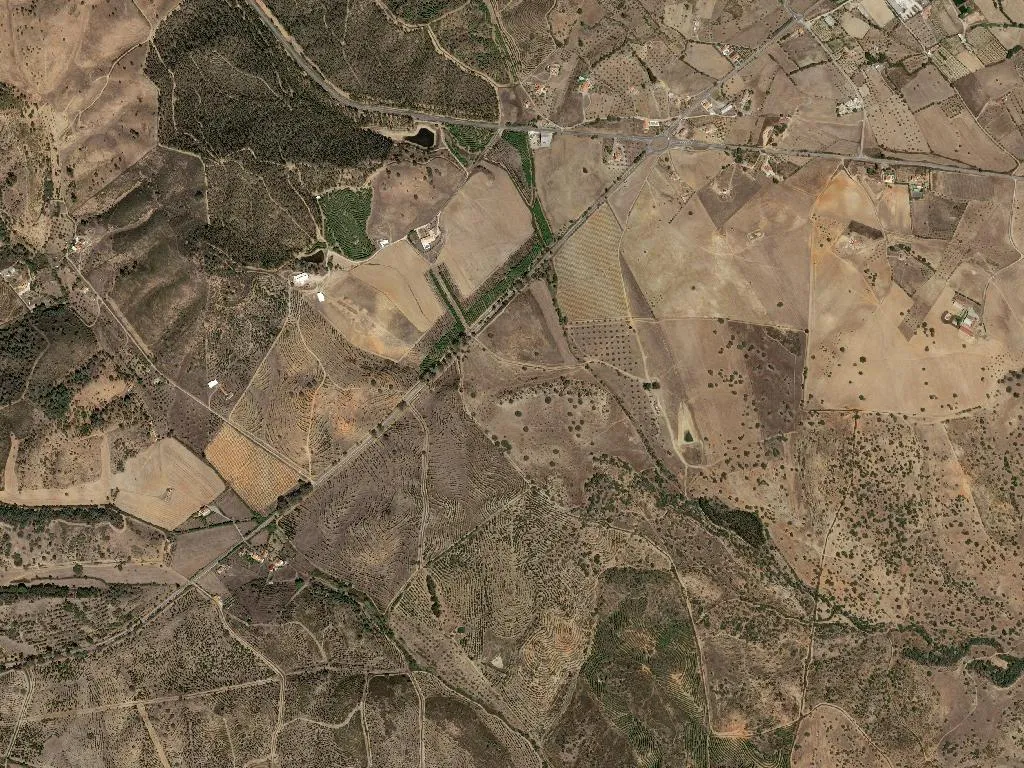
The 1891 bell of Santa Luzia’s mother church—cast at Lisbon’s long-gone Santo António foundry—strikes twelve times at noon, its bronze pulse audible five kilometres away on the Xereponte estate. Around the gravelled square, sodium lamps the colour of burnt marmalade glow along Rua da Igreja; every other lane switched to cold-white LED in 2019. December air carries the tannic scent of compacted earth and cork-oak logs: 129 registered hearths in 2022, each one feeding the sky. From the tiny chapel of Nossa Senhora da Saúde, set at 166 m above sea level, the Alentejo plain unrolls like unbleached linen; on the clearest days you can clock the Serra do Mendro ridge 38 km north.
The temple that named the village
Seventeenth-century in origin, the church was patched up in 1934 after the 1858 earthquake that rattled every tile between the Algarve and the Tagus. Jesuit carver José de Almeida gilded the main altar in 1743; the lime wash on the walls is still slapped on biennially with hydraulic lime mixed on site. The door is five-centimetre chestnut, ironwork hand-forged in São Marcos da Serra. Sunday mass is at 11 a.m., celebrated by Father António Valério—parish priest since 2007, the year the iPhone arrived in Portugal. On 13 December, St Lucy’s procession drifts down Rua de Baixo to the Casa do Povo where the Irmandade dishes out 300 pressed-dough buns dusted with cinnamon, the recipe lifted from the 1924 notebook of widow Maria da Graça. Seven rural chapels—Health, Bartholomew, Blaise, Barbara, Anthony, Sebastian and Lawrence—punctuate a 14-km circuit walked on Ash Wednesday by 28 penitents last year.
Flavours with postcodes
Baixo Alentejo IGP lamb from the Vale do Guadiana estate reaches the village grocery, O Moinho, every Friday; by Saturday lunchtime it has become a clay-pot stew at A Paragem on the N2 (€12 for 300 g of shoulder and a 400 g slab of Amelia’s hearth bread). Serpa DOP cheese is sold at Quinta do Valley—45 litres a day, 60 days’ minimum cure in 14 °C schist caves. Adelaide’s backyard coriander, picked at seven, goes into the garlic-sharp açorda thickened with Cooperativa de Ourique extra-virgin. For pudding, pão de rala, a convent sweet smuggled from Beja’s Nossa Senhora da Assunção in 1902 by Sister Inácia, and requeijão tarts cut with 12 % muscovado, €1 each at the October fair. Clay-pot wine—800 litres from eight growers, fermented in 500-litre amphorae from Mina de S. Domingos—flows at Café Central for €2 a mug.
Between cork groves and winter streams
The PR4 footpath follows the Ribeira da Negra for 8.4 km, starting at Portela de São Brás (37.485 N, 8.227 W). The stream flows on average 38 days a year; when it does, the width tops out at 1.8 m. Holm oaks dated to 1788 shade the trail; keep binoculars ready for little bustards in winter and the 74 common cranes that dropped in last February. Population density is eleven souls per square kilometre—443 residents across 3,491 ha—making badger setts almost as common as doorbells. Way-marked in 2016 by Alentejo Aventura, the route logged 346 walkers last year, every name scribbled in the Ourique tourist office ledger.
The farming calendar
Olive picking runs 15 November to 31 January, 85 % cobrançosa variety. The local co-op took in 190 tonnes in 2023, paying farmers 45 cents a kilo; work stops at half past twelve for bean soup eaten in the grove. Mixed vineyards—Moreto, Periquita, Tinta de Almeida—cover 15 ha, hand-harvested with 25-centimetre shears at 600 kg/ha. Of the 178 residents over 65 (40 % of the parish), 94 draw a rural pension. Zé Luis’s garage, open Tuesday to Friday, will change the oil in your Stihl 023 for €15. Twenty Holsteins still deliver 120 litres of milk daily to the coastal dairy, clattering across a tar-and-chip yard that hasn’t seen fresh tarmac in decades.
By late afternoon the 129 chimneys breathe a straight plume of cork-oak smoke—0.8 kg per fireplace, according to the national census—while the mercury drops six degrees between five and nine. It is that scent, resinous and slightly sweet, that lingers on the windscreen long after you’ve turned north on the N2, the bell fading in the rear-view mirror like a metronome counting slow time across the plain.