Full article about Cork-smoke ovens & ancient stones of Santana da Serra
In Ourique’s quiet parish, communal ovens scent the air while Neolithic villages and Lib-era hideout
Hide article Read full article
Smoke Signals from the Alentejo
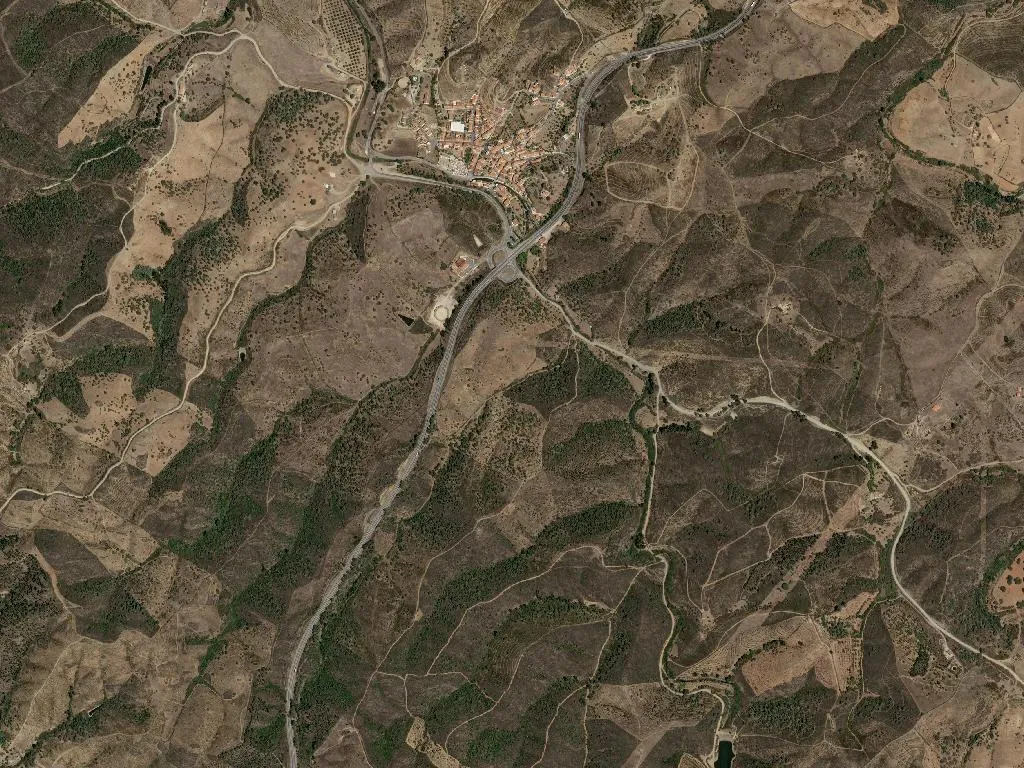
The plume rises dead-straight from the stone oven clamped to the side of the house, cork-oak smoke laced with the caramel scent of bread still forming its crust. Between the ridges of the Serra do Caldeirão, 47 such communal ovens punctuate Santana da Serra – a parish the size of Guernsey inhabited by barely 660 souls, each oven a bulletin board that announces, in smell rather than sound, whose dough is being fired today.
Bedrock and Paper Trails
People were here before parchment. On a windy spur above the Mira stand the granite footings of Cortadouro, a fortified village occupied from 5000 BC until copper arrived two millennia later; 200 m away, the Pêgo necropolis still yields bell-beakers and ochre-stained bone. The place first appears in ink on 15 August 1533, enrolled as Santa Ana; “da Serra” was bolted on in 1653 to distinguish it from two other Santanas within today’s Beja district. The Knights of Santiago collected its tithes from 1234, and in December 1833 the guerrilla-priest Remexido dashed off a letter to the Ourique garrison from Monte do Malhadinho, using these slopes as a hide-out during the Liberal Wars.
The parish church of Santo António, rebuilt after the 1755 earthquake, keeps the Alentejo formula: single nave, plain whitewash, eighteenth-century gilded altar acquired with Brazilian gold. Three kilometres east, the chapel of Nossa Senhora da Cola is the final station of a local Stations of the Cross that ends each 15 August with a candle-lit procession across stubble fields.
November Market, Yearly Rhythm
On the first weekend of November the cattle market yard behind the primary school becomes the Feira dos Sabores da Serra. Thirty-five producers set up trestle tables under holm-oaks:
- José Palma’s dark heather honey and late-medronho blossom honey from Monte do Pêgo;
- Copper-pot medronho brandy at 45 % vol. from Carlos Pires’ tiny licensed still at Monte Novo;
- Manuel Cardoso’s Serpa DOP ewe’s-milk cheese, cave-ripened 60 days until it weeps whey;
- António Brito’s IGP spring lamb, reared on cistus and bird’s-foot trefoil;
- Maria da Graça’s 1.2 kg Alentejan loaves, slid from the wood oven at seven in the morning, crust audibly cracking as it cools;
- Ana Paula’s “paio de Santana”, a paprika-laced neck sausage that cures for three months in the draughty loft of a Monte do Malhadinho farmhouse;
- Júlia Silva’s hand-woven cotton table-runners, the geometric motifs borrowed from Moorish tessellations, produced on a 1902 treadle loom inherited from her grandmother.
Nothing travels more than 15 km to reach the fair; most ingredients cross only a cattle-grid.
Ridge, River, Reservoir
The topography is rumpled rather than dramatic: Cabeço da Forca (432 m), Cabeço do Malhadinho (387 m), Cabeço do Pêgo (354 m). Between them the Pêgo, Gafo and Carrasco streams slide down to the Mira, 6 km south. Eighty-year-old strawberry trees, cork oaks stripped in 2023 for lot 17-C, three-metre-circumference holm oaks, rockrose and rosemary knit the understorey. Golden eagles nest on the Forca; Iberian hawks quarter the grasslands where bustards still roll their necks.
Two way-marked trails start from the football pitch: PR1 “Caminho do Pêgo” (8.3 km) follows stone slabs once used for transhumance; PR2 “Caminho do Gafo” (12.1 km) loops through abandoned olive terraces to a viewpoint over the Santa Clara reservoir, 12 km west. There, kayak rentals lie upturned on the beach like bright beetles, and largemouth bass rise at dusk.
The castle of Cola – a 45-minute scramble above the Pêgo valley – is less castle than collapsed Visigoth stronghold: two walls, a cistern, a panorama that stretches to the Atlantic haze. Cortadouro and the necropolis open Tuesday and Thursday by appointment with the parish council; the key hangs on a nail inside the café, next to the medronho measure marked “À vontade”.
Evening Audit
By 18:30 in August the sun flares low, igniting the schist and turning every white-washed farmhouse into a lantern. Smoke climbs again, this time from supper fires. The nearest neighbour is 800 m away, silence measured in cock-crow rather than decibels. At nineteen hundred hours the church bell tolls the Angelus; the note ricochets across ridges, a sonic thread that stitches the scattered hamlets into a single, temporary congregation.