Full article about Serpa’s Slow-Morning Spell: Cheese, Cork & Castle
Hear doors echo through limewashed alleys while DOP cheese melts on your fingers above the Alentejo
Hide article Read full article
A door slams, then nothing
The first thing you hear is a wooden door slamming somewhere down a side alley. After that, silence. At ten o’clock on a Tuesday morning Serpa inhales and exhales so slowly you can almost count the seconds between breaths. Sunlight ricochets off limewashed walls; the glare is so sharp you walk half-blind, pupils narrowed to slits. The town climbs a modest 190-metre ridge—its Moorish name, Sharba, simply means “height”—and every step uphill from the surrounding flatland trades the dry heat that rises off packed earth for sudden pockets of cool air beneath eight-hundred-year-old stone.
With only 5 595 residents scattered across 444 km², population density here is roughly thirteen humans per square kilometre. There are more cork oaks and holm oaks than people, a ratio that dictates the rhythm of daily life: bread queues move at agricultural time, cafés open when the baker decides the crust is right, and nobody apologises for it.
A hill the Moors named
The castle that crowns the ridge was begun by the Moors, rebuilt after the 1230s Christian reconquest, and is best appreciated by walking its parapet. From the battlements the Alentejo plain dissolves into a trembling haze of ochre and green; the Guadiana river glints somewhere to the east, invisible but elemental, the country’s southern frontier. Inside the walls history accretes like sediment. The parish church of Santa Maria grafts Manueline knots onto a Baroque body; a single unadorned façade gives no hint of the gilded altars inside. Across the lane, the thirteenth-century Franciscan convent—cloisters intact, sandals still echoing on stone—now hosts travelling chamber orchestras and contemporary photography shows. Round the corner, a 1625 sundial incised with Latin aphorisms continues to throw shadows across the same cobbles it measured when Charles I was on the English throne.
Cheese you eat with your fingers
Serpa’s identity is fermented as much as built. Queijo Serpa DOP, a soft sheep’s-milk cheese coagulated with cardoon thistle, develops its sunset-orange rind in cool cellars before emerging creamy enough to sag under its own weight. In the municipal market women in indigo aprons slice wheels on marble slabs, the lactic tang colliding with the resinous smell of bay and pennyroyal piled on the next stall. Eat it correctly—no utensils, just crusty Alentejo bread and impatient fingers—then lick the residue like a child finishing cake batter.
Lamb from the Baixo Alentejo IGP appears as ensopado, slow-cooked in terracotta with coriander, garlic and enough olive oil to stain the clay. Tomato soup here is not the polite café variety but a brick-red porridge thickened with yesterday’s bread. Convent sweets—toucinho-do-céu, literally “bacon from heaven”, and yolk-heavy bolinhos de noiva—were devised by nuns with access to unlimited eggs and no calorie counters. Wash everything down with rough local red that tastes of iron and sun-baked schist.
Voices under the oaks
Serpa’s Cante Alentejano choir was founded in 1926, two decades before UNESCO listed the polyphonic song as intangible heritage. Rehearsals still take place in a bare hall off Largo da República; men and women stand in a semicircle, hands clasped behind backs, releasing low, guttural verses that rise in parallel fifths. No instruments, no conductor—just lung and memory. Visitors are welcome, though you will feel you’ve intruded on family prayers.
Each July the International Music Festival colonises cloisters, courtyards and even the castle’s cistern. Maria João Pires has played Schumann on the convent’s 1844 Pleyel; Mischa Maisky has let Bach suites reverberate against granite where nuns once whispered. Audiences are capped at a hundred; cicadas provide the encore.
Where the Guadiana becomes the edge of the world
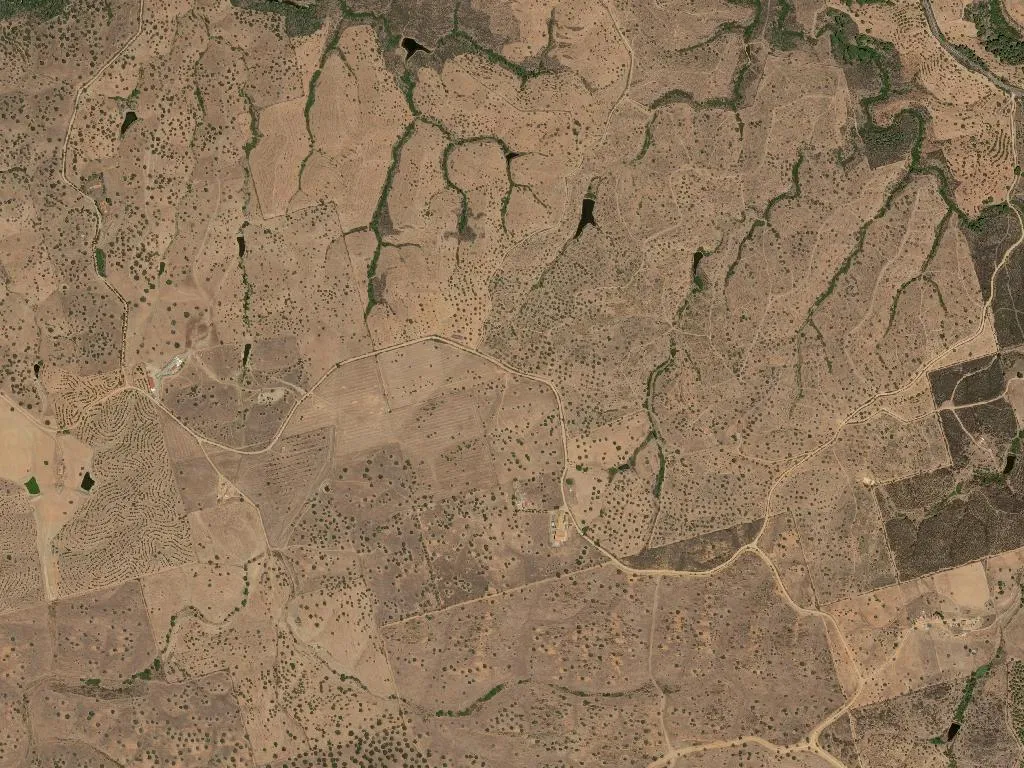
East of town the Parque Natural do Vale do Guadiana unrolls 70 000 ha of scrubland—rockrose, rosemary, genista—rooted so deep they survive August’s furnace. Cycling trails shadow the river as it widens into oxbow lakes visited by black-winged stilts and purple herons. Southwards the Serra de Serpa lifts gently to 300 m, enough elevation for griffon vultures to ride thermals above holm-oak canopy. The visitor centre will lend you binoculars, but the more honest approach is to walk: dry leaves crack like biscuit underfoot, the air smells of warm thyme, and every so often a boot print reveals a wild-boar track crossing your own.
Where to sleep
There are barely thirty places to stay—converted olive mills, town-house rentals, one small hotel installed in the former judicial court—so you will not be jostling for breakfast pastries. Wake to the smell of coffee drifting from the roaster on Rua 5 de Outubro, step outside, and you may still hear that same wooden door knocking somewhere down the lane, unanswered, unhurried, perfectly content to keep its own time.