Full article about Vila Verde de Ficalho, where cork-oak shade meets Cante
Rococo church, 1700s jail and living Alentejo song in Serpa’s white village
Hide article Read full article
The scent of earth and silence
The wind carries the scent of heather along the dusty paths, and the stillness of Alentejo’s afternoon is only broken by the distant chime of a bell. In Praça da República, the Manueline pillory stands as a silent witness to centuries of exchanges and conversations, while the whitewashed façades throw back the white light of the August sun. Vila Verde de Ficalho breathes slowly, at the pace of those who know the density of heat and the value of the shade cast by a century-old cork oak.
Stones that speak
The parish church of São Bartolomeu dominates the cluster of houses with its Rococo pediment, the result of an eighteenth-century overhaul of a sixteenth-century core. Inside, gilded woodwork glints in the cool half-light, and eyes take a moment to adjust from the raw glare of the street to the hush of the nave. A few steps away, the former town hall and jail keeps its straight-edged windows and distinctive cornice — a building that has watched troops, merchants and pilgrims file past since the 1700s. Beyond the village centre, the chapel of São Sebastião, at the place called Mesas, still waits for the faithful who climb the hill in procession each January, keeping a seventeenth-century tradition alive.
A song that refuses to fade
Here, Cante Alentejano is no museum relic but a living practice. The local choir, founded in 1923, is one of the oldest in the municipality of Serpa and still teaches teenagers the deep, rolling modulations and open-throated refrains that stretch as wide as the plain itself. At day’s end, men gather outside the tavern and let their voices braid, unhurried, building harmonies that UNESCO has listed as Intangible Cultural Heritage. During the feast of São Bartolomeu at the end of August, front doors swing open to visitors in a gesture of medieval hospitality that refuses to die — the entire parish becomes a house in common.
At table, the taste of the montado
The cooking is a direct extension of the landscape: Baixo Alentejo IGP lamb, reared on open pasture, reaches the table in hearty stews that demand crusty Alentejo bread to mop up the gravy. Serpa DOP ewe’s-milk cheese — soft, oozy, pungent — is served at varying stages of maturity, paired with red wine from Trincadeira and Aragonez grapes that local growers still pour from clay pitchers. Açorda with poached eggs is a manifesto of simplicity, and sericaiais — egg-yolk and almond sweets — finish the meal with the richness that only pork lard and sugar can confer.
Between cork trees and river
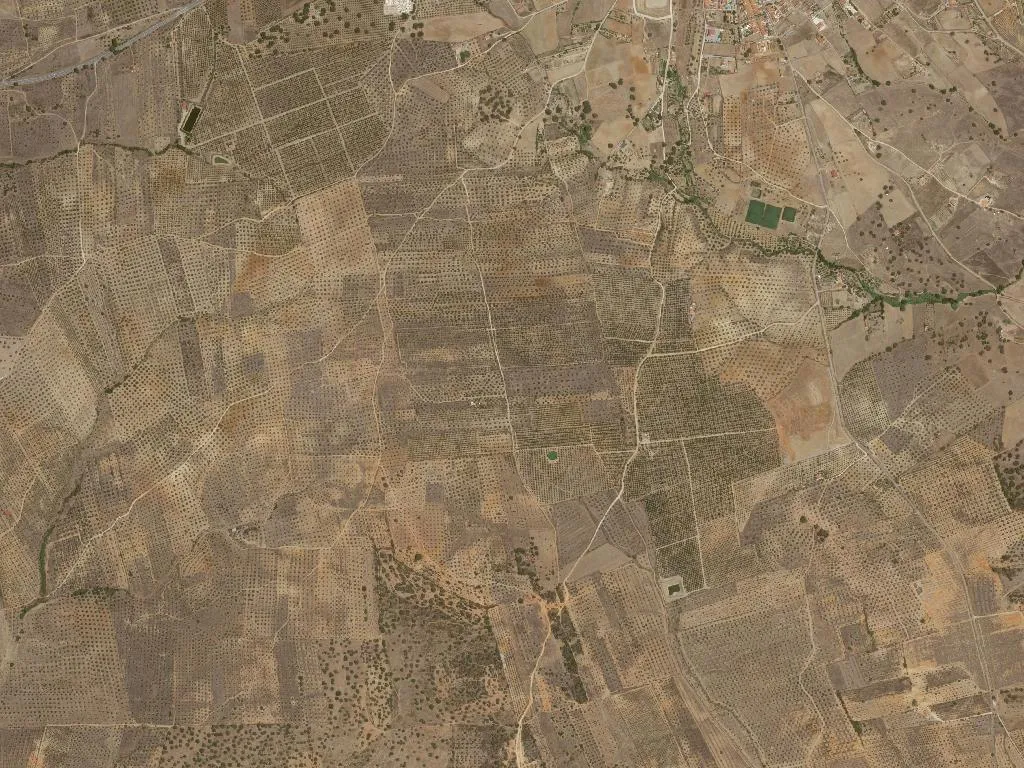
Vila Verde de Ficalho lies inside the Guadiana Valley Natural Park, where rolling stands of cork and holm oak throw jagged shadows across the red earth. The Ficalho walking trail, eight kilometres that start beside the parish church, crosses summer-dry stream beds and open montado where the only sound is the snap of twigs underfoot. From the Serra viewpoint the eye travels to the Guadiana itself, a silver thread a few kilometres south that creates wetlands where purple herons stalk the reeds. Fifteen minutes away by car, the Roxo reservoir lets you drift by kayak across mirrored water, watching ospreys fold into a dive.
History, light as air
Local memory insists that during the French invasions the Manueline pillory was buried in the churchyard to escape looting and lay forgotten until 1890, intact, as if the earth had kept it safe. Today it stands again in the square, witnessing days that pass in a parish whose population density barely reaches twelve souls per square kilometre — one of the lowest in southern Portugal.
As the sun tilts over the cork trees and the air cools, the smell of burning oak begins to rise from chimneys. It mingles with the rasp of men rehearsing outside the choir hall — a scent and a sound that linger not as postcard images but as something physical, something you breathe in, something that clings to the skin like the fine dust of the village paths.