Full article about Selmes
Selmes, Vidigueira—Alentejo hamlet of 780 souls, medieval olive groves, clay-talha wine and star-filled silence.
Hide article Read full article
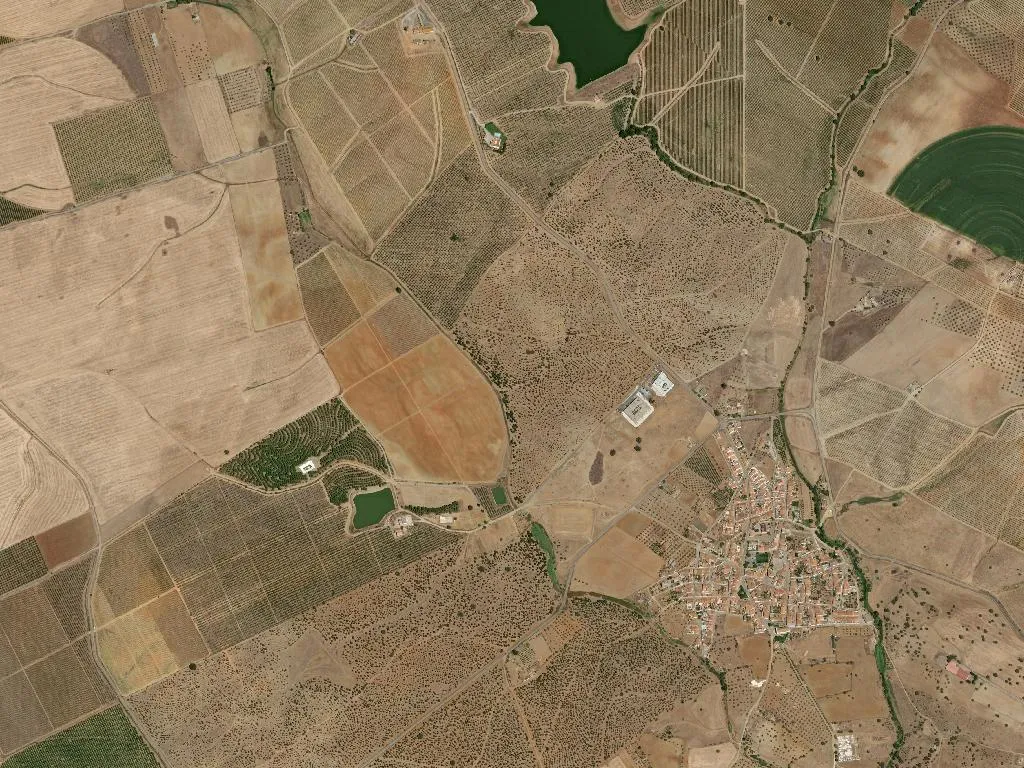
The partridge is already rasping between the rows of vines while the sky is still the colour of wet cement. Below the bird’s call, the plain rolls quietly—shale and sandstone underfoot, the air carrying a dry breath of rockrose and sun-baked earth. Selmes, a parish of Vidigueira in Beja’s southern hinterland, wakes without urgency: 780 souls scattered across 13,747 hectares, a density lower than the Mongolian steppe. Rurality here is not a weekend aesthetic; it is the only contract on offer.
The geometry of emptiness
There is no high street, no café with plastic chairs and competing radios, no square where gossip can orbit. Farmhouses perch on low knolls—white cubes caught in a tide of olive grey and straw yellow. The land tilts at a lazy 133 m above sea level, a shallow dish where the horizon is stitched with lone holm oaks and the occasional brutish fig, bark scarred by generations of sheep rubbing their winter wool. Streams exist only as rumours after rain; water gathers instead in stone cisterns grandfathers still locate by memory. After dusk, when the generator-driven floodlights of distant greenhouses finally blink off, the Milky Way feels close enough to snag on a thistle.
Soil as ledger, soil as bible
Each resident commands, on average, 17.6 hectares—an inheritance measured by the stride, not the deed. Medieval tax rolls already list “Silves” or “Selbes”, the name shape-shifting while the topsoil stayed put. Centuries-old olive groves deliver Alentejo Interior DOP oil, crushed in stone mills that start only when you phone ahead. Schist terraces, some so narrow a mule can barely turn, still support the Vidigueira sub-region’s reds and whites; a handful of producers ferment in 600-litre clay talhas, following Roman instructions recorded by 12th-century monks.
What the year tastes like
Winter begins with coriander-scented açorda, an egg poached in the broth to turn bread and garlic into breakfast. Sundays belong to slow-pulled lamb stew, its fat stained paprika-red, eaten while the church bell you can’t quite see clangs the Angelus. At January pig-killings—the parish’s substitute for patron-saint fairs—there is pão de toucinho, migas thickened with wild asparagus, and cinnamon-dusted sericaia, all portioned by grandmothers who can judge a shoulder of bacon by eye. No menus, no bill: you eat in kitchens where the dog knows not to bark at strangers and the wineglass is refilled without petition.
Keeping the calendar with your boots
Dirt roads between parcels are hourglasses of light; you gauge the season by how long your shadow stays useful. At dawn, steppe grazes hold Portugal’s last great bustards—heavy-crested birds that take off like reluctant cargo planes. In September, volunteer pickers are handed secateurs and a quick lesson in stem twist; purple juice quickly tattoos the cuticles. A few growers run private talha tastings: dip your jar into the clay belly, feel the wine exhale fermentation heat, learn why amphora porosity flatters the local antão vaz grape. Night brings a planetarium without velvet seats; silence arrives so complete you hear your own retinas hum, interrupted only by a gate complaining to its hinge.
Selmes offers no castle to storm, no gift shop to exit through. It offers instead 271 elders who read clouds like ticker tape, 72 children whose biology homework is collected from under a cork oak, and a horizon calibrated to human lung capacity. When the sun finally slips behind the shale and the holm-oak shadows stretch like spilled ink, you realise the entire Alentejo can fit inside three movements: break the wheaten loaf, stripe it with oil, pour the wine.