Full article about Barreiros: Vinho Verde vines & wolves on the Minho horizon
Granite lanes, Loureiro pergolas and mahogany Barrosã beef in a 739-soul Amares parish
Hide article Read full article
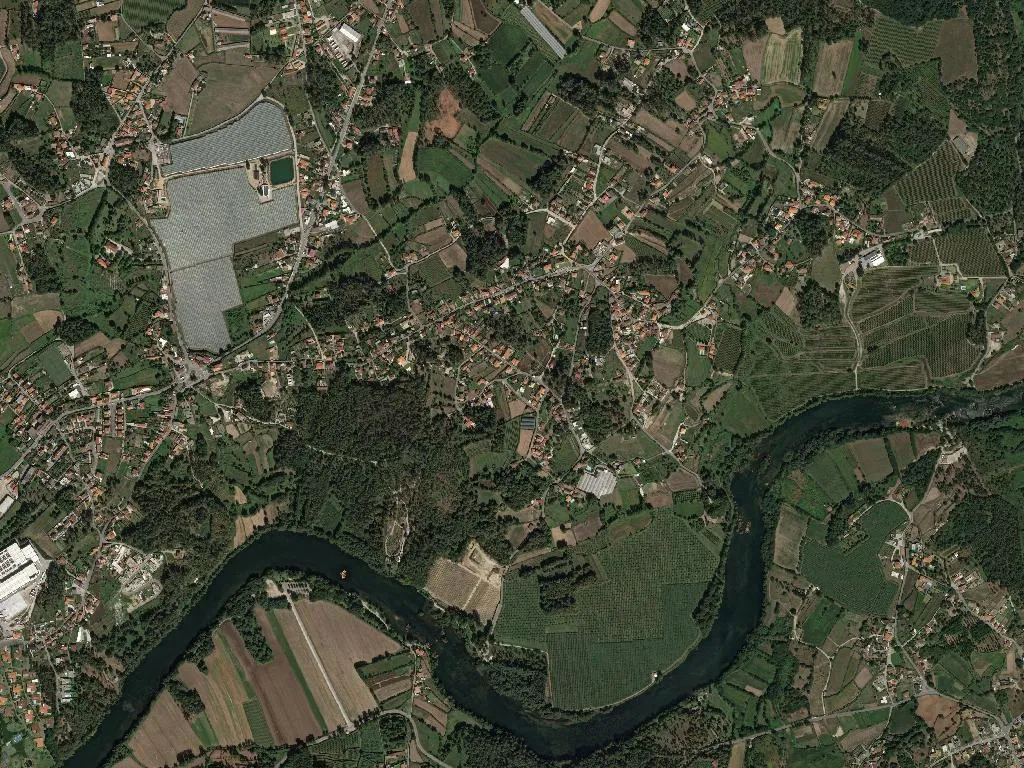
Morning light strikes the granite walls at an angle, sliding across pergola-trained vines like liquid brass. Barreiros wakes reluctantly, in step with the River Cávado that bends through the valley two kilometres away, ferrying melt-water from the Gerês massif to the Atlantic. At barely 67 m above sea level the air is thick with loam and the diesel cough of a distant rotavator – the only mechanical note in a soundtrack of blackbirds and dripping irrigation hoses.
Seven-hundred-and-thirty-nine people are on the books, which means everyone recognises the gait of everyone else and a stranger is clocked before the first espresso is finished. The parish could fit inside Hyde Park: three square kilometres of narrow lanes where houses give away their owners by the colour of wood-smoke and the hour the bell on the gate jangles. We are inside the demarcated Vinho Verde region and it shows: Loureiro and Alvarinho vines climb granite posts warped by centuries; some still rest on chestnut stakes split by January frosts. Walk here between June and September and you’ll see bunches blushing under a parasol of jade-green leaves that turn sunlight into diffuse, emerald glow.
The landscape as larder
Locals insist you can live on air and water, but in Barreiros the bankable assets are soil and altitude. Carne Barrosã DOP – the mahogany-coloured beef that London restaurants mark up 300 % – is simply “what’s for lunch” when visitors appear. Add a spoon of Mel das Terras Altas do Minho DOP, a dark-amber wild-flower honey whose bitter top-note comes from heather and gorse on the Serra do Bouro ridge. Follow the lane uphill and the Natural Monument forms the horizon: a wall of granite and pyrenean oak where our map ends and the wolves’ begins – though, say the elders, the wolves now visit only in dreams.
A footpath that never quite leaves
Barreiros lies on the Portuguese Coastal Camino. It is normal to find staff-wielding pilgrims refilling bottles at the granite trough or dozing under a centuries-old oak before the final push to Santiago. Their traces are discreet: a yellow arrow on a curb, a ceramic scallop-shell tile, the particular fatigue of someone who has walked from Porto and still has 200 km to go. They ask if we speak Spanish; we answer “No, but Vinho Verde is fluent.” Comprehension is instant.
Saint Anthony and the annual population spike
The third weekend in June turns the village inside-out. Paper-flower arches replace the usual geraniums – real blossoms are expensive and June rain rots them – the air thickens with grilled sardine smoke and cordite from low-grade fireworks. All seven guest rooms – spare bedrooms in cousins’ houses – are booked by relatives from Porto, Paris and Zürich. The demographic maths collapses: 87 under-30s share long Formica tables with 158 over-65s. The great leveller is the communal vat of Loureiro: after the third glass no one can remember who is 18 or 80.
Daily life here offers no curated Instagram trail. Instead you get insider directions – “cut behind Sr Armindo’s quinta, but don’t say I sent you” – and a calendar still ruled by pruning, flowering, picking. Logistics are simple, risk negligible, crowds impossible. The worst that can happen is a dead phone battery; solved by borrowing the neighbour’s car charger, no questions asked.
At dusk the sun skims the vines, the valley fills with indigo shadow and Barreidos reveals itself in miniature: the squeak of a gate João has promised to oil since 2021, the hush of flood-water in the irrigation channel – “I water today, tomorrow is too late” – the increasing ballast of grapes that will be harvest in three weeks. That faint promise of sweetness is the parish in a sentence. Stay for dinner, but pack a jumper. Nights are cold, and the stars over the Serra do Bouro have no patience for under-dressed stargazers.