Full article about Bico, Amares: Where River Cávado Licks Granite Terraces
Bico, Amares: granite terraces, almond orchards and Loureiro vines breathing river mist—taste Minho’s quiet pulse.
Hide article Read full article
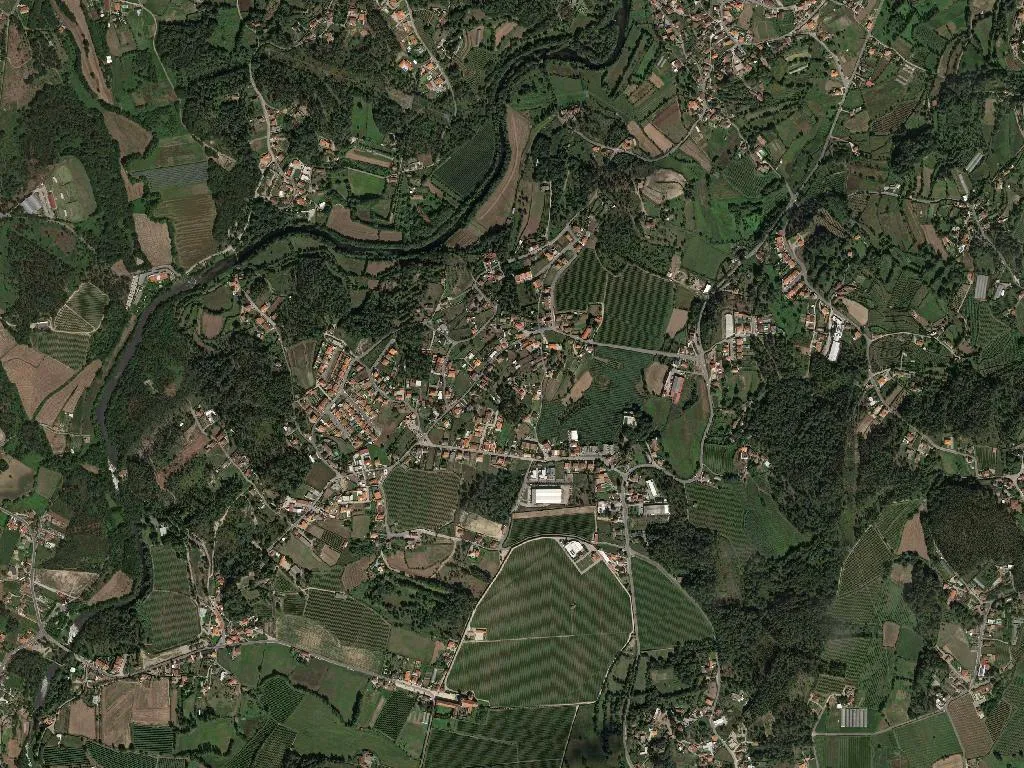
The granite cobbles are already scorching by noon, even in the shade of the single olive tree that anchors the square. Bico spills downhill like a small amphitheatre of low fields where the River Cávado slips behind almond orchards, yet you feel it—the damp breath rising from the water, carrying the scent of silt and reed. Two hundred contoured hectares of hand-stacked stone walls and low-slung vines that look as if they might crawl straight into the current. Eight-hundred-and-sixteen residents, I checked the last census: a handful never left, others returned to nurse ageing parents and re-graft the family vineyard. The village sits only seventy-seven metres above sea level, but its pulse is set by the river—I’ve never seen the end of it.
Between the river and the ridge
Walk up to the primary school and the Serra do Bouro rears up in the west, limestone blanching white under the sun, creaking when the wind swings north. Eastward the Cávado meanders, silent at this point—its presence betrayed only by a narrow file of poplars. Sixteen kilometres to Braga for a courthouse or a cappuccino, fifteen more to the out-of-town cinema, far enough for wheat and maize to be sown by tractor timetable rather than market price, and for Barrosã cattle to wander the marsh meadows in wide-brimmed shade. Loureiro and Alvarinho vines grip the same granite tread as the villagers—taste the place in a glass, the mineral hit is unmistakable.
On paper the parish is “densely populated” at 350 souls per km²; in practice that means 160 children skinning knees in the single primary school and 102 pensioners holding court outside the café after the ten-o’clock mass. In between are the commuters—plasterers, nurses, vineyard hands—who spend weekdays in Braga and come home to prune on Saturday. Yet, unlike neighbouring villages that echo only with shuttered windows, Bico still rings with shouts by late afternoon.
Beef, honey and weekday lunch
Wednesday is market day in Amares, but Friday is when Bico’s butcher receives Barrosã cattle—animals that grazed the high moors scented with gorse and strawberry tree. The meat arrives already luminous: steaks for the grill, cheek and belly for a bacon-laced cabbage stew whose aroma drifts up to the sacristy and forces the priest to crack his window. Honey is a separate sermon—hives parked on granite slabs where the breeze carries river salt. Pour it over warm maize bread and it thickens grandmother-style chamomile tea, the cure-all for winter colds. Inside Zé Manel’s smokehouse, sausages net spider-silk and the winter coat you forgot to dry-clean. Ask nicely and he’ll slice a coin of chouriço for you to taste on the doorstep.
There are four places to stay, none of them hotels—just family houses that outlived their families. Each has a courtyard, mosquito-netting at the windows and a cat that negotiates breakfast. Guests wake to the rooster or, if they’re walking the coastal Camino, to the knowledge that a municipal bunkhouse has been swapped for a proper pillow.
Saint Anthony and the pilgrim tread
On 13 June the village ignites. Morning smells of sardines eaten raw with bread and butter before the grill takes over. By four the procession descends: Saint Anthony’s litter decked in tissue-paper carnations, a brass band with slipping sousaphones, children tailing the parade for cinnamon-dusted biscuits. After dark the square becomes a bonfire of rosemary and lavender; boys dare each other to leap the flames while girls count how many future boyfriends might escape the embers. The scent knots itself into your hair and follows you to bed.
Bico is an official stop on the Portuguese Coastal Camino to Santiago. Pilgrims appear at dusk, rucksacks still freckled with sand from Esposende, feet glistening with nettle balm. They sit on the church bench, refill bottles at the spring, ask if anyone minds a tent behind the cemetery. Tomorrow they face the haul over Santa Marta’s ridge; we hand them a wedge of maize loaf and wish them ultreia.
The parish bell tolls seven—three beats, a breath, three again. Shadows stretch, the vineyard green turns black, and down below the Cávado keeps rolling, permission neither asked nor given. Some say the murmur is the Fervença rapids, others swear it’s simply the air. What matters is to feel it, as if the whole village were one long, slow inhalation of river breath.