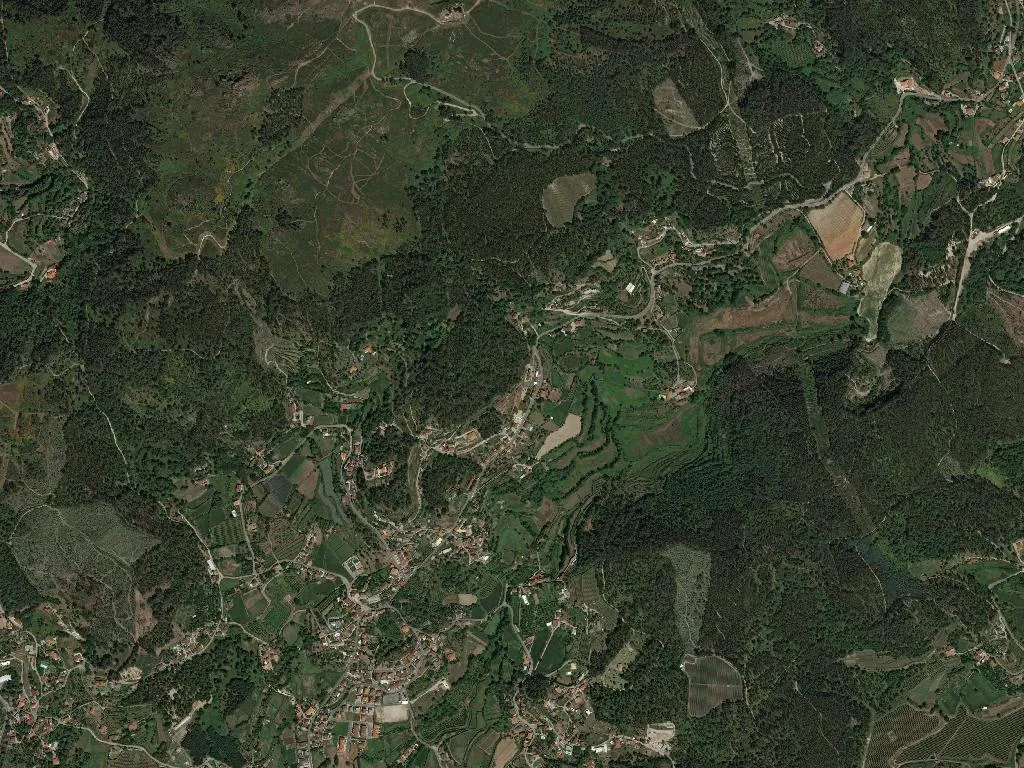
Full article about Sun-Warm Granite & Cowbell Lullabies in Caires
Caires, Amares—granite houses glowing with sunset heat, Barrosã beef slow-cooked in chanfana, nameless streams where village kids learn to swim
Hide article Read full article
A Place Where Stone Still Holds Heat
The granite walls of Caires still pulse with the day’s warmth when the sun folds behind the Corno do Bico. Silence here is not absence but a low, fluorescent hum that can make a city-dweller’s ears ring. Eight hundred and seventy-eight souls are scattered across so many folds of schist and oak that neighbours lose track of each other’s surnames. Houses breathe, yes, but they also lean together like strangers sharing a blanket on the night bus.
The parish swallows a slice of the Serra de Bouro where bedrock claws the ground like broken teeth. Nameless streams sprint down gullies too small for Ordnance Survey ink; boys learn to swim in them because there is no municipal pool for twenty kilometres. Carne Barrosã is not a menu slogan—it is the mahogany cow you can see from the kitchen window, the low moo that lifts you at dawn, the flavour that gathers in the pan when grandmother slow-cooks chanfana on Sunday. The honey carries no tasting-note of heather or chestnut; it tastes instead of the moment the beekeeper realises the hives have gone quiet and the air has become so dense you could slice it with the breadknife.
A Parish Measured by Footfall
The Portuguese Central Way of St James slips through Caires with the discretion of a late-night lodger. Pilgrims pause at Sr Albano’s café where a milky galão arrives with a dish of lupins and the weather forecast stretches into a third cigarette. There are four beds on offer: two in the granddaughter’s room when she flies back from Lyon, one on the sofa the tabby has already claimed. Tractors climb the gradients carrying wet oak; a log drops, and tomorrow a child will pocket it like contraband chocolate for the school stove.
One hundred and eight children sounds ample until you discover that three share the same Year-4 classroom where the teacher heats soup on a camping stove because the radiator never arrived. Santo António’s festivities are pencilled for June, yet they begin in May when the emigrantes roll in with hatchbacks full of salted cod and offspring who answer in French. Rockets frighten the dogs, but they also drown out Dona Amélia hollering for her forty-year-old “baby” to come in for dinner.
The Wine That Refuses to be Green
Forget wine routes, QR-coded cellars, tutored flights with cornbread. There is only Sr António’s vineyard climbing a hillside of such preposterous steepness the bunches seem to grip the sky itself. Vinho Verde is not green at all—its almost-white blades your tonsils and its alcohol lingers like contrition until the following Sunday. It is drunk from water tumblers, offered to the neighbour who lends a hand at harvest, decanted into five-litre garrafões that the Lisbon daughter spirits away “so Dad’s taste doesn’t evaporate”.
The roads are single-track, but it is on the bend of the N103, when Gerês floats into distant view, that your chest suddenly feels too small. No viewpoints, no selfie discs, just the corner where your father let you take the wheel, the wall where your cousin wept the morning the plane left for Luxembourg, the junction where your grandfather met the 7 a.m. coach.
At dusk the smoke you smell is not woodsmoke—it is yesterday’s gorse still smouldering in the next field because the neighbour forgot to douse it. The gate latch screeches with rust inherited like a surname. In Caires no one runs—not for mindfulness, but because knees no longer permit it, because the heart objects, because there is nowhere else that needs you sooner than now.