Full article about Sulphur-scented Caldelas: hot springs & chestnut woods
Roman bridge, pilgrim path, steaming pools—Caldelas, Sequeiros, Paranhos breathe history
Hide article Read full article
The scent of sulphur and chestnut trees
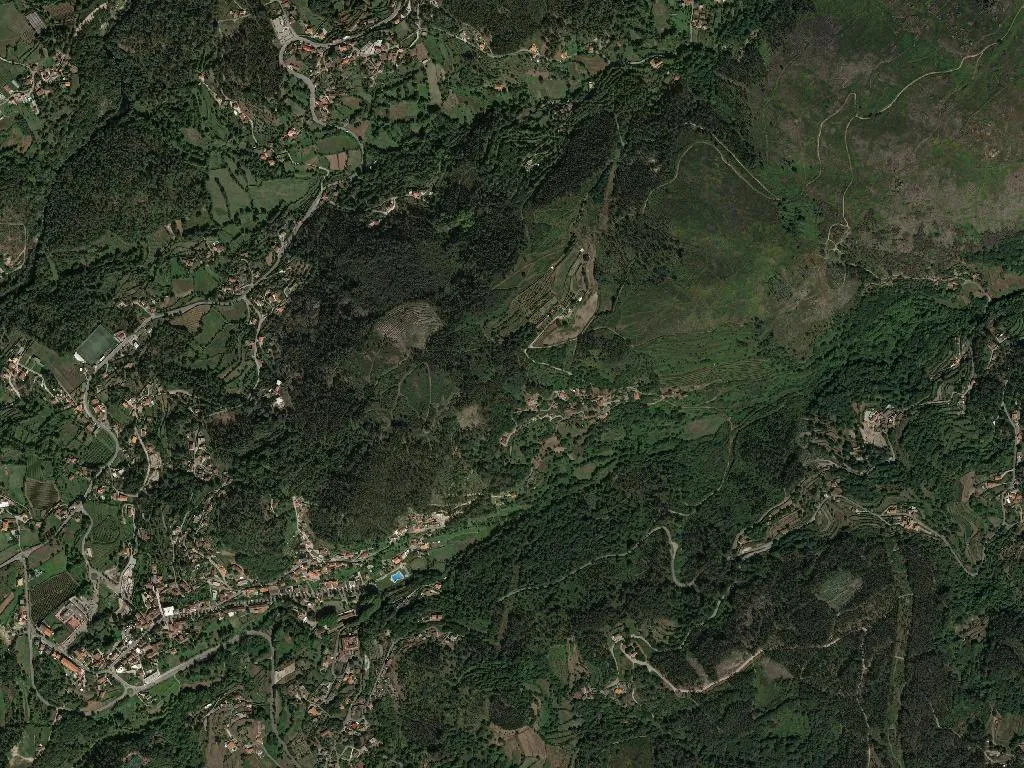
Steam rises from the open-air thermal pools, sketching white arabesques against the wall of green that is the Serra de Bouro. The water arrives at 48°C, freighted with salts and minerals that have drawn the ache from bones since the Legions first pitched camp here. A warm, eggy waft of sulphur drifts uphill, braiding with the sharper perfume of chestnut blossom. Somewhere below, the Rio Homem slips between oak and bracken, its voice kept low by the granite it has polished for millennia. This is the civil parish union of Caldelas, Sequeiros and Paranhos, 1 125 souls spread across 11 square kilometres where every form of water—thermal, river, rain—writes the rules.
Roman footprints under medieval stone
Granite is the local alphabet: houses, field walls, the narrow granaries on stilts that punctuate the maize terraces. Just outside Caldelas village a single-arch bridge crosses the Homem; its worn parapet is twelfth-century, but the abutments are Roman, each block still carrying the tool-marks of a provincial surveyor. The name Caldelas itself is a contraction of the Latin calda—a direct nod to the hot springs that soothed trooper and mule alike. Sequeiros probably remembers the Roman sequi, a north-south trackway that later became the pilgrimage road to Santiago; Paranhos simply means “stony ground”, which any walker who has scraped boots across the Serra de Bouro will confirm.
Pilgrim boots, oak woods and hill-top fog
The Coastal Camino slices through all three settlements, funnelling hikers from Braga towards Ponte de Lima. Staffs click on schist cobbles, rucksacks creak, and on dry days a fine dust rises like talcum from the path. Mid-morning they stop at the twin-aisled chapel of Senhor dos Aflitos in Caldelas, May garlands still draped around its baroque doorway, wax ex-votos shaped like hearts and lungs glinting inside. Further uphill, Sequeiros’ granite tower keeps watch over corn plots; its bell still marks the liturgical hours, though now it also counts the kilometres for passing trekkers. Eastward, the Serra de Bouro Natural Monument offers way-marked loops through autochthonous oak forest; at 257m the ridge is low, yet Atlantic fog frequently parks itself among the trunks, turning every holly bush into a looming bear.
Salt cod, Barrosã beef and Minho honey
Every July the thermal-park lawns become the Festival do Bacalhau—three days devoted to salt cod reinvented as golden patties, crisp fritters or a smoky bean-and-flake stew orchestrated by local chef António Silva. Between bites, grill smoke rises from skewers of Barrosã DOP beef, its fat spitting onto charcoal while clay bowls of papas de sarrabulho—a cinnamon-dark blood porridge—bubble on the side. Dessert is conventual sugar theatre: toucinho-do-céu (literally “bacon from heaven”) enriched with amber Mel das Terras Altas do Minho DOP, a mountain honey so thick it reluctantly leaves the spoon. The wine poured into rough terracotta cups is the same loureiro-based vinho verde that cools seaside cafés in Porto, yet up here it tastes greener, more nettle-sharp, as if the granite has lent it a wet-stone edge.
Granite memory and a bell that still echoes
Corn granaries—espigueiros—stand in small stone regiments, their slated walls set two fingers apart so the Atlantic wind can finish the drying that the sun begins. Farmhouses keep the same proportional rhythm: metre-thick walls, timber balconies, roofs of narrow, dark tile. Population density is under a hundred per square kilometre, and the demographic ledger tilts—385 over-65s to fewer than a hundred under-30—yet the place refuses hush. Thirty-odd guest beds—ranging from a converted casarão manor to self-catering cottages—fill with thermal guests, Camino wayfarers and weekenders from Braga who come for the ridge walks and leave with bottles of honey.
Dawn tomorrow will see the same plume of vapour rise to meet the cool air, and the same bell in Sequeiros will send its three-note report across the valley. A pilgrim tightens a bootlace on the Roman bridge, checks the scallop shell tied to his pack and steps westward. The granite, dew-dark and rough as a cat’s tongue, keeps its own lithic archive: centuries of soles, rain, silence—memory that no amount of warm water can erase.