Full article about Fiscal, Amares: where church bells mark grape-stained time
Granite lanes, Barrosã beef & purple harvests in a 712-soul Minho hamlet
Hide article Read full article
The lane drops between granite walls where moss grows thick in the sun-starved seams. From somewhere below, the bell of Fiscal’s 17th-century parish church strikes noon — three slow peals that dissolve into the Cávado valley. Time here is measured by the vineyard’s pulse: when the first leaf bursts, when corn kernels stiffen on the cob, when the dye from freshly-picked uva tinta stains pickers’ palms an imperial purple.
The Count
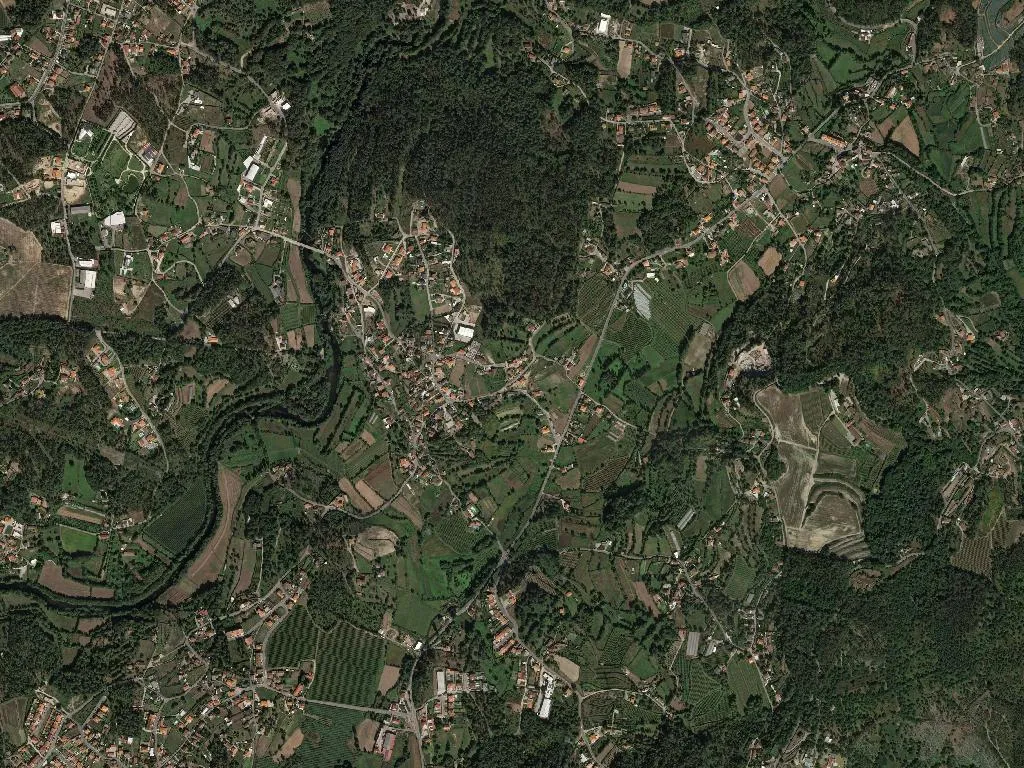
Seven-hundred-and-twelve souls share just under four square kilometres of north-facing slope. The river’s proximity turned this into vineyard country long before the Romans arrived; elderly growers still train their beans up the same granite pergolas the legionaries knew. Walk the lane in high summer and the air carries the hot, almost winey scent of loose dogs and sun-baked schist, laced with the tang of cane-trash fires used to burn vine prunings.
Pilgrims & Parties
The Portuguese Central Way of Saint James skirts the village, though you’d never guess it — no scallop-shell waymarks here, just a concrete path that climbs past smallholdings to the church. Four houses take walkers; two have pools, one keeps hens that inspect every suitcase. In June the Festa de Santo António fills the lane with hatchbacks parked half on the maize ditches and children ricocheting off an inflatable castle towed in from Braga.
Generations
Morning finds the village’s remaining elders on the cement bench beneath the London-plane tree outside the Junta de Freguesia. They smoke, spit discreetly, narrate each passer-by. At 4 p.m. the school bus from Amares disgorges 87 pupils who sprint the only flat street, satchels flapping. The parish roll lists 145 residents over 70; births are catalogued in single figures.
What the Land Gives
In hillside kitchens Barrosã beef — PDO-protected, chestnut-coloured, long-horned — simmers in cast-iron with potatoes and winter kale. No spice rack is troubled; flavour comes from upland grasses the cattle grazed. Honey, dark as mahogany, tastes of flowering chestnut from the adjoining Serra do Gerês, where bees work oak woods that smell of warm loam after rain.
Twilight
The Cávado slips past the lower boundary. Allotments thrive on the river’s black silt; a few growers still open sluice gates by hand when the levada brings irrigation water. Higher up, granite outcrops and the scent shifts from new-mown hay to resin of maritime pine. At day’s end, when oblique sun fires the stone and stored heat begins to release, you hear water murmuring in the stone channels — a reminder that the mountain is above, the river below, and that clocks are what outsiders consult.