Full article about Rendufe: Bells, Benedictines & Bouro Shadows
Granite aqueduct, maize rows, 24 stone houses and a lion-crested monastery echoing with 1706 pipes.
Hide article Read full article
The bells slide downhill like a regular heading for last orders
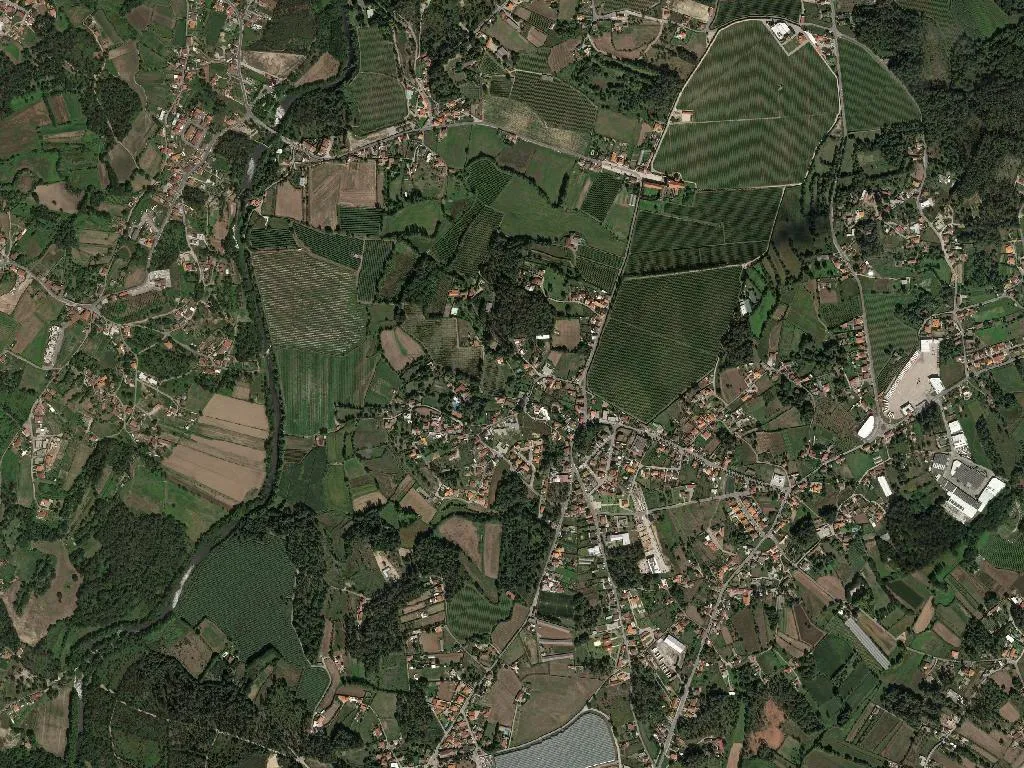
They arrive at the terrace in their own time, threading through umbrella pines that smell of sun-baked resin. Eastwards, the Cávado keeps the parish in check; everything else is smallholding—maize rows, trellised loureiro vines, 24-odd stone houses and a Benedictine monastery that looks older than the concept of hours. At 08:15 the light strikes all 55 arches of the aqueduct; the granite warms like a soup bowl and the village registers that the day has begun.
A monastery that once counted sheep
Rendufe is a contraction of Randulfus, grandfather (or great-grandfather—genealogists differ) of Egas Pais, the 12th-century nobleman who ordered the building of Mosteiro de Santo André. In medieval scriptoria the name slid into “place of the flocks”, and the pastureland obliged: monks kept tally, shepherds paid tithes in wool, and the parish council oversaw nine neighbouring municipalities. The lion on the coat of arms is not heraldic decoration; it is a reminder that this was once the administrative lair of the valley.
The monastery unlocks only between July and September, weekends, 11 a.m., 3 p.m. and 4.30 p.m. You slip in through a side door, nod to the caretaker who has the reliable look of an uncle never absent from Sunday lunch, and step into gilded woodcarving that still throws candlelight onto the walls. The 1706 pipe organ can rattle the votive flames when the bellows are coaxed into life. In the cloister the hush is absolute, the sort generated only where centuries have clocked-in to pray without alarms.
Water, stone and where to disappear
The aqueduct stretches roughly 300 m but refuses tidy beginnings or endings: it starts in Sr Arménio’s vegetable plot, dives into woodland, surfaces again beside a dirt lane. Built to float Cávado water to the convent cistern, it now supplies ghost stories for children and a backdrop for lycra-clad cyclists. The marked trail up the Serra de Bouro begins at its final arch: pine needles carpet the climb, the canopy closes like a green umbrella, and the viewpoint fits the whole Minho into a phone screen—almost.
What you put in your mouth
The parish sits inside the Vinho Verde demarcation; the local white is light, lightly sparkling, prickly enough to make you blink. Drink it under the pergola before lunch. In a soot-blackened pot the cook renders rojões—pork shoulder, sweet paprika, a glass of the same wine, lard brought to a flame-coloured bubble. Cornmeal broa is mandatory for mopping. Feeling indulgent, order Carne Barrosã: meat from the small, long-horned Barrosã cow, its white fat dissolving at body temperature. Finish with Terras Altas honey that will hold a spoon upright and a toucinho-do-céu—literally “bacon from heaven”—that justifies the hyperbole. Winter means caldo verde; summer, kid goat turned on a spit and basted with new olive oil. Rule of thumb: if the dish takes longer than 30 minutes, the kitchen doorway already shelters the cook’s glass of red.
Processions, looms and passing pilgrims
Santo António’s feast falls in June: procession, brass band, red wine drawn from rubber barrels, plastic cups of aguardiente. There is a cake competition, visitors from every parish, fireworks that test the village dogs’ nerves. Three houses still clatter with hand-looms: shuttle beating against beater, linen that smells of harness leather, checked tea towels my grandmother swore would “last two lifetimes”. The Portuguese Coastal Camino cuts through the main street; a few walkers detour to the monastery, most ask only where to refill a bottle and find something solid to eat. Point them to Café do Lúcio, advise them the road tricks the calves, send them off with a “bom caminho” that sounds like family saying goodbye.
When the sun drops behind the aqueduct the air fills with vine sap and woodsmoke. The parish shrinks, cars drift towards the N103, and whoever stays behind hears only the river and Sr António’s dog barking at its own shadow. Rendufe is not where events happen; it is where time is spent well—between one glass of wine and another of water—until the bell tolls again to remind you the day is still today.