Full article about Torre & Portela: bells, pork, vinho verde
In Amares, twin granite hamlets share one cobbled spine and a June feast that swells ten-fold
Hide article Read full article
The Bells Rise with the Woodsmoke
The parish bells ricochet across a valley stitched with vines and oak, announcing the June feast in Torre and Portela. Under the churchyard lime trees, stalls ooze honey the colour of barley sugar, while women in indigo aprons ferry trays of roast pork and men swing demijohns of vinho verde so the light catches the pale wine like liquid quartz. Even at midday the granite houses still exhale last night’s coolness; their eaves drip with scarlet geraniums that have never heard the word “geranium” but know exactly when the sun crosses the ridge.
Two Villages, One Cobbled Spine
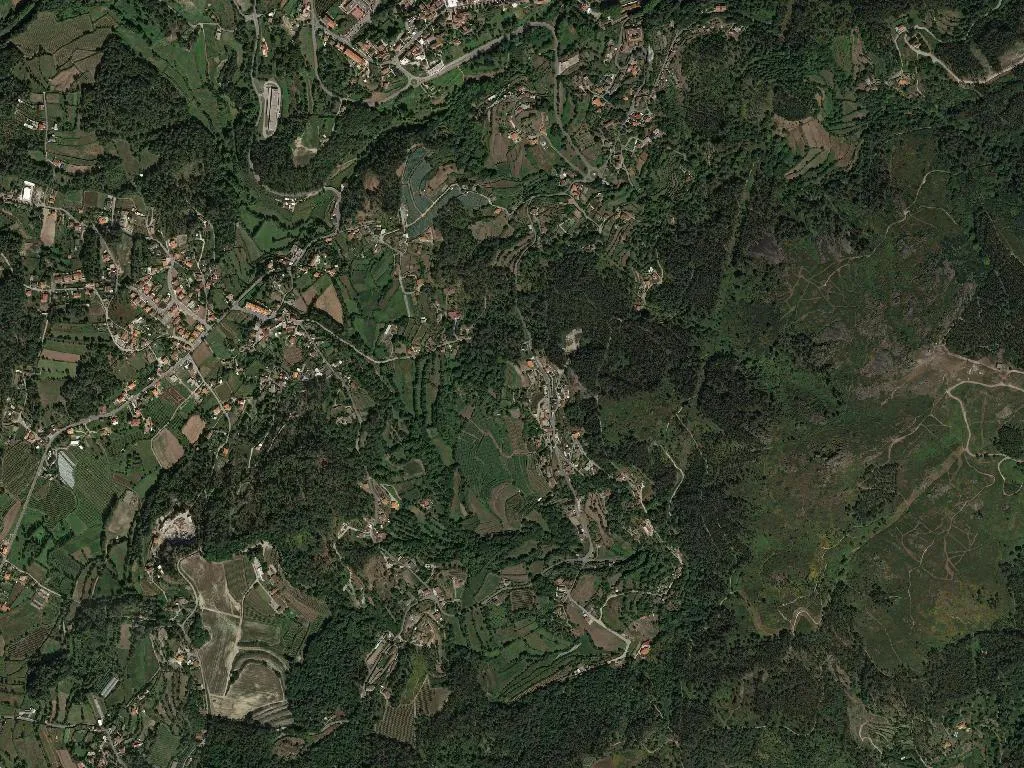
An administrative merger in 2013 merely rubber-stamped what geography had long dictated: two settlements a three-minute walk apart, stitched by a single stone path that climbs, dips, and climbs again between loose-schist walls. Torre—its name a reminder of a watch-tower long gone—perches a metre or two above Portela, itself once nothing more than a mountain gap. Each keeps its own chapel, its own square, its own row of single-storey cottages where whitewash is applied so freshly every spring that the walls appear to glow against the slate. At 158 m the parish sits on a shelf halfway between the Cávado river plain and the dark wall of Serra do Bouro, visible to the east like a green fortress.
Santo António and the Village Pulse
On the night of 12 June the community swells to ten times its census figure. Processions shoulder the saint through lanes barely two arm-spans wide, the brass band squeezing between doorways, the drumbeat echoing off granite like a second heart. This is not folklore for hire; it is the annual audit of a place whose electoral roll reads 563. Emigrants fly home from Paris and Zürich, toddlers dart between aunts they last saw in church at Easter, and every household contributes a terracotta pot of caldo verde, its olive-oil halos catching the flood-lights strung from the plane trees. Plates arrive piled with rojões—cubes of Carne Barrosã DOP, the Minho’s high-pasture beef—seared over vine-prunings until the edges blacken like charcoal silk.
Wine, Honey and Granite Silence
The Vinho Verde demarcation runs straight through these slopes. Vines are trained low on wire or weather-darkened stakes so the Atlantic air can slide underneath, delivering the snap of acidity that makes a second glass inevitable. In the meadows, hives produce Mel das Terras Altas do Minho DOP, an almost mahogany honey whose flavour shifts with the blossom calendar—heather in April, wild lavender in July, chestnut in September. Neither product shouts; both taste of altitude and rainfall, of soil that is mostly granite crumbs.
The Serra Holds Its Breath
East of the lane the Serra de Bouro Natural Monument rises in a sudden geological shrug. Trails leave the cork-oak shade and climb through moss-covered outcrops where the only sound is the soft knock of hiking poles and the drip of a spring you never quite locate. At 600 m the air thins and the Cávado valley unrolls below like a silver ribbon dropped from the hills. Locals insist that if you sit still long enough you will hear the granite breathe.
Footsteps to Santiago
The Coastal Portuguese Way of St James crosses the parish in a 24-hour procession of blistered boots. Pilgrims refill bottles at the granite fountain by Torre’s chapel, check the scallop shell way-mark daubed in cadmium yellow, and march on towards the Spanish border three days away. Their passage is older than the Camino’s modern revival: medieval documents record the same right of way, when the valley was a corridor between the Duchy of Bragança and the cathedral city of Braga. Some evenings the only exchange is a nod and the creak of a rucksack buckle, yet the villages feel the temporary inflation of the world inside their borders.
Smoke columns rise perfectly vertical at dusk, thin incense against the darkening ridge. Inside, a bowl of bean broth steams on red-checked oilcloth, a quarter-loaf of broa corn bread waits to be torn, and the wine in the tumbler is sharp enough to make the tongue tingle. Outside, the bell-ringer pulls once more for the eight-o’clock Ave, measuring time the way these fields always have: by the tilt of the sun, the weight of stone, and the slow return of whoever left.