Full article about União das freguesias de Vilela, Seramil e Paredes Secas
Morning bread from a 1938 stone oven, 16th-century gravestones warm in the sun, Barrosã beef slow-ag
Hide article Read full article
Granite that still bites the frost
At 6.15 a.m. the only light on Rua da Igreja is the single bulb above Sr. Joaquim’s door. He lifts the shutters and the cold rises from the cobbles like smoke. Inside, the coffee machine coughs once and settles to its rhythm; outside, the air carries the resinous snap of oak that was felled last January on the Serra de Bouro, dried until August, and is now feeding the wood-fired oven where Dona Albertina will slide in loaves of wheat-and-maize bread, the same ratio her family has used since the oven was built from their own fieldstone in 1938.
Three names, one parish boundary
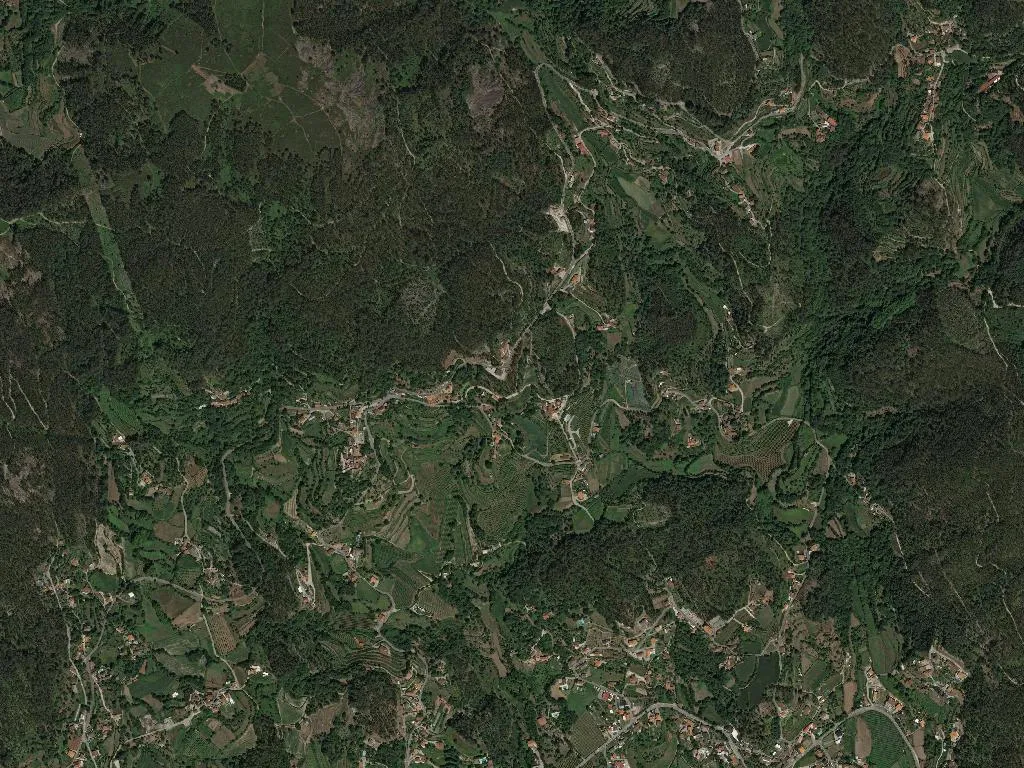
The 2013 merger banded Vilela, Seramil and Paredes Secas into a single administrative parcel of 860 ha, but no bureaucratic ink has ever persuaded a Seramil native to say anything other than “I’m going down to Vilela” when they cross the old divide. The name Vilela first surfaces in Afonso III’s 1258 Inquirição – “villa… que uocant Uilela” – with a charter signed by Braga’s archbishop, Dom Martinho Geraldes. In the chapel yard at Paredes Secas two 16th-century gravestones still lie half-sunk in the turf: a Latin inscription fading beneath the Cross of Christ, the stone warm only where the sun touches it.
The Portuguese Coastal Way to Santiago peels off the EN 308 here, passing the green-shuttered Casa do Almocreve (no. 47, Vilela), now a three-room guest-house. Pilgrims pause at the 1902 cast-iron fountain commissioned after cholera claimed fourteen parishioners; the water is so cold it makes the metal cup sing.
A taste of the high ground
Sunday lunch is Barrosã beef from Quim Barroso’s herd in Rebordões. The oxen graze for twenty-four months, hang for fourteen days in Amares’ municipal chiller, then travel the last kilometres to Vilela in a 1992 Citroën C15 that refuses to retire. The cooperative at Paredes Secas produces a honey DOP from forty-two hives that yield, on average, 1.8 tonnes a year. April brings gorse, May brings broom, June brings chestnut blossom; the result is a caramel note and a pH of 3.9.
Loureiro grapes for the local vinho verde were planted in 1973 on granite-schist terraces 280 m above sea level by Mário Seixas’ grandfather. Hand-picked on 15 September, the wine is bottled by March: 11 % abv, total acidity 7.2 g/dm³. Sra. Hermínia pours it at 8 °C in her one-room tavern – open Saturdays only and only if you ring first (962 345 678).
Between stone and moss
The PR 3 footpath “Serra de Bouro – Vilela” measures 7.4 km gate-to-gate, climbs 320 m and demands a leisurely 2 h 30 min. At km 3.2 you meet the levada that once fed three water-mills; only Sr. Agostinho’s still grinds maize on demand – €5 a sack. The spring emerges at 580 m from a granite fracture, holding a constant 12 °C. Local winemakers use it to crash-cool their whites: “Two hours and the heat is out of the grapes,” Mário explains.
Four registered holiday cottages (AL 45831, 47219, 49802, 50166) share a maximum of ten beds apiece; low-season rates hover around €70 a night, breakfast anchored by carqueja bread and Serra da Cabreira goat’s cheese delivered by Adelino, who milks 120 Serrana goats.
When the bell of S. Tiago strikes seven – not six; the mechanism slipped in 1952 – the note drifts for twenty-two seconds before dissolving into the ridge. From the crest of Bouro you can still pick out the television mast at Caldelas 18 km away, close enough to remind you that these stones keep their own version of time.