Full article about Adães: Where the Church Bell Counts Heartbeats
Vines, drizzle and a café that unlocks at seven; pilgrims pass but silence lingers.
Hide article Read full article
The bell that never hurries
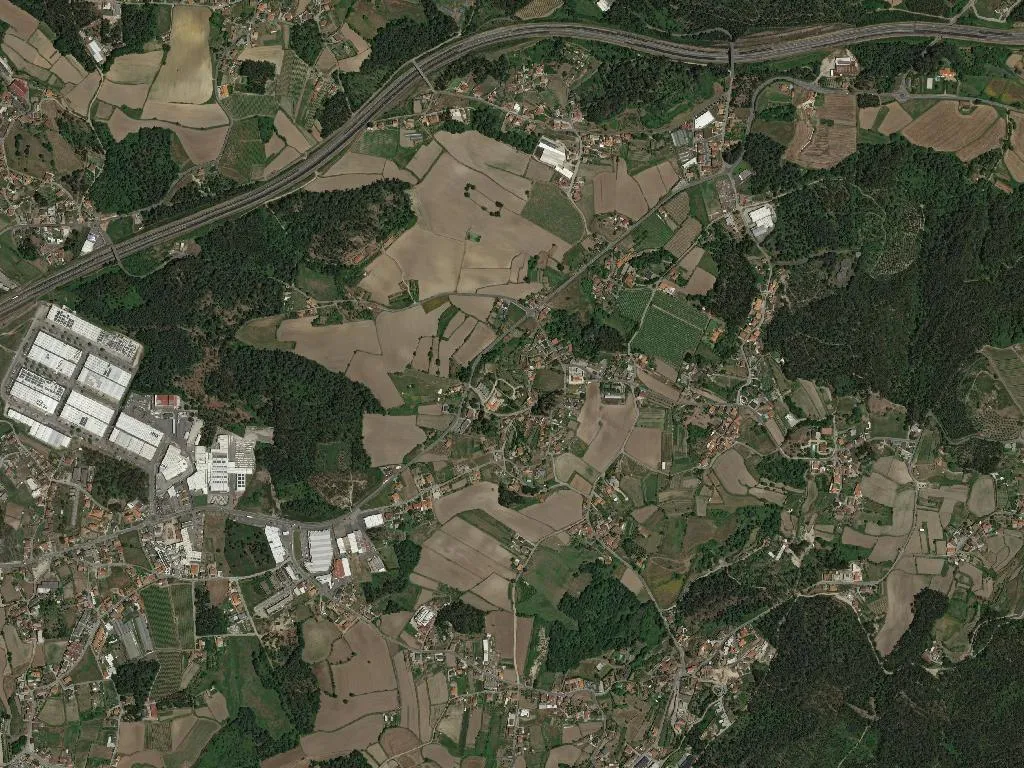
The church bell tolls as if time were a loose garment. In Adães, 80 m above sea level yet still high enough to catch the Atlantic breeze, the north light ricochets off whitewashed walls so sharply you raise a hand like a visor. Granite parapets answer back with that gun-metal blue you only see after a minha chuvinha – the fine drizzle that dampens laundry on the line and bothers no one.
Seven hundred and fifty-five souls. You can meet half of them in Zé’s café at seven sharp, when he unbolts the door and the bread is still sighing from the oven. The rest appear in procession on 3 May for the Festa das Cruzes, or queue at the butcher’s on Friday mornings. This is Vinho Verde country: vines march across the terraces in zig-zag stitches, lashed to chestnut posts that look like the blunt teeth of an old hand-saw. In May the smell of newly-turned earth collides with fertiliser and the first vine flowers – the olfactory equivalent of a chilled glass of loureiro.
What the Camino takes
The Portuguese Central Route of the Camino de Santiago cuts straight through the village, but it doesn’t break the hush. Pilgrims shuffle past, backpacks swaying, eyes fixed on GPS dots, asking if they’re still on course for Ponte de Lima. We nod, point them towards Zé’s for the cleanest loo for 20 km, and send them on their way. No one tries to sell them a fridge magnet. The only souvenir is silence – it rings in your ears for days.
Our Glastonbury is the Festa das Cruzes. The bandstand fills with lifers: octogenarians who have occupied the same bench since the Carnation Revolution, grandchildren up from Braga for the weekend, émigrés who still keep a folding chair in their aunt’s cellar. There are roast-chestnut stalls, a bean-and-pork raffle, and on Saturday night the DJ segues from Quim Barreiros to Despacito without apology. When the last rocket fizzles out the village feels smaller – until someone remembers they’ve booked a wedding for the same weekend and the sky lights up again.
What the stone keeps
There are no restaurants. What there is, is Lameiro’s wood-fired oven, still lit every feast-day Sunday. You arrive with your kid on a tray, pay Pedro €5 to slide it into the bread, and collect it three hours later: skin blistered, juices running, ready to be torn apart on a trestle table. The wine arrives in a plastic cup recycled from last year’s churrasco – sharp enough to slice enamel, like drinking a lemon that regrets not being born a grape.
Houses hide behind walls taller than my grandfather. The earthen lanes are paved with whatever stone the fields spat out: pocket-money savings laid down over decades. In the back gardens, Galician kale stands guard like the childhood minders of old – tall, green, ready to be shredded into turnip broth when the first flu rolls in from Braga.
What time doesn’t take
Afternoons drain away downhill, sun sliding off the slope like a regular into a tavern. Yellow bulbs click on one by one, as if the village were an Advent calendar in slow motion. Woodsmoke settles, Sr Armando’s dog barks at its own shadow, and Dona Amélia’s gate still squeaks – unoiled since the troika years.
That’s it. No selfie-board viewpoints, no artisan boutiques. Just the silence that follows the nine-o’clock bell – a silence so complete your neighbour’s cough arrives like a headline. And the certainty that tomorrow, when the bell strikes seven, Zé will lift the latch again, same bread, same bica, same remark about the forecast. Adães does not change; it waits. Sometimes that is exactly what we need.