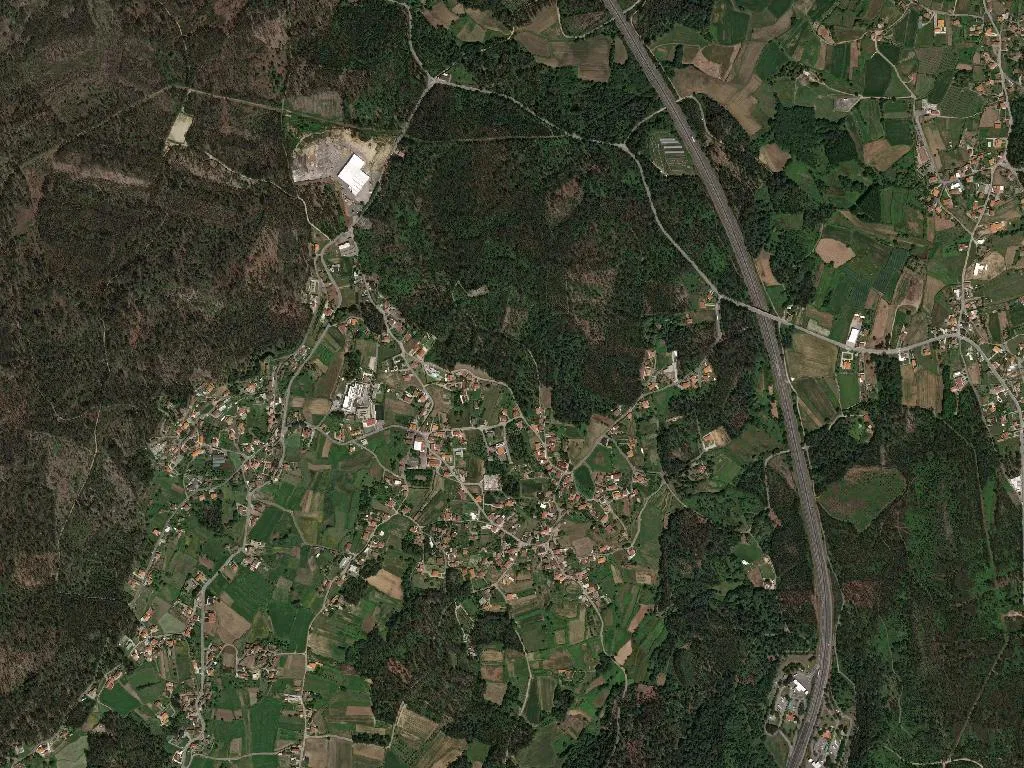
Full article about União das freguesias de Alheira e Igreja Nova
Oak-smoked alheiras swing above schist hearths while baroque gilt flickers in Alheira’s 17th-century
Hide article Read full article
Oak smoke and sausage season
The first threads of smoke leave the thatched hut as slowly as held breath, carrying the scent of smouldering oak and the occasional hiss of pork fat hitting embers. Twenty, perhaps thirty, alheiras swing from the rafters—enough for the whole family, and the neighbours if they ask nicely. They were strung up in November and left to flirt with the January wind that barrels down from Monte do Viso. By the time the skins turn the colour of biscuit, the filling inside will have firmed to a perfect sliceable texture. At Dona Aurora’s house, hard against the schist wall her husband mortared stone-by-stone over fifty winters, the sausages become the parish’s edible calendar: what remains of last year’s pig, stretched to feed the next.
Granite, carving and Sunday devotion
The mother church of Alheira unlocks at 7:30 a.m. on the mornings Father António isn’t called to Braga’s hospital to anoint the sick. December rain has darkened the granite to charcoal, but when the low sun finally slips through the side windows the gilded baroque reredos ignites like foil. Eduardo—87, spine still ram-rod straight—claims the front-right pew every Sunday in the same charcoal coat his wife brushed clean in 1978. Outside, the Sousa coat of arms is almost illegible on the 17th-century pillory, yet Idalina can still recite the lineage cut short by the 1834 dissolution of the monasteries.
Stone calvaries punctuate the lanes where processions halt for the priest to bless fields and vines. The one at Santo Ovídio, halfway to Igreja Nova, has a polished slab that doubles as a summer picnic bench for children cracking peanut shells. The Portuguese Coastal Camino skirts the parish, but walkers are thin on the ground—perhaps one a week in high season, asking first for water, second for somewhere to eat.
May garlands and moonlit bifanas
Festas das Cruzes begins promptly after lunch on 1 May. Women fan out across the scrub with pruning knives, returning with armfuls of yellow-flowered gorse still sticky with coconut-scented resin. Twisted into arches and nailed above doorways, the blooms perfume the night breeze. By the time the square in Igreja Nova is cordoned off for the evening arraial, trestle tables from the agricultural co-op are loaded with bifanas (garlic-marinated pork in soft rolls) and the eternal debate: which boy will buy the first round for which girl. The traditional desafio singing duels have fallen silent—only the oldest remember Zé Manel’s falsetto that once reduced the entire village to laughter.
Plate of smoke
In Lopes’ tasca you smell the alheira before you see it. Aurora’s sausages arrive by bicycle, ten euros a kilo, and leave the kitchen at fifteen, split lengthways and still steaming. Tomatoe-tinged rice—cooked at speed by Lopes’ son between beer pulls—soaks up the smoky paprika juices. The cornmeal loaf is freighted in daily from Barcelos, but the glass of Loureiro-Vinho Verde comes from a farmer who swaps five-litre demijohns for two hours of gossip and espresso, lamenting this year’s frost-bitten yields.
Between springs and levadas
The Rota das Fontes sets out from Dona Rosa’s spring—an iron pipe that gushes even in August drought. Allow two hours for the five-kilometre loop if you pause at Fonte da Moura, where local legend insists a woman waited in vain for a forbidden lover. Granite setts are loose after winter rain; galoshes recommended. You’ll pass Joaquim’s abandoned chestnut terraces, planted sixty years ago and now yielding more moss than marron.
As dusk settles, oak smoke rises again above the thatch and the church bell strikes twice for the evening Ave. On the tongue: the lingering paprika warmth of alheira. In the lane: footfalls on stone so familiar they could find their way home in the dark.