Full article about Arcozelo: Where Minho Fields Kiss the Sky at 15 m
Flat coastal parish in Barcelos thrums with 12,000 neighbours, floral crosses and vines
Hide article Read full article
Fifteen metres above the sea
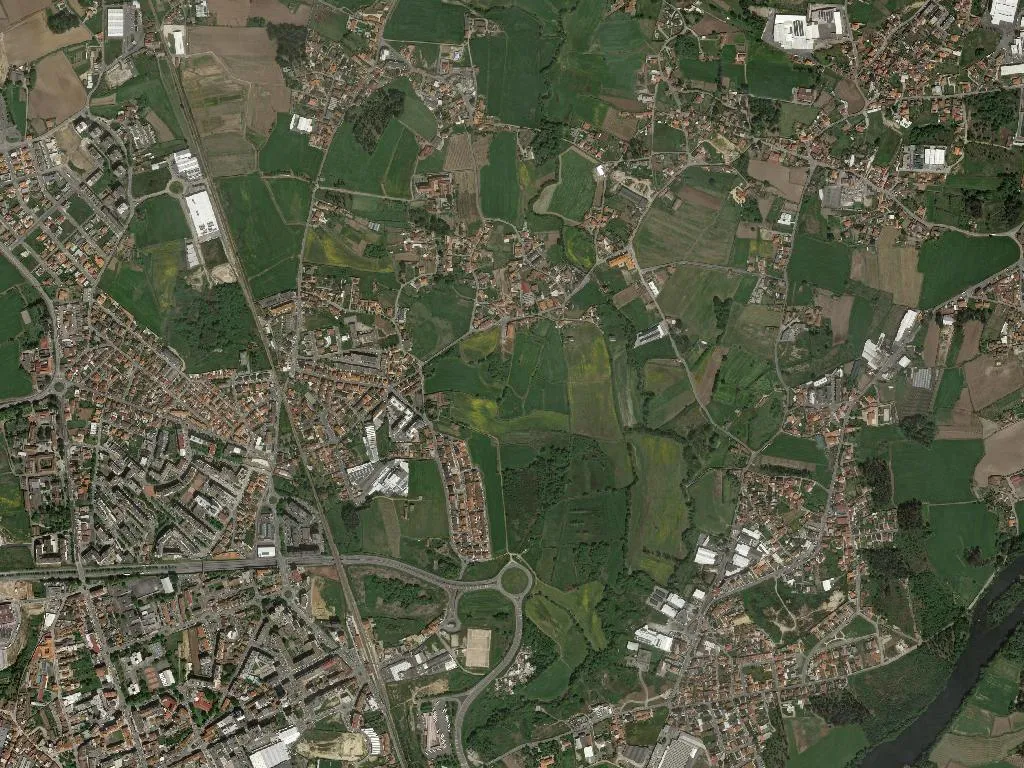
The first thing you register is the flatness. Arcozelo sits just fifteen metres above sea level – little more than the height of a Georgian townhouse – and the horizon unrolls like a pressed tablecloth, uninterrupted by hill or high-rise. Dawn air arrives cool and mineral, freighted with the vegetal density that only the Minho produces: green on green, vines trained over iron wire, low granite walls where moss drafts imaginary cartographies. This is the south-eastern corner of Barcelos municipality, 35 km inland from Porto’s airport, and the land does not invite ascent; it invites slow walking, soles almost level with the water that slides invisibly beneath the fields.
Twelve thousand souls on a green tea-towel
Crammed into 343 hectares, 12,824 inhabitants give Arcozelo a population density higher than central Oxford. Expect open countryside and you’ll be disoriented: houses shoulder-to-shoulder along lanes just wide enough for a tractor and a tabby cat, vegetable plots leaning into neighbourly vineyards, the agricultural and the domestic separated only by a half-open iron gate. The parish rolls out in a continuous, low-rise fabric – red tile, white render, the occasional azulejo – that feels more lived-in suburb than village. On weekday afternoons you hear both the scuff of slippers on pavement and the high-pitched spill of children from the primary school on Rua de São João. Two rhythms, neither dominant.
Crosses raised against the May sky
Arcozelo’s annual Festa das Cruzes (Festival of the Crosses) turns the streets into a temporary botanical garden. From 1 May, floral crosses – carnations, marigolds, glossy arum leaves – appear overnight on façades, at crossroads, even bolted to telegraph poles. The scent of cut stems mingles with smoke from temporary grills sardining whole sea-bass, while the local brass band rehearses Sousa marches at 09:00 and rockets detonate against windowpanes by noon. For outsiders the impact is visual – colour detonating against white-wash – but residents listen for the sonic timetable: the church bell that signals the procession, the collective murmur when the parish priest blesses each cross, the exact moment the band strikes up after midnight mass.
Yellow arrows on the asphalt
A hand-painted yellow arrow on a garden wall, another on a lamp-post, a third at dog-height on a corner house: the Central Portuguese Route of the Camino de Santiago cuts straight through Arcozelo. Pilgrims relish the relief – no calf-burning gradients, just the metronome of boots on warm tarmac bordered by vines. Four private homes advertise beds for the night; €18 buys a shower, line-dried sheets, and coffee served in a china cup at dawn. Before first light the roosters start up – impossible to ignore at this latitude – and walkers repack blistered feet, glad of a stage that stays flat all the way to Ponte de Lima.
Sea-level Vinho Verde
Vinho Verde vineyards rarely sit this low. In Arcozelo the vines are trellised overhead in pergolas, forming green tunnels that drop the summer temperature by three degrees. At barely fifteen metres above the Atlantic, the humidity is almost excessive – everything sprouts, including the tiny indigenous borraçal that gives local whites their spritz. The resulting wine is sharp enough to slit oysters: lemon-peel aromatics, a faint fizz that demands caldo verde thick with shredded kale, or cornbread torn by hand to mop up the last drops.
The matter of the everyday
There is no postcard monument, no miradouro to justify a detour. Arcozelo offers instead the texture of the habitual: grocery shops that unlock at 07:00, coffee drunk at the counter with one elbow on cold marble, the cumulative soundtrack of gates closing, kettles whistling, bicycles too big for their riders. Density produces its own acoustics – not urban roar, not rural hush, but a mid-register layer of voices behind half-shut shutters, water running into a sink somewhere inside a house, a single dog bark that decides not to continue. Walk through at 19:00 when the sun drags vine shadows across the tarmac and you carry away not a grand vista but a sound: the slow creak of a metal gate someone closes, deliberately, just before supper.