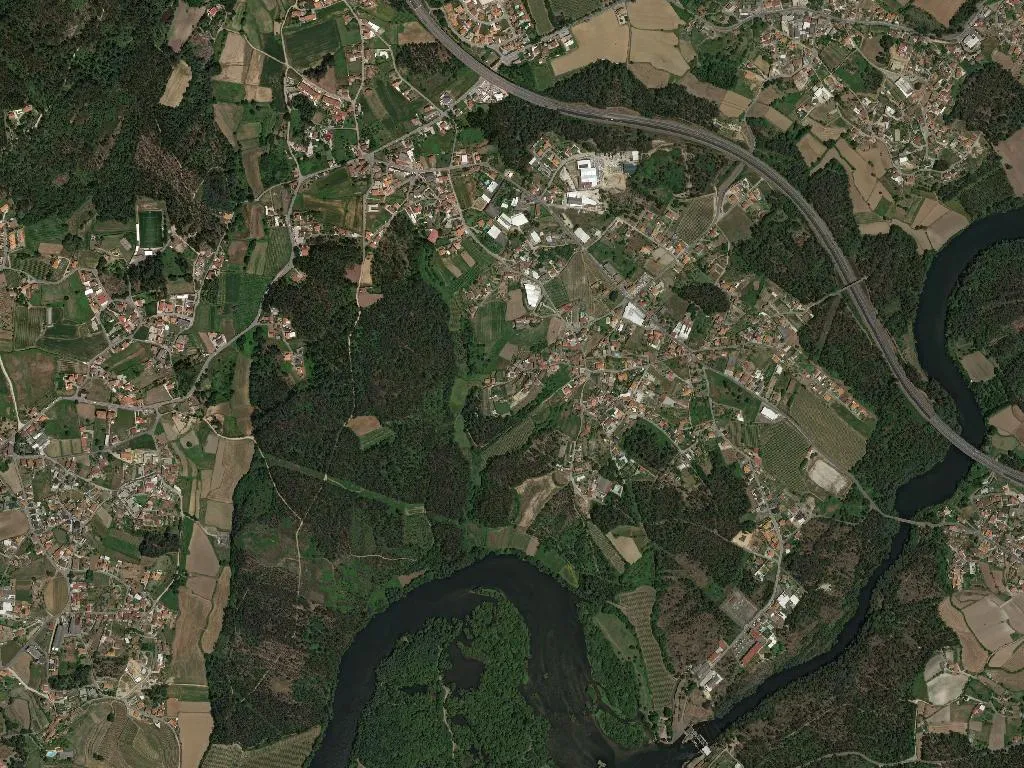
Full article about Areias: Where Pilgrim Boots Still Echo in Barcelos
Areias, Barcelos—granite slabs polished by pilgrims, baroque church glinting with silver vows, oak-scented lanes.
Hide article Read full article
The first light catches the varnished wood of the Manueline cross and still feels cool, as though the dawn hasn’t quite evaporated. Below the churchyard the River Cávado slips between willow screens, audible but unseen, while the baroque bell tolls seven times—slow, deliberate, the sound of time being counted out in bronze. Centuries of pilgrim boots have polished the granite slabs to a damp sheen; a woman in the lane behind swings open the door of her bread oven and the morning air fills with oak smoke and rising dough.
Following the foot-weary road
Areias has appeared in ledgers since 1417, when the Santiago brotherhood recorded it as a staging post on the Portuguese Central Way. A half-real “tavern tax” was levied on everyone who crossed the Cávado by rope-and-timber ferry—an oscillating contraption that pilgrims compared to riding a drunk hammock. The name itself comes from the Latin areia, a nod to the sandbanks the Romans dredged for building stone, carted west to Viana do Castelo to face city walls.
Today walkers still pass through, though they now use the asphalt of the EN205. Just off the old royal road the Paço de Areias stands its ground: an 18th-century manor carved with the original owners’ coat of arms and a granite staircase that staggers down to a box-hedged garden in slow surrender.
Inside the 1563 parish church—refashioned a century later in full baroque swing—Solomonic columns twist towards a gilt high altar from Braga’s carving school. Forty-seven silver ex-votos and three of gold hang in neat formation, glinting whenever the tall windows let slip a shaft of sun. Scattered across the 253-hectare parish, tiny field chapels dedicated to St Blaise, St Amaro and St Lucy punctuate dirt tracks that thread between maize rows and pergola vines.
Bread crosses and straw effigies
Palm Sunday brings the Festa das Cruzes. After the procession the priest hands out palm-sized loaves pressed from wooden moulds—each a “bread cross” to be kept through the year against thunder and the evil eye. In May the Romaria de Nossa Senhora da Saúde packs Barcelos to the chapel of Santa Luzia, a five-kilometre hike that ends with clay bowls of steaming caldo verde and concertinas tuning up in the dusk.
Carnaval bows out on Domingo Gordo with the Entrudo’s funeral: a straw man dragged by teenagers to the river beach and burned amid bangers, the air sharp with gunpowder and scorched cane.
Wood-oven cod and tortozitos
Order lunch when the baker’s fire is still roaring: salt cod blistering in the wood oven, hacked potatoes “à murro” whose skins crack under the knuckles, everything irrigated with spritzy vinho verde from backyard trellises. The parish sweet tooth runs to tortozitos—flaky crescents of egg-yolk jam and cinnamon—and sugar-cavacas that snap like meringue when dunked. During the grape harvest the village still runs a copper pot-still; the first aguardiente emerges at mid-morning, tasted in medicinal thimbles against the churchyard wall.
Between vines and water
The signposted “Areias entre Vinhas e Rio” loop wriggles for three kilometres along schist walls, citrus orchards and moss-lined levadas where dragonflies hover like turquoise paperclips. At the river beach a timber pontoon juts into olive-green water just translucent enough to watch fish tilt in the current. On the first Sunday of every month the church square becomes an open-air craft market: linen towels thumped on wooden looms, fresh cheese knotted in cloth, heather honey decanted into old whisky bottles, and strings of scarlet chilli swaying like bunting.
Dusk settles on the earthen malha pitch. The iron disc spins, thuds, raises ochre dust; barefoot men laugh at a near miss while the Cávado catches the last light and a thin plume of acacia smoke climbs straight into the still air.