Full article about Bronze bells over sixth-century bones in São Pedro Fins
Morning mist lifts above Roman-tiled graves in Campo e Tamel’s loureiro vineyards
Hide article Read full article
The Bell’s Echo in a Misty Morning
The bells of São Pedro Fins roll across the valley one low-mist morning, their bronze notes flattening against corn stubble and trellised loureiro vines. Beneath the churchyard’s ankle-high grass, archaeologists recently prised open a secret: sixty early-medieval graves, some dating to the sixth century, their stone linings recycled from Roman roof-tiles. Four hundred hectares of smallholding and single-storey houses now sit atop a palimpsest of lives that began well before Portugal was a scribble on parchment.
Layers Underfoot
The discovery was made while the parish council upgraded the church apron, yet it feels less like an excavation than an unpeeling. Each skeleton lay oriented east–west, hands folded over pelvises, still obedient to late-Roman custom. Above them, the present parish church—first documented in 1098—was literally built on its own predecessors, the altar squarely over the cemetery’s core. The message is blunt: consecrated ground is a scarce commodity; you plant your dead in the same furrow as your ancestors and get on with sowing.
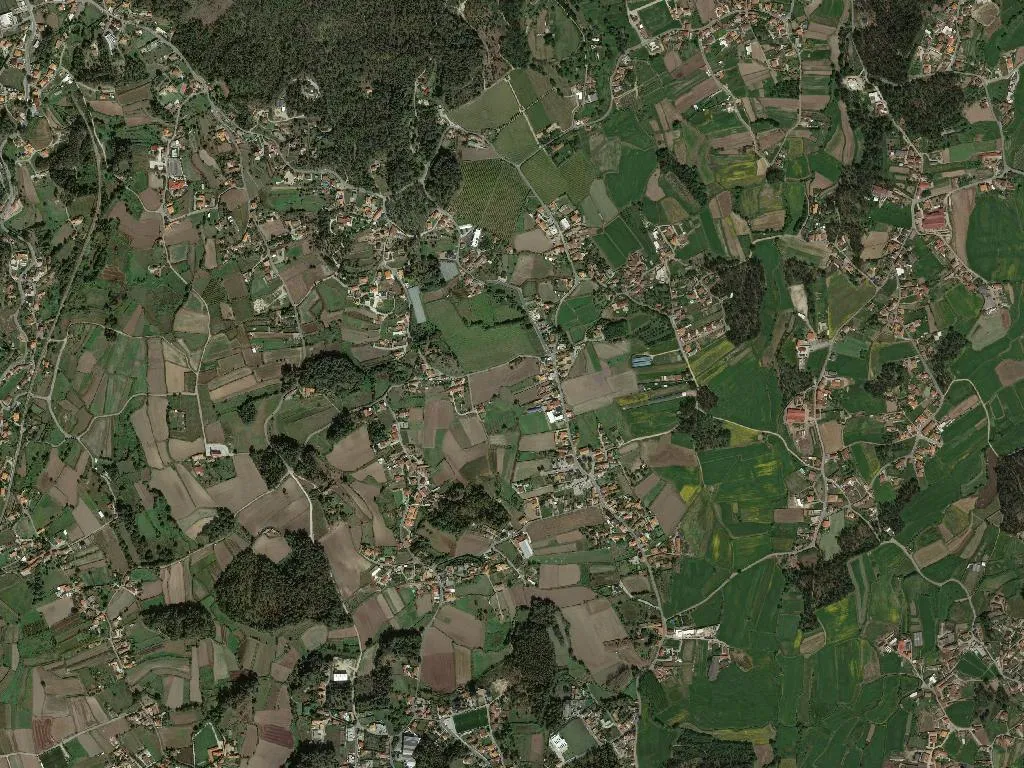
The toponymy hints at even older tenancy. Tamel derives from a pre-Roman term for damp valley floor; Campo simply means open tilled land. Stand on the escarpment above the Cavado at midsummer and the etymology is visible: rectangles of maize flicker like green pennants, while the Minho’s signature low-trained vines form a corduroy that stretches to the horizon.
Between Field and Market Town
Population density here is 314 people per square kilometre—higher than the national average—yet the place never feels crowded. Most of the 1,509 residents commute ten minutes to Barcelos for work or secondary school, then retreat to granite cottages where the loudest noise is often a petrol lawnmower. Seniors outnumber under-25s two to one; by late afternoon the stone benches outside the minimercado become a parliament of flat caps and fleece, debating cloud cover and the price of broa.
The Festa das Cruzes still closes the lanes on 3 May—procession, brass band, fireworks that rattle the corrugated roofs—but the liturgy is held together by memory, not marketing. Waymarkers for the Central Portuguese Route of the Camino thread through the maize plots; two new guest-houses register the occasional German blister or Korean pilgrim who has traded the coastal path for inland vineyards.
What the Soil Gives the Pot
No signature dish carries the parish’s name on a menu in Braga or Porto. What you eat here is the Minho default, executed with backyard precision: caldo verde thick enough to hold a spoon upright, grilled sea-bass from the Cavado, pork shank braised with bay and served in the same copper pot your grandmother used. The wine is Vinho Verde from the surrounding plots—loureiro for floral lift, arinto for a blade of acidity—bottled unfiltered so a faint haze catches the late light like ground glass.
At dusk the fog lifts just enough to silver the church tower. Roman tile, Visigoth fibula, granite baptismal font, freshly limewashed wall: every stratum gleams for a moment, then the mist settles again. The living cross the yard, unaware they are treading the same worn keystones that once roofed a villa, later cushioned the dead, now echo underfoot—an unbroken tread from empire to parish council, all of it only 67 metres above sea level yet layered like a tell in the Levant.