Full article about Carreira e Fonte Coberta: Barcelos’ echoing granite parish
Whitewashed lanes, rocket-banged crosses and vines trained above kale plots in northern Portugal
Hide article Read full article
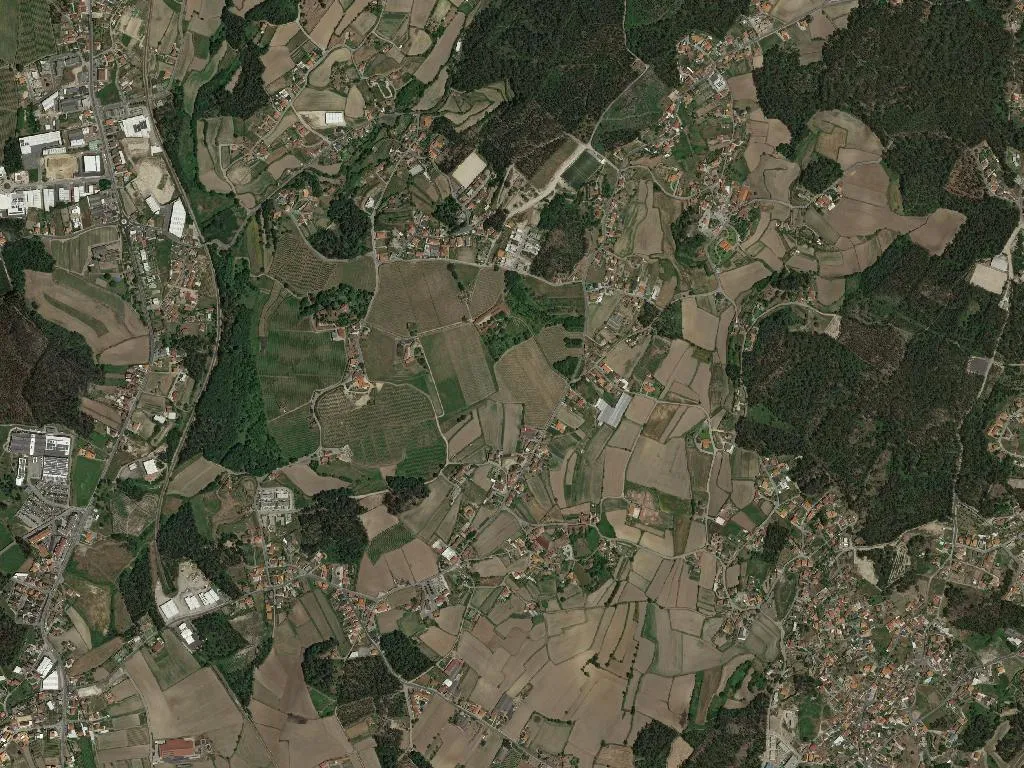
Sunlight ricochets off whitewashed granite and a fig tree stipples the packed earth with shifting shadow. A single bell, struck without haste, folds the noon hour into the valley: this is Carreira e Fonte Coberta, a 528-hectare parish union stitched together in 2013 on the low, Atlantic-lapped plateau of Barcelos, 35 km north of Porto’s airport.
Two parishes, one ledger of time
Carreira keeps its thirteenth-century charter close to the chest. The parish church of São Pedro is built for endurance rather than display—schist walls the colour of wet slate, a doorway you stoop to enter, interior cool enough to store citrus. Fonte Coberta, a kilometre south-east, took its name from the springs that still seep through meadow and allotment, feeding small plots of kale and mint. Its chapel, dedicated to the Syrian martyr São Romão, is a granite box the size of a London studio; ox-eye daisies push through the joints.
Between them live 2,022 souls at a density that would make a Norfolk village feel spacious. Two hundred and fifty-one are under 14; three hundred and seventy-nine have passed 65. Children still borrow eggs from neighbours whose baptismal entry their great-grandparents signed.
Crosses and gunpowder
The Festa das Cruzes anchors May. On the eve, women fold 2,000 tissue-paper blooms over wire; at dawn the men lash the three-metre cross to shoulder poles. By ten the procession is moving, priest, brass band and a retinue slow enough for gossip. Rockets bang off the valley sides, the sound ricocheting like pheasant shot. Lunch is democratic: trestles behind the church, chouriça hissing on makeshift grills, cornmeal broa torn open while still hot, and vinho verde poured from aluminium jugs into handleless bowls. No tickets, no programme, just an expectation you’ll bring a chair and leave your mobile in your pocket.
Vine pergolas and scallop shells
The parish sits inside the Vinho Verde demarcation. Vines are trained high on granite posts so vegetables can grow beneath; the resulting wine is low in alcohol, faintly petillant, drunk within a year of harvest. There are no visitor centres, no coach parks—only the discreet offer of a second glass if you ask after someone’s grandfather.
Since the twelfth century the Central Portuguese Way of Santiago has crossed this land. Modern pilgrims emerge from the maize lanes, rucksacks tagged with scallop shells, and pause at the spring by the football pitch to refill battered plastic bottles. Their passage lasts twenty minutes, but it places Carreira on a map older than Portugal itself.
Water as white noise
Walk Fonte Coberta at dusk and you hear water before you see it: a thin runnel chivvying under stone bridges, feeding a communal wash-tank where sheets still flutter against blue and white azulejos. No viewpoints, no gift shops—only the cadence of a landscape that measures time in planting rows and bell cycles. When the light finally drains, the sound persists, a quiet metronome reminding you that some things continue perfectly well without witnesses.