Full article about Carvalhas: granite hush, chestnut crackle
January smoke drifts over Roman stones while Loureiro wine ferments in 200-litre barrels.
Hide article Read full article
Cobbles that swallow footsteps
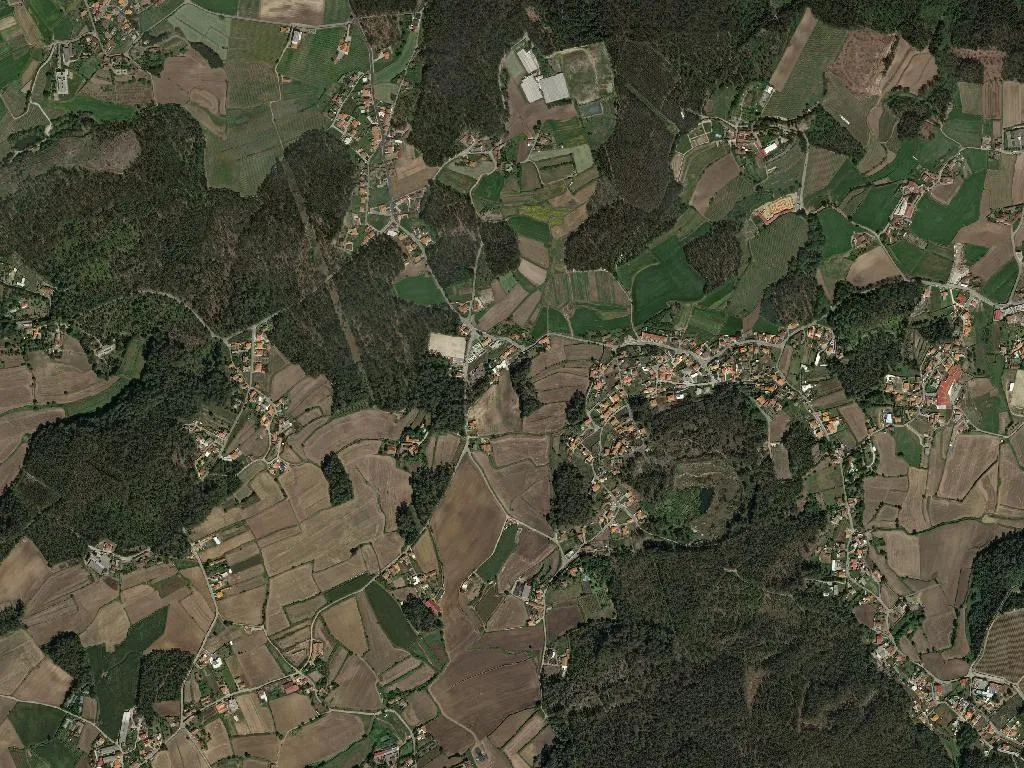
The granite setts drink in every footfall. On a January dawn in Carvalhas, chimney smoke rises in ruler-straight lines—not literary flourish, simply Sr. Adolfo firing his salamander stove. Oak logs crackle (the hamlet’s name comes from carvalho, the Portuguese for oak), releasing a perfume that mingles with yeast drifting from kitchen ovens. Six-hundred-and-ninety-two souls are registered here, yet the scatter of low, whitewashed houses makes the plateau feel emptier, as though privacy had been plotted into the very ground plan.
Roman footprints, medieval crosses
When the plough blade turns, it still flings up fist-sized chunks of grey basalt that once belonged to a 2nd-century road. Farmers leave them at the field edge like unwanted kittens. The Portuguese Central Way of St James cuts through the parish, but there are no scallop-shell gift shops—just the occasional German pilgrim limping towards the spring at the crossroads, boots held together with gaffer tape. Two stone crosses, probably 13th-century, stand in cereal stubble; modern tractors steer a deliberate metre-wide detour rather than disturb them.
Chestnuts and accordions: São Martinho in November
Mass is scheduled for nine, yet the nave only fills at half past—"the priest is late too," someone shrugs. After the gospel, the courtyard becomes an open-air kitchen: chestnuts roasted on a bonfire of vine prunings, vinho verde poured so cold it stings, and Zé Manel with his eyes half-closed coaxing a waltz from a battered Hohner. No tickets, no stage: his granddaughter learns the slit that stops the nut exploding. Come June the ritual repeats for the Festa das Cruzes, only with higher temperatures and more persistent flies.
Green wine, dark corn bread
The local Loureiro grapes ripen pale, so the wine is literally green—no marketing gloss required. Almost every cottage keeps its own micro-plot; a few still ferment in 200-litre mahogany barrels that smell of camphor and great-aunt perfume. September’s treading is a social event where jokes older than the EU are recycled along with the pomace. The broa de milho emerges from the wood oven the colour of burnt caramel—nothing like the supermarket sponge labelled "Portuguese corn bread". Dip it in caldo verde and you have supper; add a disc of home-smoked chouriço and you have a reason to stay.
The silence between cockcrows
By mid-morning the lanes are empty: anyone under thirty works in Barcelos or Braga, returning only at weekend to raid the parental larder and offload laundry. The church bell counts the hours for an audience of sparrows; only when a beat is missed does the parish notice the sacristan has slipped off to the dentist. After dark the silence is so complete you can timetable the village dogs: Adolfo’s hound barks on the hour, two kilometres away, a leisurely baritone reminder that Carvalhas still keeps watch.