Full article about Galegos São Martinho: Where the Bell Greets You First
Galegos (São Martinho) packs 1,842 souls into 3.1 km² of flat Ave valley, trading vines for red-brick homes, gossip over hedges and a tiny May fiesta of pa
Hide article Read full article
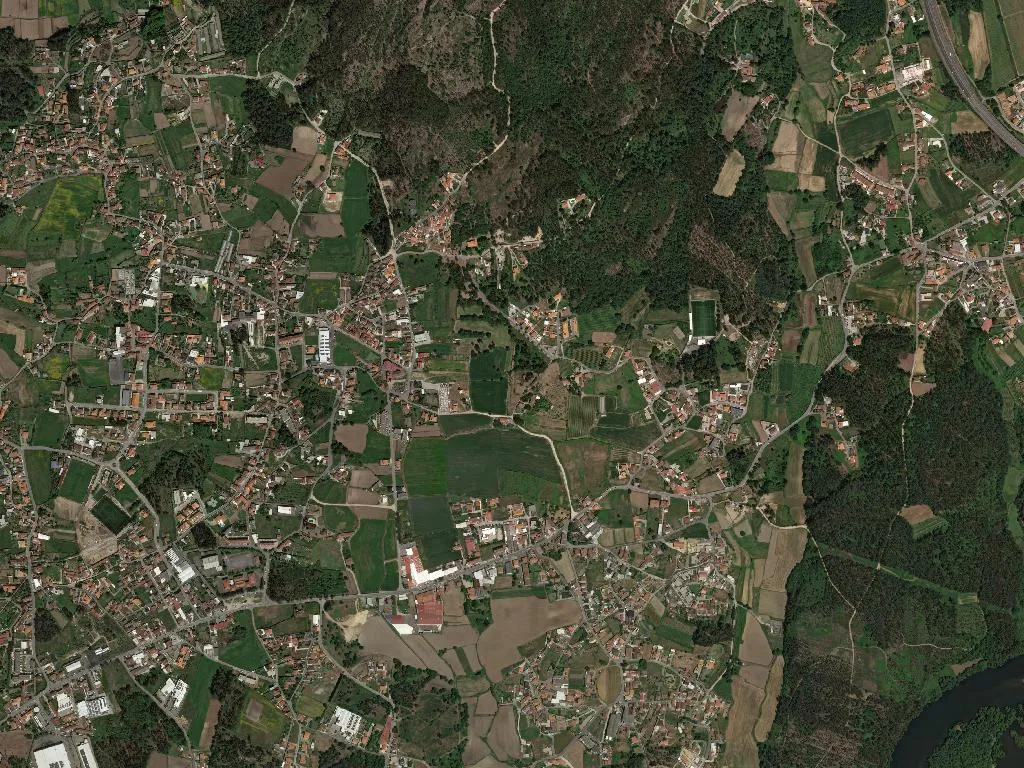
The bell reaches you before the village does. Down in the Ave valley, where wind combs through market gardens and breaks against a wall of eucalyptus, the tower of São Martinho rises like a ship’s mast above the green. Only 3.1 km² of land holds 1,842 inhabitants—roughly 600 neighbours per square kilometre—so half the parish already knows you’re coming before the road sign confirms it.
Between field and factory
This is neither lost hamlet nor dormitory suburb but something soldered together in the middle: back fences almost touch, voices carry across the lane without raising, and what you had for supper is communal knowledge by breakfast. At 70 m above sea level the ground is ruler-flat, which explains why children here master a bicycle before the alphabet. Atlantic humidity settles on skin all summer, turning chilled Vinho Verde from luxury to necessity. A few pergolas still survive in private yards, yet most vines were replaced long ago by brick and tile; proximity to Barcelos—ten minutes by car—made building plots worth more than grapes. The arithmetic is visible: 252 residents under fourteen, 349 over sixty-five. Still, there is motion: the grocery of Dona Alda, Zé’s café opening at seven-thirty for the Vieira & Sons work crews, women dragging chairs onto the threshold when evening cools.
The Crosses in the churchyard
Festa das Cruzes lasts three days each May and owns none of the fireworks or headline acts that inflate bigger town calendars. The churchyard shrinks under striped awnings; paper-flowered crosses, guarded in Dona Fátima’s wardrobe since last year, lean against the granite; the abandoned primary school becomes a dance hall. Grilled sardines, caldo verde and pimba music—cheesy Portuguese schlager no one admits liking yet everyone sings—keep the mood upright. Offspring who left for Lyon or Lisbon reappear with grandchildren no one has met, while the unmarried aunt still serves tables with the balance of a twenty-year-old. By Tuesday morning the square is swept and silence reclaims itself.
Way-marked and walked-over
The Caminho Portugués Central slips through Galegos like a courteous intruder. Pilgrims with scallop-shell tags ask for water at the spring, photograph the 17th-century façade and leave. There is no hostel, no yellow-arrow theme park—only Dona Emília stepping out with a warm corn-meal cake. “They’re just people,” she shrugs; “I walked once too, when I was young.” She has become part of the furniture, as integral as Barcelos’ roasted-rooster legend or the neighbour’s pão-de-ló sponge.
When the light drains and traffic on the EN205 thins, Galegos reveals its contract: the barman still knows your name, the bell still counts the hours, and if you pause by the cemetery corner the old man opposite will wave—certain you must be someone’s child. Six chimes, a familiar door creaks, and the echo lingers like a promise: until tomorrow, God willing.