Full article about Gilmonde: The Flat Hill of Maize & Memory
Train-whistle village where Cávado mist drifts over medieval field stripes and May crosses blaze.
Hide article Read full article
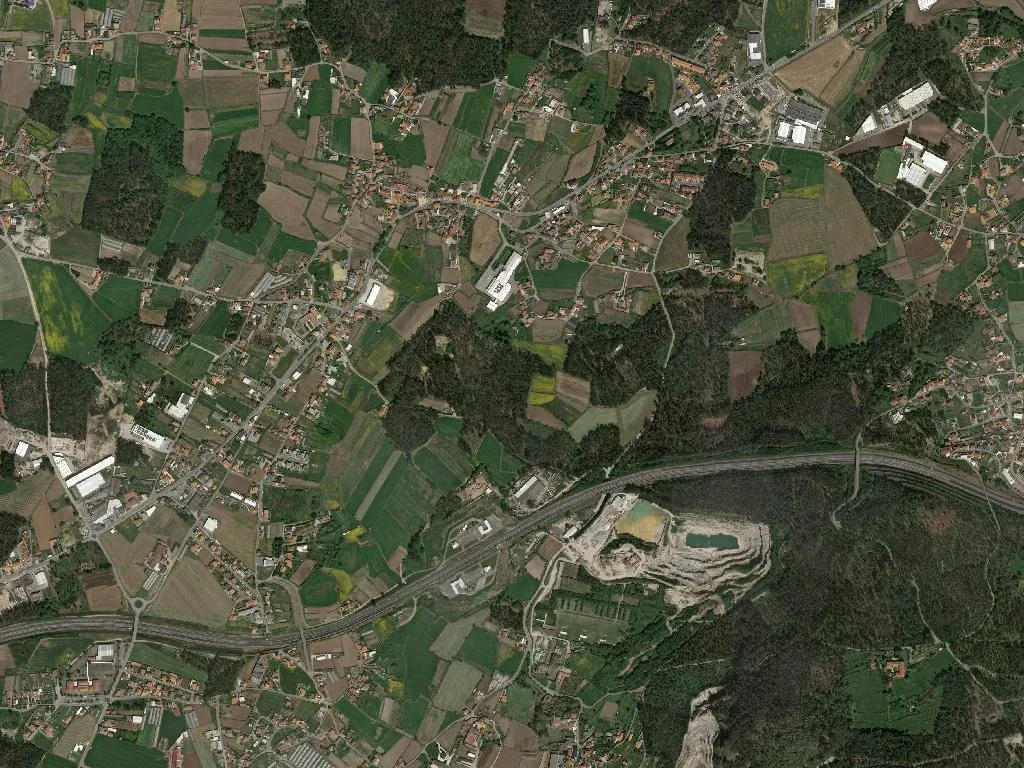
The church bell of Santa Maria strikes half past seven just as the Cávado line train from Braga whistles in. Between river and track, the cooperative maize fields of Barcelos—laid out in perfect grids—still obey the medieval boundaries set out in the 1514 charter. The land sits only 38 m above sea level, yet locals still call it o monte, a name first scratched into the 1258 royal survey as “Gelimont”.
The Gill Hill That Isn’t
There is no hill. “Hill” was a feudal tag, the hunting reserve the Gill family held between the Cávado and the royal road that once ran from Barcelos to Famalicão. The river itself was the frontier between the bishoprics of Braga and Barcelos; a wooden toll bridge here charged three réis for every laden foot until 1867. The concrete road bridge rebuilt after the 1956 flood still carries traffic, but the river no longer ferries granite or wine—just the regulated release from Penide dam eight kilometres upstream.
Closed Crown and Golden Ears
The parish arms, approved by the national heraldry board in 1936, show a closed crown of Our Lady on a silver field flanked by two golden maize ears. Inside the church, the gilded altarpiece arrived in 1892 from the now-vanished Quinta do Paço. The cross in the churchyard, dated 1594, was erected by the priest João de Mesquita, who also planted the cypress that still shelters nesting blackbirds. Light slants through the broken-arch windows, the same that lit the open-air mass of 8 December 1917 when 3,000 villagers prayed for the Great War to end.
When Crosses Bloom
The Festa das Cruzes (Festival of the Crosses) falls on the Sunday nearest 3 May, recorded at least as far back as 1879. Twelve crosses go up: one in the church, one on the churchyard cross, the rest at houses chosen by the parish council—this year the Costa family of Largo do Chafariz, repeating their 1998 and 2012 stint. Gilmonde’s own brass band, founded 1923, strikes up the “Hymn to the Crosses” composed in 1951 by local musician José Alves. The procession leaves at 3.30 pm, returns at six, and the tally of hospitality is fixed: 250 sponge cakes, 1,200 cinnamon pastries, 40 litres of house wine from the Gomes vineyards at Ramada.
Stone and Faith Way
The Portuguese Coastal Camino passes directly in front of Café Central, left of the church. A yellow arrow painted in 2012 sends pilgrims over the bridge towards the municipal albergue at Ramalha—eight bunks, hot shower, opened 2015. Last year’s ledger records 3,442 arrivals: Germans in April, Koreans in May, Brazilians all summer. They ask for the bakery, shut since 2018, but find fresh loaves at Mini-Mercado Silva, trading since 1976.
Vineyards and Minho Table
The parish rolls out 23 ha of Loureiro vines, all within the Cávado sub-region, trained high on traditional pergolas and picked in mid-September. The Barcelos cooperative is paying €0.65 a kilo this year, the same as 2022. There is no restaurant, yet Quinta do Outeiro offers Sunday lunch by reservation only: rojões (spiced pork) with sarrabulho porridge for twelve, cooked in an iron pot over a open fire, white wine served in clay jugs. The recipe belongs to Elvira, born 1928, who still adjusts the colour of the sauce with a wooden spoon.
When the sun drops behind São Félix hill, the Cávado turns molten and the 20.09 train gives one last whistle. Mercury-vapour lamps—installed in 1983, the year paraffin streetlights were finally shelved—flicker on, and the bell tolls the Angelus from the same 1894 chant book the sacristan keeps in the vestry.