Full article about Lijó: vines, manor fires & pilgrim shade
Walk Loureiro vineyards, hear manor stones whisper and sip history in Barcelos’ lowest parish
Hide article Read full article
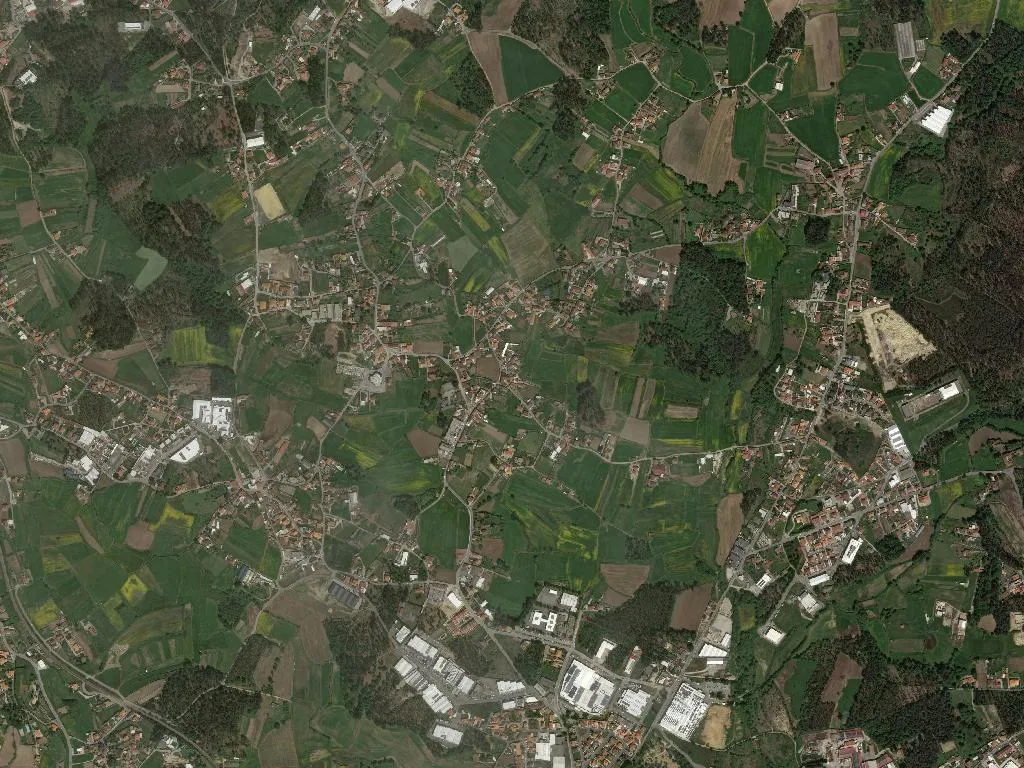
The bells of São Vicente arrive muffled by vines, morning light pulling long shadows beneath the pergolas. Lijó wakes reluctantly, paced by the stone levadas that braid the fields, ferrying water to vegetable plots and to the 70 ha of Loureiro vines that quilt this low-lying plain. At barely 37 m above sea level the soil answers to the same family names that have shaped every plot and every schist wall since the first medieval charter.
Houses that speak
Casa e Quinta de Raíndo stands inside a copse of Himalayan cedars and cork oaks, its granite blocks having watched the Barbosa de Farias and Machado da Costas administer land, taxes and votes. Their private chapel—Capela de Santo António—still shelters 17th-century tomb slabs, reminders that this was once a court rather than a farm. Restoration began in 1988 when the regional youth-training charity APACI moved in; today the old manor hosts catering courses and digital-media workshops, the stone fireplaces now warmed by laptops rather than retainers. A kilometre east, Quinta de Pontelhas keeps its Manueline window frames and a memory of its former owners, knights of the Order of Christ. The toponym itself—Lijó, from the Latin ligium, a knot or binding—makes sense once you walk the parish: every lane once tied Barcelos to the coastal port of Viana do Castelo.
On the pilgrims’ tread
The Central Portuguese Route of the Camino slips through the village without ceremony. After four days on the road walkers are grateful for what Lijó offers: a level pavement, a stone bench under a vine arbour, the 18th-century parish church whose door is left unlocked for shade and contemplation. There are no souvenir stalls, only small granite crosses—cruzeiros—that mark former parish boundaries and the spot where, in 1756, a freight cart supposedly lost its load of wine and was declared a miracle.
Stone crosses and ancient vows
May brings the Festa das Cruzes. Each neighbourhood sponsors one of the granite crosses dotted around the lanes; they are washed, garlanded with wild roses and paraded to the church square where a brass band plays until the early hours. Mid-winter offers a quieter ritual: on 22 January São Vicente’s feast day, locals queue for sopa de pedra—a smoky bean-and-cabbage broth ladled from a cauldron big enough to baptise a child.
At a Minho table
Lunch is served in converted haylofts and low-beamed taverns. The set menu rarely changes: kid goat roasted until the skin crackles like sugar, rojões—pork shoulder simmered in paprika-laced lard—and caldo verde that owes its silky texture to a hand-blender and a generous splash of olive oil. On feast days the soup gives way to papas de sarrabulho, a gravy-thick porridge of pork blood and cumin that demands a glass of Quinta da Pedra’s Loureiro, its sharp green-apple edge slicing cleanly through the richness. Pudding appears as toucinho-do-céu, an almond-and-egg-yolk slab that translates, rather poetically, as “bacon from heaven.”
The numbers that matter
The 2021 census records 2,425 inhabitants—enough to keep both primary schools open, few enough that neighbours still borrow tractors instead of buying them. Population density is high on paper (548 per km²) yet lanes feel spacious; new houses are required by municipal statute to keep a 3-metre green buffer, ensuring vines and vegetable gardens outnumber front walls. Evening settles, wood smoke drifts across the pergolas and, somewhere behind the cedars of Raíndo, the chapel bell strikes eight. Tomorrow the levadas will run again, guiding water, guiding footsteps, as they have since the parish was first mapped.