Full article about Macieira de Rates: where flax beats once echoed
Pentecost crosses, leg-thick eels and wartime tungsten mines shape this Minho parish
Hide article Read full article
The heartbeat you hear before you see
The sound arrives before the village does: a wooden paddle striking flax, tac-tac-tac, steady as a pulse on May nights. In the threshing yards unmarried women worked the fibres to the scrape of violas while caret os – masked men in fringe and leather – stalked between them, half pantomime, half nightmare. This was the Festa das Cruzes, Macieira de Rates’ Pentecost rite that lasted well into the last century. The crosses still parade each June, but the paddle has fallen silent; only memory keeps time, stored in granite and in the third imperial lager of the afternoon.
A plain where the river changes its mind
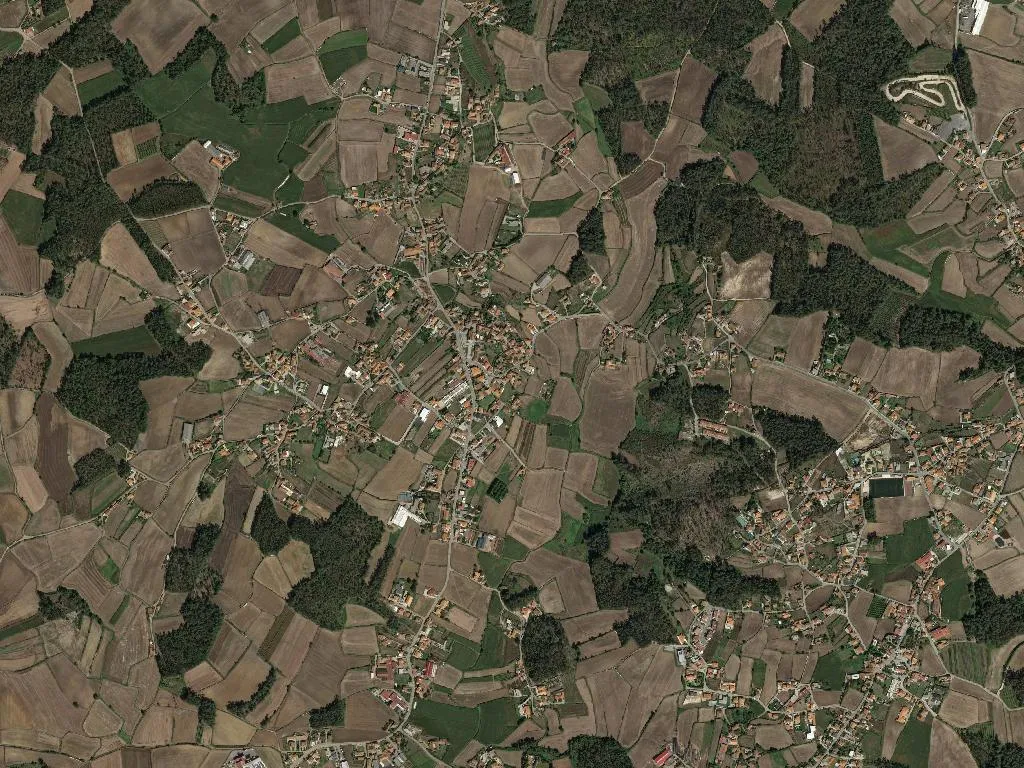
The parish sits at precisely 70 m above sea level – every field, lane and threshing floor levelled as if a giant had skimmed the landscape with a palette knife. The Este slides through it, renaming itself Cávado a few kilometres downstream, and the land responds with an orderly patchwork of Loureiro vines, maize plots and pockets of oak just large enough for children to stage credible disappearances. Side-streams – Codade, Souto – braid the meadows into damp corners where eels, locals insist, grow “leg-thick”. Minho’s slow-moving sky filters the light into something soft enough to forgive three consecutive days of drizzle.
Pilgrims, poets and tungsten
The first parchment dates from 1128: Afonso Henriques donated “Maceeira with its offspring” to the Benedictine house of São Pedro de Rates. People here know the ledger starts earlier – standing stones called Pedra Fita and shepherd shelters named Bouça da Mama speak of pre-charter literacy. In the 1240s the knight Gomes de Maceyra used parish rents to endow Santa Maria do Souto near Guimarães, a medieval flex of disposable income. Seven centuries later a greyer boom arrived: wolfram prices during the Second World War turned the fields into open-air mines. For a few explosive years the air tasted of cordite and cash; old-timers date rural modernity from “when the girls first wore shoes”.
Memory also keeps a ledger of voices. Bernardino Leça, born 1844, improvised décimas faster than most people speak, dueling stringed rivals at country fairs until the roosters called time. His cottage by the Rio is now a small interpretation centre, though today’s teenagers scroll Instagram rather than Leça’s instantes. They may not realise that Frei Bartolomeu dos Mártires, the barefoot Dominican who reformed the Portuguese church, also dossed down here, presumably lured by hot cornbread and hotter verse.
On the pilgrims’ treadmill
The Central Portuguese Camino cuts straight through the parish. Backpack traffic has risen sharply since UNESCO listed the route, yet the 13th-century Ponte do Burrinho still carries everyone across the Este with medieval nonchalance. Guidebooks call it “quaint”; knees call it a godsend. A kilometre further, walkers puzzle over Lugar da Mulher Morta – either a tragic love affair or a witch who over-seasoned her spells, depending on the teller. Tractors, not tour buses, dominate the lanes; dogs bark, then think better of it and return to sun-warmed sleep. The limestone tower of Santo Adrião – finished 1558 – still works as a compass when phone batteries surrender to the rain.
Cornbread, cod and mugs of Loureiro
The kitchen keeps to what the earth approves. Tomato rice tastes of the soil it grew in; the baker fries salt-cod croquettes better than any chef with an awards list; yellow maize bread arrives warm, striped with butter churned that morning. Festival days mean green wine served in clay mugs – glass is for city folk, and mugs survive being dropped. Nothing is fashionable; everything is plausible. The wine’s sharp spritz matches the weather and the conversation, both of which tend to linger.
When the last cross returns to the sacristy and the brass band packs up, Macieira slips back into its quieter register: diesel in low gear, the church bell counting the hours, the smell of wet schist that reminds you Minho rain is simply background radiation. Somewhere between the river and the maize fields the paddle still beats its phantom rhythm – audible, if you listen after the third imperial, to anyone prepared to stay past the last bus.