Full article about Manhente: Where Maize Leaves Whisper to Granite
A Camino pause where Roman ghosts, corn-blessing priests and sponge-cake queens still linger
Hide article Read full article
The granite of the parish cross stays cool under hand even when the sun has begun to toast the maize leaves. Pilgrims on the Portuguese Coastal Camino break stride here, refilling bottles at the spring before the stiff pull towards Faria. Only the scuff of boots on schist—part of the 18th-century Royal Road to Valença—disturbs the hush; a blackbird rattles the oak canopy but never shows itself.
What endures
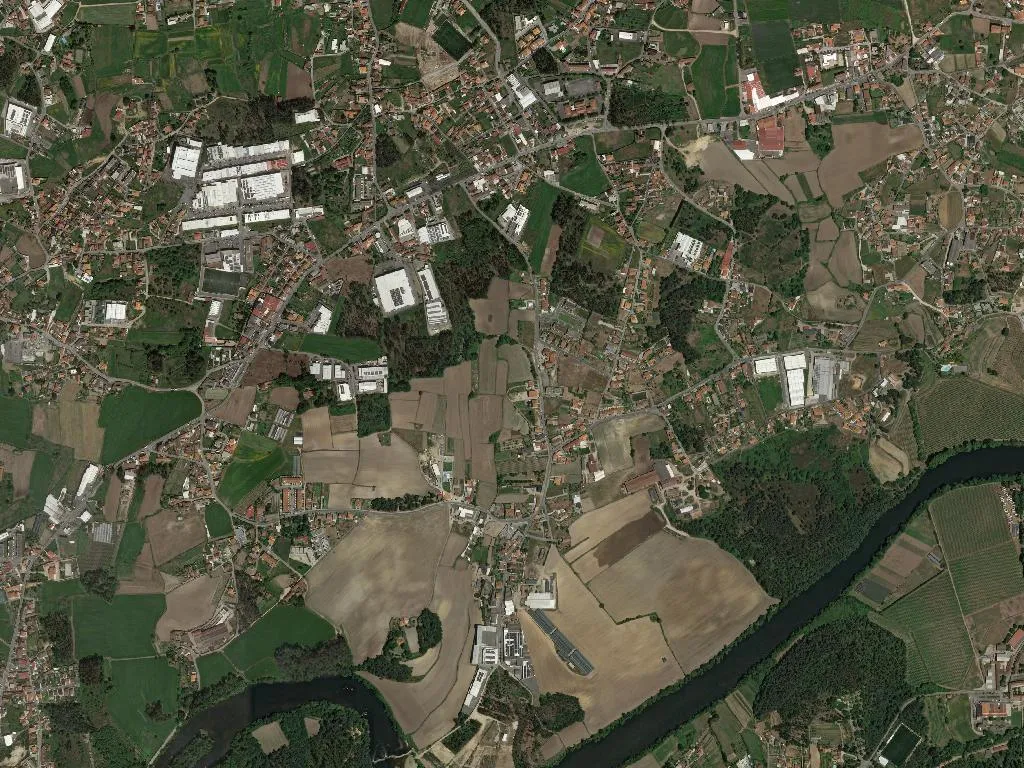
Manhente’s very name is a promise: from the Latin manentem, “what remains”. What remains are mostly the surnames. Subterranean traces of Roman villae survive as faint crop-marks only an aerial laser can read. In the 1258 Inquiries the settlement already figures as “Mainente”, a knightly estate. Granite coats-of-arms, half-erased by Atlantic rain, still sit above doorways at Casa do Outeiro and Quinta do Cruzeiro; carved stone and native bedrock are now almost the same colour.
The parish church carries 1737 on its lintel, but villagers remember 1944, when Father António processed through the fields sprinkling holy water to coax rain-delayed corn. No one has bothered to mend the Baroque gilded angel whose wing snapped during the Carnation Revolution. In the Curraleira hamlet, the wooden porch of Nossa Senhora da Saúde chapel groans every Sunday under the weight of walking sticks. Come August, the sponge-cake contest is won, as ever, by Maria do Pires and Amélia: they alone still source yolks from yard hens and flour milled at Quinta do Bispo.
Calendar of supplications
The third Sunday in May belongs to the Festa das Cruzes. The primary-school oven is fed for three nights with pine and eucalyptus; smoke flavours the communal loaves. Women drape white linen at every sash window along Rua do Cruzeiro—no one recalls why, but tradition is adhered to. On 20 January, St Sebastian’s day, hunters queue with setters and podengos for a quick blessing before the fox season opens. During Easter’s Compasso, boys rehearse the Ó Senhor Morto door-to-door chant; households reply with glasses of vinho verde and slices of sugared folar.
Wood smoke and aguardente
Manhente sponge-cake is leavened in a wood-fired oven, its batter bound with eggs from the baker’s own hens and sugar fetched in blue Minipreço bags from Barcelos. Festival rojões come from the December pig; the blood must drip slowly into white wine for the sarrabulho to set, precisely as grandmothers dictate. The local vinho verde arrives sharp and lightly sparkling; after three years in demijohn it loses its edge, prompting Braga expats to drive out with empty crates. When the bagaço has macerated long enough, Zé do Telheiro wheels in his portable still; steam condenses into clear fire-water at 48% ABV. Hams cure in an upstairs bedroom sealed since the owner’s grandmother died; the key is kept in a teacup.
Footpaths and field edges
The Rota das Quintas Vinícolas links three working manor houses—Cruzeiro, Outeiro and Bispo—where wine is siphoned straight from barrel to bottle via plastic hose. The Levada Trail, all eight kilometres, is ridden mainly by German cyclists on gravel bikes; locals simply take the lane. The old pé-posto rights-of-way still serve smallholders who plant potatoes and kale on Curraleira’s slopes, though tractors now reach the terraces by tarmac. Below the health-chapel lookout, a concrete bench faces west; when the bell tolls at 19:30, every resident recognises the signal to head home for supper. The chime carries across maize parcels that, since last year, belong to the Vila Boa agricultural co-operative—another shift in a place that keeps its name by letting everything else gently change.