Full article about Castelo de Faria & Vine-veiled Hamlets Above the Cávado
Bronze-Age ramparts, stone wine presses and loureiro vines shape Milhazes, Vilar de Figos e Faria.
Hide article Read full article
Stone, vines and silence
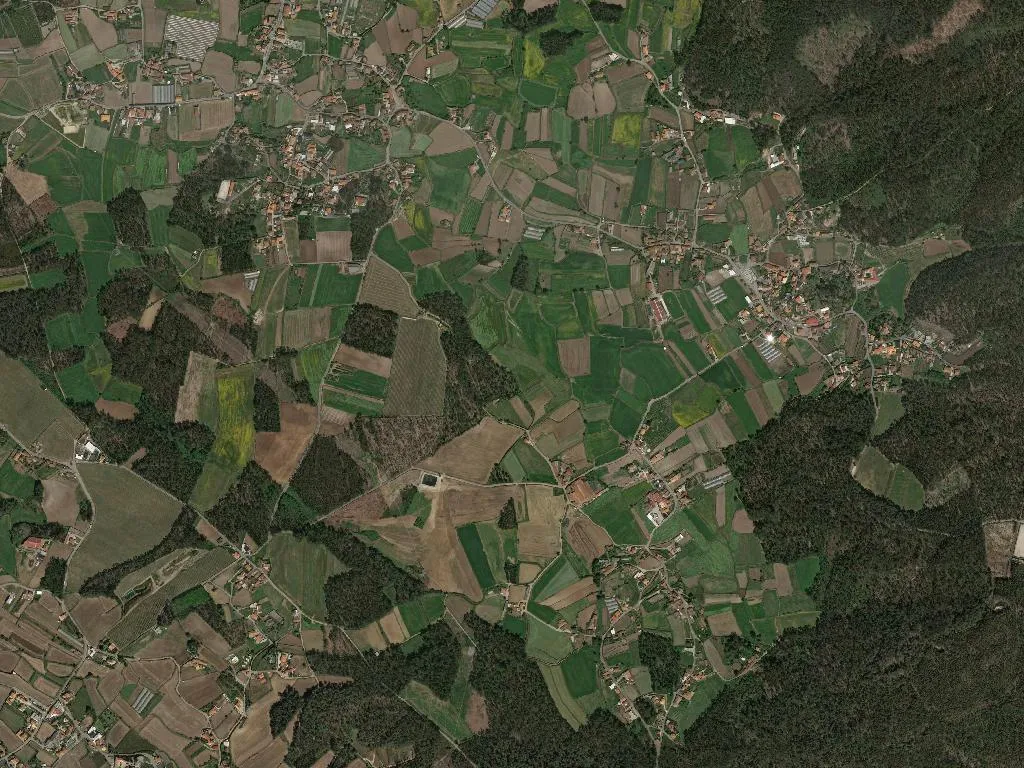
Wind scuds up the Cávado valley and scours the granite ribs of Castelo de Faria, the 76-metre ridge where a Bronze-Age hillfort later became a frontier fortress. Below, the three hamlets of Milhazes, Vilar de Figos and Faria share 1,213 unruly hectares of vines, maize and rye. Since 2013 they have been merged into a single civil parish, yet each keeps its own cadence: Milhazes with its manor-scale wine press, Vilar de Figos guarding the shrine of São Paio, Faria bequeathing its surname to half the Portuguese-speaking world.
A tale etched in granite
Local memory insists that in 1373 the castle’s alcaide, Nuno Gonçalves, chose death rather than surrender the keep to a Castilian raiding party. Archaeologists prefer the longer view: pre-Roman castros, Roman tesserae, Visigothic slate and a faint line of Muslim occupancy all precede the Gothic curtain wall you can still trace today. What remains is a wind-sharpened outline of ashlar blocks, good for little except reminding hikers on the Central Portuguese Caminho why this ridge was worth dying for.
The troubadour who drank loureiro
Milhazes celebrates João Garcia de Guilhade, a 13th-century joglar whose cantigas de amigo once drifted through the courts of Galicia-León. The poetry is gone, but the landscape that informed it survives in trellised loureiro and trajadura grapes that qualify for the Vinho Verde DOP. At 164 inhabitants per km² the parish is hardly crowded—254 residents are under 25, 416 over 65—so the rhythm of pruning, picking and foot-treading still governs the year. Stray off the lane and you’ll find a granite lagar big enough for a village dance floor, its spout blackened by centuries of tannin.
Twelve kilometres of daylight
The Monte da Franqueira circuit leaves from the back of the hermitage, threading gorse and oak before dropping into Gilmonde’s smallholdings. Way-markers every kilometre list distances in charcoal-grey paint, a discreet nod to passing pilgrims. From the crest you can clock the Atlantic shimmer 35 km away, then descend through dry-stone walls that smell of moss after rain. The parish church of São Paio—patron of Vilar de Figos—appears suddenly, its bell-tower squared off like a keep, its porch carved with the cross of the Order of Christ.
Crosses, procession and Sunday kick-off
Every second Sunday in August the hill fills with white linen and brass bands for the Romaria da Franqueira, a Marian pilgrimage that dates at least to the 16th-century enlargement of the hermitage. Earlier, in May, the Festa das Cruzes drapes the three villages with carpets of wild geranium and dyed sawdust. Between holy days the Casa do Povo’s folk group keeps the accordion busy, while on Sunday afternoons the Campo de Jogos in Milhazes hosts a fixture between the parish veterans and whoever can still run the full pitch. The final whistle drifts uphill, meets the smell of fermenting must and dissolves into the same wind that once carried Castilian arrows.
Stay for dusk: when the sun slips behind the castle’s broken tooth the Cávado valley turns molten, the vines look like bronze filigree and every stone wall releases the day’s heat in a slow sigh. Somewhere below, a single bell counts the Angelus, and you realise why the surname Faria—first granted here in the 12th century—still travels the globe: it began on a ridge where geography, memory and wine refuse to be separated.