Full article about Panque: Cávado’s whispering flood-plain village
Hens cluck, gilded altarpieces glow and Vinho Verde flows in Barcelos’ quietest parish
Hide article Read full article
The Sound Before the Sight
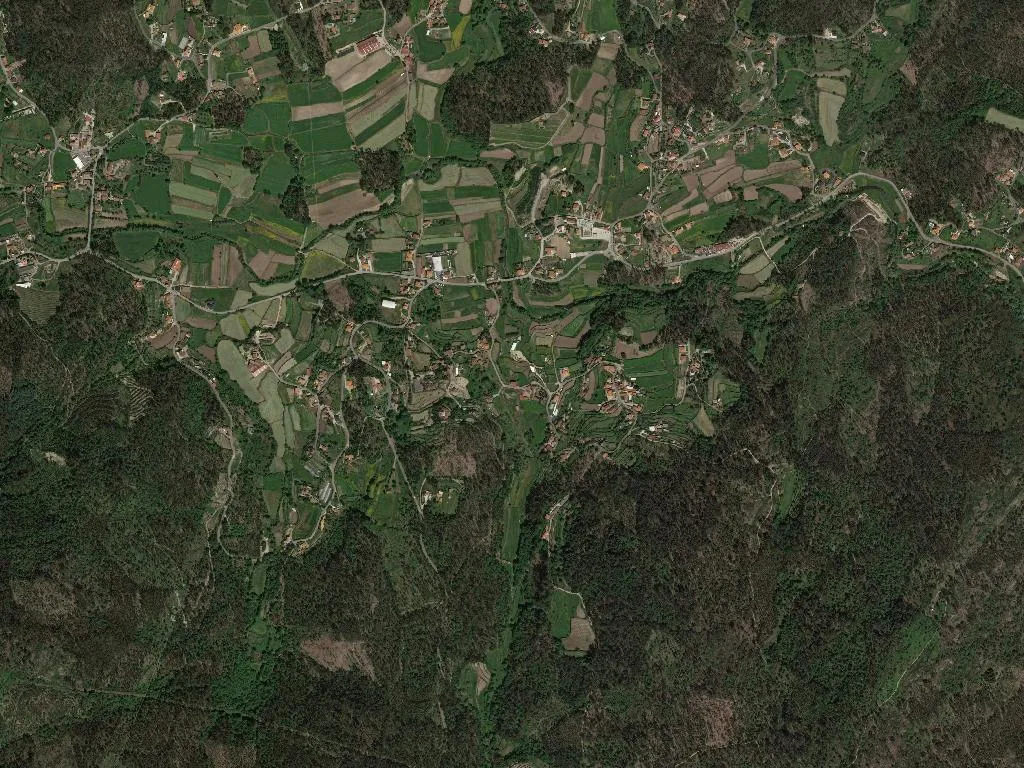
You’ll hear Panque before you see it: a stone-lined water channel ticking beside the footpath like a low metronome. Dawn lifts over 631 souls and twice as many hens scratching between the cabbage rows that slide down to the River Cávado. Sunlight scours the fields, willows stencil Sunday shadows across the lane, and Santa Eulália’s bell counts time with the same urgency as coffee that refuses to hurry—none at all.
The Cávado’s Table
Local etymologists swear the name derives from “panca”, a slab or tabletop, and the flood-plain proves them right. Everything sits level as a cheeseboard: Vinho Verde trellises share space with pear orchards and the last stands of corn that end up in the chickens’ scrap buckets. Southwards, the Cávado idles along, ferrying centuries that the medieval bridge has already watched ebb away. Way-markers on the Central Portuguese Camino steer boot-sore walkers here for spring water at the stone font; they ask how far to Barcelos and are told, “Always another hour,” though no one minds when the compensation is this landscape.
Gilded Altarpieces, Millwheels and January Carols
The parish church gives little away outside, but step in and an eighteenth-century gilded altarpiece flares like an heirloom brooch suddenly catching daylight. On the council’s coat of arms a comb and a millwheel recall the river’s textile fulling mills; one granite wheel still leans against a barn wall in Molinhos, waiting for a journeyman who will never return. Two field chapels—São Sebastião and São Roque—punctuate the lanes once paced by processions, now by dog-walkers. On 20 January households wake to the Blessing of the Houses, when voices carry carols through open doorways; on 3 May the Festa das Cruzes plants a striped marquee on the threshing floor and, the following Sunday, tractors with more patina than paint idle beside trestle tables of coconut-crusty cakes.
Frogs, Blood-Porridge and Vinho Verde
At table Panque refuses to cosmopolitanise: kale soup thick enough to stand a spoon, pork shoulder simmered in blood-porridge on feast days, kid roasted in a wood-fired oven that still warms the kitchen afterwards. Signature, though, are the “frogs of Panque”—egg-rich fritters the size of a walnut, snow-dusted with icing sugar. The name is sticky, the pastry more so. They marry perfectly with chilled red Vinho Verde poured in small glasses that empty faster than Old Trafford when United are three-nil down.
Water Lane, Canoe and Sunset from the Arch
The Levada de Panque, once an irrigation canal, is now a four-kilometre walking track between vegetable plots where turnips and dwarf beans still grow for the pot. Go late afternoon when the river turns molten and the bridge’s single Gothic arch looks air-lifted from a studio set—except it’s 600 years old and still taking weight. Rent a Canadian canoe at Faria’s riverside club and paddle west until the sun parks itself on the parapet; pilgrims pause mid-span, rucksacks at their feet, realising that arriving later in Barcelos is no catastrophe. The bell strikes six, the echo drifts off among the willows, and the village slips into evening at exactly the speed it woke—slowly, certain tomorrow will taste much the same, and content that it will.