Full article about Ox-Cart Lanes & Green Wine in Quintiães e Aguiar
Barcelos parish where granite ruts, pilgrims’ chatter and Atlantic-cooled vines meet
Hide article Read full article
The granite corridor
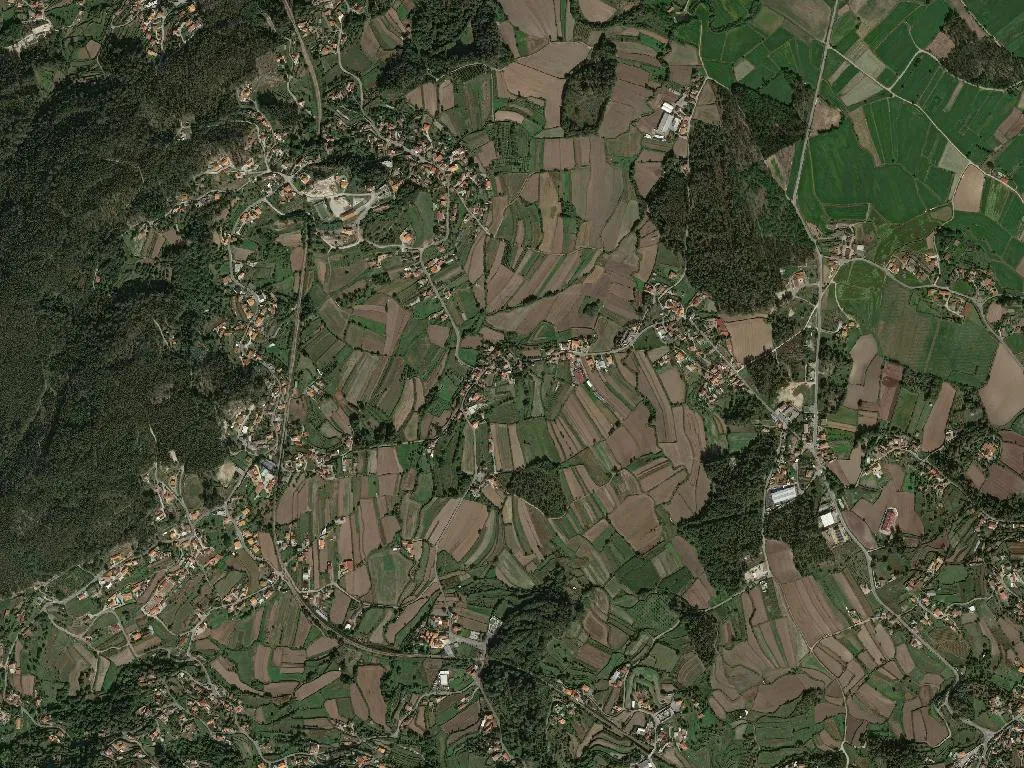
The cobbled lane climbing between stone walls still carries the rut of ox-carts. Time-burnished granite drinks the morning light differently along each metre: dull where hooves polished it for decades, suddenly glassy at the edges. In the merged parish of Quintiães e Aguiar the land terraces gently downward toward the Cávado valley – a topography of worked slopes stitched with low-trained vines and baby corn, the 82 m of elevation just enough to let Atlantic air circulate without the bite of the uplands.
A countable sort of life
Spread across barely seven square kilometres live 1,080 people – a density that lets casual encounters happen in the roadway and neighbours greet one another by first name. The age pyramid tells the familiar story of interior Minho: 234 residents over 65, only 136 under 18. Weekday afternoons absorb the hush; the only punctuation is a tractor’s diesel burr or a gate-bound dog announcing the hour.
Stone that refuses to leave
A single monument enjoys Public Interest status – a granite chapel-wharf that moors collective memory. Whether in manor house, wayside cross or threshing floor, the stonework holds the stubbornness of Minho granite: moss colonising north-facing joints while the south flank absorbs midday heat you can’t keep a palm against.
In the pilgrims’ slipstream
The Central Portuguese Way of St James cuts through these fields on its march to Santiago. For centuries the route was more than ink on a map – it was gossip, trade, the world arriving at the doorstep. Present-day hikers clatter up the lane, backpack clips jangling, trekking poles clicking, conversations in Korean or Bavarian echoing oddly between schist walls. Two private houses offer beds and, more importantly, serve as listening posts where locals learn what brings the planet past their gate.
Where the wine stays green
Vinho Verde country drapes itself over the hills as if it had never been anywhere else. Vines either ride trellises above your head or hug the ground in the old style, depending on whose grandfather planted them. At harvest the air ferments – sweet yet sharp with grape pulp. The resulting wine keeps its trademark Atlantic acidity and the fainttickle of dissolved CO₂, a liquid memory of Atlantic drizzle rolling inland.
Crosses in celebration
The annual Festa das Cruzes (literally “Feast of the Crosses”) organises the year as decisively as the agricultural calendar. No tourist office choreography here: processions form because they always have, the churchyard fills, bells slice through voices, and the communal supper stretches until the light gives out.
Evening shadows lengthen the walls into caricature. Beyond the last house the vines have already muted their summer colour, steeling themselves for winter dormancy. What lingers is the smell of newly turned soil, freshly split firewood, the valley’s cool exhalation as temperature drops – a perfume no laboratory could bottle, recognised only when you come back.