Full article about Remelhe: Cobalt Tiles & Floral Crosses on the Minho
Walk the Camino through Remelhe’s granite balconies, Loureiro vines and 1740s martyrdom tiles
Hide article Read full article
Six O’Clock at Largo do Cruzeiro
The bell of Igreja de São Vicente strikes six just as the last pilgrim of the day crosses Largo do Cruzeiro. In Remelhe, the Central Portuguese Camino does not skirt the settlement; it threads straight through it, brushing the church door, the granite cross and the stone balconies of 19th-century manor houses. The 1,280 villagers no longer glance at the worn boots that pause to refill plastic bottles at the spring before the final push to Santiago.
A Latin Twig on the Minho
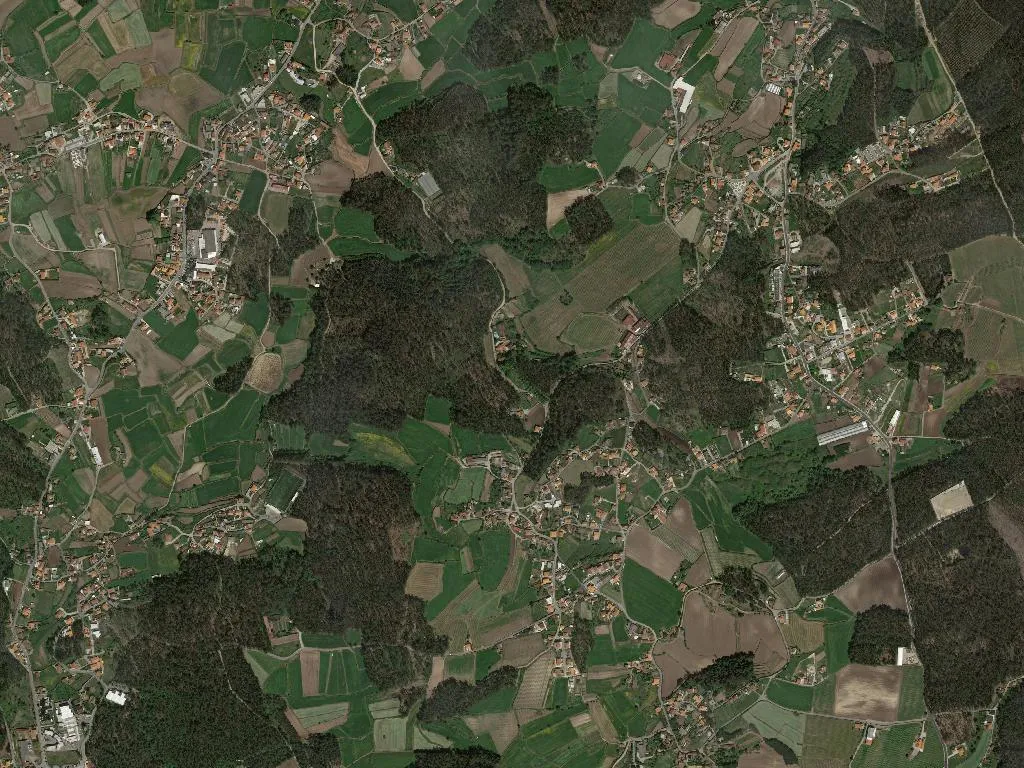
Romans called the place Ramulius, “little branch”. Oak and cork still sprawl over the communal hills, but the geometry now belongs to Loureiro-trained vines and to regimented corn terraces that slide towards the Ribeiro de Remelhe. Water still glides along the same irrigation channels where, only twenty years ago, women scrubbed linen on Sunday mornings. First documented in 1258, the village once paid its dues to Barcelos castle in live chickens. Plague, war and the Atlantic rain have come and gone; the settlement simply tightened its grip on the granite.
Choir Stairs and Cobalt Tiles
The 18th-century parish church keeps its gilded altarpiece in semi-darkness until the western windows let in the evening light. Climb the worm-eaten wooden stairs to the choir and you meet a 1740s tile cycle, cobalt on white, that narrates the martyrdom of St Vincent panel by panel. Outside, the high-cross defines the village compass: north to the Roman bridge, south to the manor house where Dr Joaquim de Quintela—19th-century liberal deputy—set out for Lisbon whenever parliament sat.
Flowering Crosses and Woollen Devils
On the third Sunday of May the Festa das Cruzes reappeared in 1994 after a 50-year hiatus. Men go barefoot, carry foliage cloaks and shoulder floral crosses cut from meadows the previous afternoon. The square smells of grilled sardines and Loureiro-based vinho verde from surrounding quintas. In January the Romaria de São Vicente blesses newly baked loaves at a sung mass; at Carnival, wool-masked caretos with cow-bells shake the village awake before first light.
Saturday Sponge and Maize Storehouses
Central bakery’s pão de ló emerges at ten o’clock on Saturday; by noon the shelves are bare. Corn-and-cinnamon bolo de São Vicente arrives with caldo verde laced with house-made chouriço on winter afternoons. Sunday lunch is rojões—pork shoulder seared in lard—followed by sarrabulho rice. Kid goat is roasted in the wood-fired oven of Restaurante O Cruzeiro; book mid-week or go without. Granite espigueiros still dot the slopes; the tallest, 12 m high, is the municipality’s record-holder. A two-kilometre way-marked trail links them, weaving between vines and oak down to the Cávado valley.
Overlook to the River
From the Senhora da Graça viewpoint, 180 m above sea level, you pick out the Cávado’s silver ribbon, the terracotta roofs of Barcelos and the irrigated chessboard of smallholdings. Atlantic squalls carry the smell of wet schist long before you feel the rain. Seven o’clock strikes—same bell, same stones, same square—guiding walkers westward until the sound dissolves into the paths that lead, eventually, to Santiago.