Full article about Sequeade & Bastuço: three villages, one echoing footstep
Whitewashed chapels, 15th-century granite and lace-makers guard the Fulão stream in Barcelos
Hide article Read full article
Footsteps across three parishes
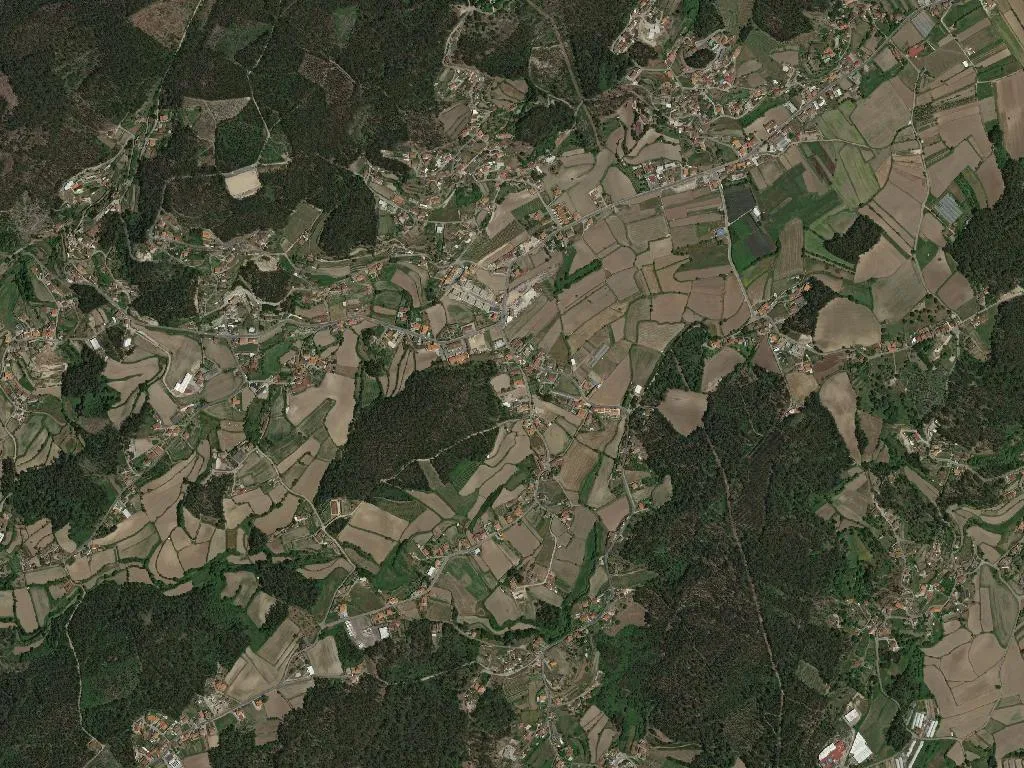
The cobbles sound different when they carry you across what used to be three separate villages. Since 2013 Sequeade, Bastuço São João and Bastuço Santo Estevão have shared a single parish council, yet the Minho landscape still rolls out in distinct shades of green, punctuated by whitewashed chapels that mark where one community ends and the next begins. The Fulão stream keeps its own naming conventions—Fulão first, then Real or Regaínho—before sliding into the Covo and, eventually, the Cávado. Water writes the map here; chapels hold the memory.
Stone that remembers the 1400s
Lift the iron latch of the Chapel of São Silvestre and you’re touching a National Monument raised in the 15th-century heyday of the Avis dynasty. Its granite walls store the coolness of five-hundred-odd winters; lichen darkens overnight in the Atlantic mist. A few minutes’ walk away, the 1990s parish church of Bastuço São João flashes contemporary concrete and glass, while the tiny Chapel of Boa Fé keeps baroque curves under orange-tiled eaves. Together they form an accidental open-air museum of Portuguese devotional architecture, portals and bellcotes conversing across centuries.
Crosses, lace and 75-per-cent turnout
On the first weekend of May the parish stages the Festa das Cruzes: processions of flower-decked crosses, coloured tissue, embroidered banners—each a handwritten letter of loyalty to place. Inside the scout-hut classrooms of São Miguel da Carreira, women still practise crivo, a gauze-like drawn-thread lace unique to inland Minho. Between stitches they debate whose rosé is fruitier, whose corn bread baked longest. Election days here feel almost redundant—participation rarely drops below three-quarters of the electorate—but they’re celebrated anyway with communal fairs where scout troops pour vinho verde and the catechism team sells broas warm from clay ovens.
Way-markers and the wine you’ll never export
The Central Portuguese Route of the Camino de Santiago cuts straight through, funnelling hikers past vineyards trained on high pergolas to keep mildew at bay. Pilgrims pause to refill bottles at the Fulão’s stone spout and to let boots steam-dry on schist walls. The wine they sip with their caldo verde will never carry a DOC seal—production is too small—but it tastes of the same granite the stream crosses, sharpened by the morning valley mist that rises like smoke from the maize fields.
Silence measured in hectares
With fewer than two thousand souls spread across six square kilometres, quiet is still a measurable commodity. Between the hamlets of Fonte Coberta and Moure, maize grows taller than a man by late July; oak coppices swallow mobile-phone signal. The parish council’s “JUNTOS RECICLAMOS +” scheme collects glass and plastic with the same communal discipline once used to thresh rye. Services are centred on Sequeade’s low-rise municipal building, yet residents still give their address as one of the three old villages, unwilling to let topography be flattened by bureaucracy.
When the walkers tramp northwards they carry dust from these roads in their boot eyelets. What remains are the chapels, the stream that changes name but not direction, the lace pricked into white linen. And the echo of the Festa das Cruzes—bare feet on dew-wet grass, processional voices, the clink of vinho verde glasses when the low sun turns every paper cross into a lantern of belief.