Full article about Silva: granite lane hissing river-cool to dusk
Nine villagers, 900 ghosts, fireworks over the Cávado—Silva keeps its own slow time
Hide article Read full article
Granite that hisses underfoot
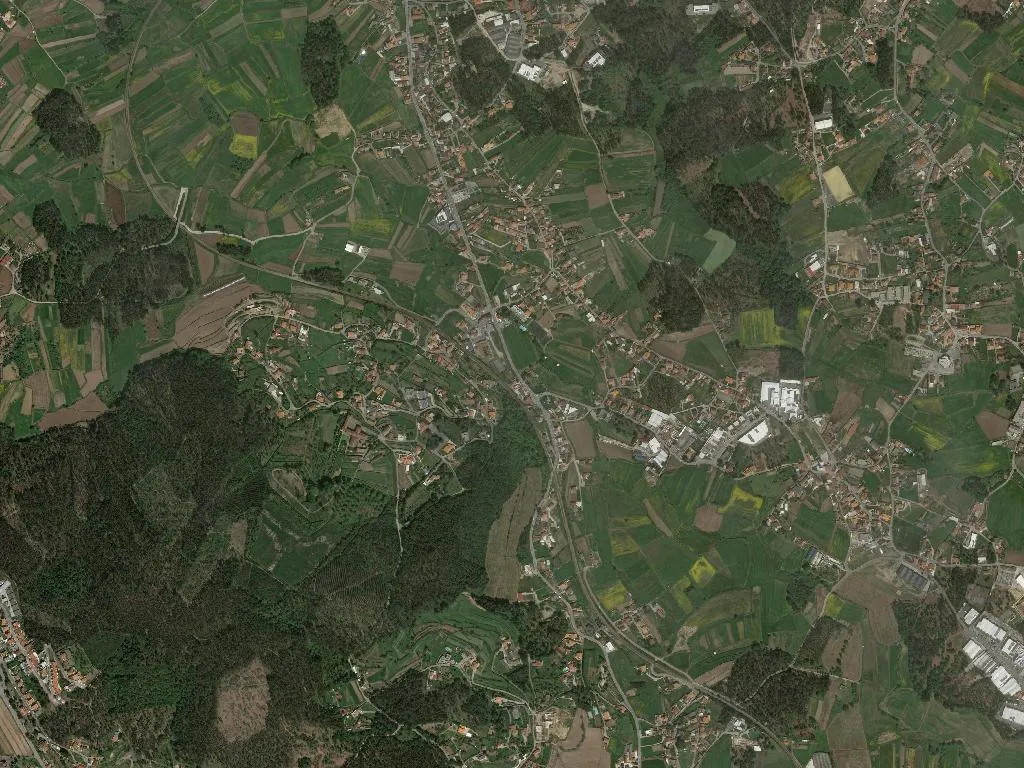
Granite that hisses underfoot when it rains – not quaint, just lethal. Silva’s single cobbled lane slopes gently towards the River Cávado, polished by centuries of clogs, tractors and the odd weekend Uber. The church bell tolls three minutes late, a habitual delay that has become the village’s private time zone. On either side of the wall-to-wall stone, vineyards wrestle with cornfields for every sunlit centimetre of alluvial soil. The parish registers list 900 souls; at dusk you count maybe nine.
Stone, dust and a scallop shell
The Portuguese Central Way of St James cuts straight through the village, but the pilgrims who reach Silva have already limped past Barcelos’ market stalls and the bridge at Portela. Their boots are duct-taped, their backpacks smell of wet wool and resignation. They stop at Tia Alice’s café for a 70-cent bica and directions to the only lavatory – a plywood shed wedged between a granary and someone’s chicken run.
In May the Festa das Cruzes still assembles enough fireworks to set off car alarms in neighbouring Tamel, though the girls no longer weave rosemary garlands at dawn and the boys have stopped climbing the hill at 3 a.m. to steal the ceremonial bundle of branches. What remains is a three-day haze of grilled sardine smoke, sponge cake the colour of burnt butter, and elderly pyromaniacs checking their watches for the GNR patrol.
Two roofs and a telephone call
Dona Amélia rents out the front two rooms of her granite longhouse; breakfast arrives in blue-and-white striped mugs with custard tarts her granddaughter makes on Friday nights. Across the lane Sr Albano, back from a career in France, offers en-suite tiled bathrooms and towels folded into swans. Neither advertises online; you ring the landline, ask if there’s a bed, and receive a straightforward “Sim” or “Não”. Breakfast is served whenever you request it – 07:30 for walkers, 09:00 for the horizontal – always with a warm cornmeal loaf delivered by the baker before his van turns back towards Barcelos.
A table that appears twice a week
The village restaurant closed when the widower Custódio hung up his apron in 2018. Instead, Zé Mário opens his front room on Friday and Saturday evenings. The menu is whatever the Cávado yielded that morning – eels stewed with bay and white wine, or kid scented with mountain rosemary. Wine comes in glazed clay jugs thrown by Zé Mário’s wife before she broke her wrist. Caldo verde is neither fashionable nor photogenic: potatoes collapsed into silk, hand-shredded collard greens and discs of black-pork chouriço smoked over his own hearth. The corn bread travels three kilometres from Tamel bakery, because parish borders are cartography, not reality.
What the camera misses
Silva will never trouble the Instagram geotags: no miradouro, no tiled chapel, no sunset sea. Instead it offers the smell of manure when António fertilises his vegetable plot, the metallic scrape of a gate that has refused to latch since 1987, the hush that falls when the last pilgrim disappears round the bend and the only sound is wind worrying the vines. Stay until the 9 p.m. bell and you’ll see Amélia unpegging sheets under a sodium streetlamp, hear Julio’s freshly split eucalyptus cracking as it dries, taste granite dust on your tongue as the day drops away. Silva isn’t a destination; it’s the scent of damp earth at sundown, a delayed hour, and someone muttering “Boa tarde” even when they don’t mean it.