Full article about Dawn over Tamel: vines steam above Lima valley
Romanesque chapel to hill-perched Vilar do Monte, the fused freguesia breathes wine and silence
Hide article Read full article
The bell rings first
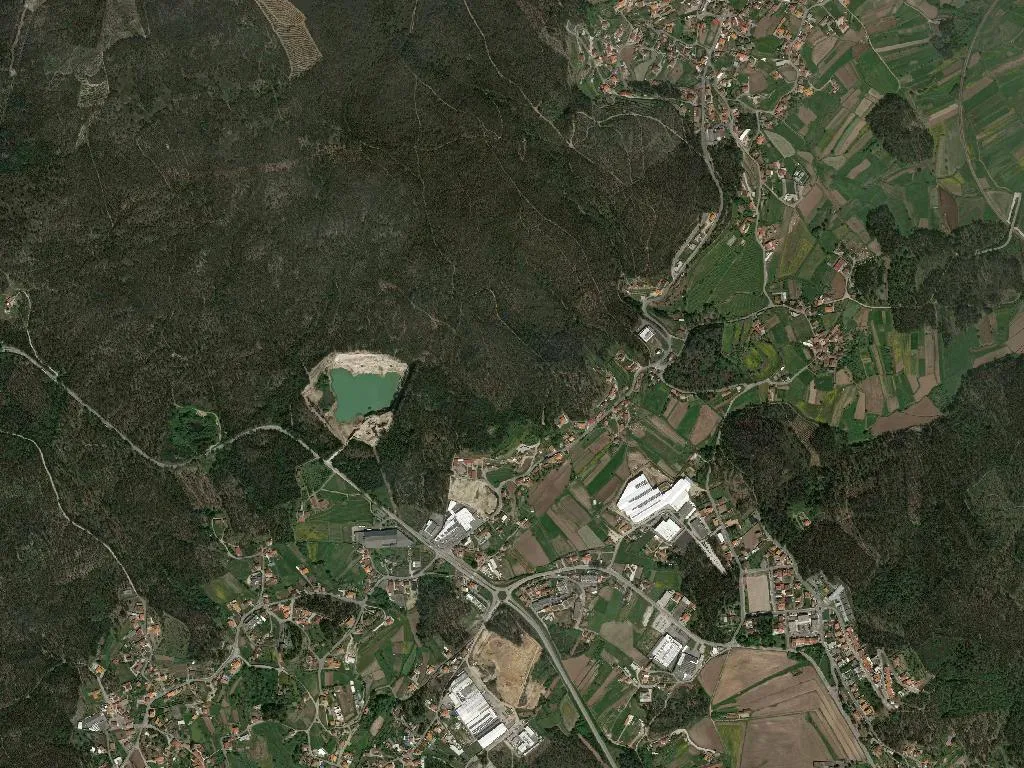
The bell of Igreja de Santa Leocádia strikes seven, a bronze note that rolls across the terraces before surrendering to the wind. At 235 m above the Lima valley, sound travels cleanly in Tamel and Vilar do Monte; no traffic, no café chatter, only the breeze combing through the vines. Dawn comes slowly here – a low sun ignites the granite walls, dew thickens the air, and the soil, rust-red in places, steams faintly as it warms.
These two villages were fused into one “freguesia” in 2013, but their identities remain distinct. Tamel, whose Celtic root still whispers of plentiful water, clusters round a Romanesque chapel; Vilar do Monte perches a little higher, its name – “hamlet on the hill” – a literal description. Together they occupy barely ten square kilometres, inhabited by 1 269 souls, 230 of them over 65. The demographic ledger tells the usual Minho story: sons and daughters in Porto or Paris, grandparents, vines and silence left behind.
Vine lines
Walk the narrow lanes and you read the land like a ledger. Every slope is accounted for: pergola-trained vines for Avesso and Loureiro, maize planted in the lower pockets, olive and kiwi where frost lingers least. The old “ramadas” of chestnut poles have largely given way to galvanised wire, yet the stone walls that buttress each terrace are still hoed free of weeds by hand. In October the air carries the sweet-sharp scent of fermenting marc; tiny quintas press their grapes in tiled lagares no bigger than a London kitchen, then pour the first green wine into thick glass tumblers for anyone who happens to pass.
The Central Portuguese Way of St James crosses the parish for 6 km, way-marked by yellow arrows painted on electricity poles. Pilgrims emerge from the cork-oak section above Portela and descend into Tamel thirsty; the font by the church door still offers potable spring water, a medieval courtesy that costs nothing and means everything.
Crosses and fireworks
On 3 May the villages wake to gunpowder. The Festa das Cruzes dates back at least to the seventeenth century, when a wooden cross was carried in procession to ward off locusts. Today the fields are safe from insects, but the pyrotechnic dawn salvo remains, rattling off the granite like musket fire. By ten o’clock the cross – freshly garlanded with wild hydrangea and white roses – is shouldered through both villages, accompanied by the Banda de Música de Barcelos and the slow shuffle of the faithful. Lunch is served at trestle tables under plane trees: grilled chouriça, cornbread warm from the wood oven, vinho verde poured from white enamel jugs. No one checks Instagram; the only filters are the leaves shifting overhead.
Smaller saints’ days repeat the formula – São Tiago in July, Nossa Senhora da Assunção in August – each with its own brass band, raffle and impromptu skittles alley. The budget is modest, the evening ends early, but the calendar of devotion still organises rural time more decisively than any smartphone.
Night geometry
By nine the cafés are empty. Dogs patrol the lanes, mercury lamps hum above the crossroads, yet between them the darkness is near-complete. Look up and you see the Milky Way spilled across the sky, a brightness that startles anyone raised under London’s sodium glow. Sound shrinks to a gate hinge, a late tractor, the wind that never quite stills. In that hush you realise the parish is still practising an ancient experiment: how much space, how little noise, a human community needs in order to endure.