Full article about Dawn bells over Tamel’s pantiles and Vinho Verde vines
In Tamel (São Veríssimo) the Camino passes, bread vans circle and May’s Festa das Cruzes explodes
Hide article Read full article
The Bell That Opens the Day
Three flat clangs from the belfry skim the orange pantiles of Tamel (São Veríssimo). At 06:15 the road is still the same temperature as the Cávado valley soil beneath it; front doors unlatch with the drag of house-shoes, a teaspoon circles a porcelain cup, two women swap tomorrow’s weather forecast on their way to buy morning bread. The parish sits only fifteen metres above sea-level, low enough for Atlantic cloud to linger over the corn tassels and the low-wire trellises of Vinho Verde.
Between Daily Life and the Pilgrim Footfall
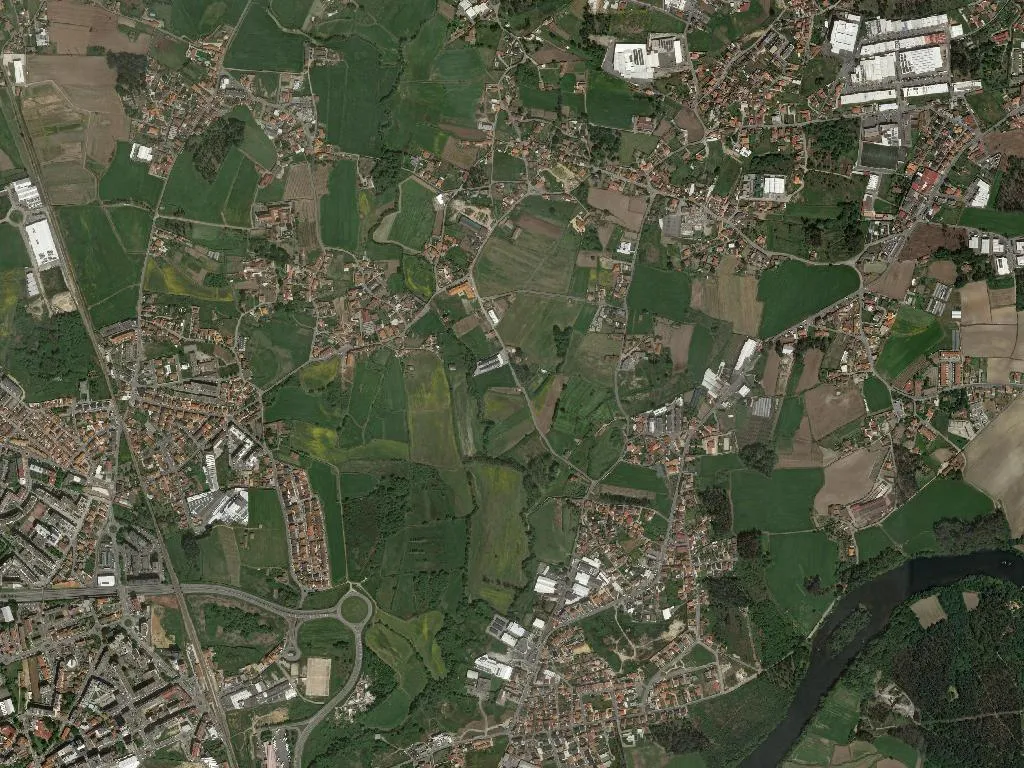
Way-markers of the Central Portuguese Camino cut straight through the village, but they do not hijack it. Hikers pause to refill plastic bottles at the stone fountain, ask the grocer for a banana and half a dozen stamps, then leave. What remains is 2,915 people packed into three square kilometres — houses shoulder-to-shoulder, laundry slung across 2-metre back gardens, vegetable plots wedged between last decade’s breeze-block extensions. Density is measured in voices per square metre at the bread-van rather than in any census table.
The parish honours Saint Verissimus, yet identity is fixed less to the 4th-century martyr than to Festa das Cruzes, held each May when the main street is suddenly colonised by processional banners, roasted-sardine smoke and the crackle of cheap Chinese fireworks. For twenty-four hours Tamel is the centre of its own micro-cosmos; the next morning the bunting sags and the village reverts to a place people leave for work in Braga.
Demography, Vine and Stubbornness
Statistics read like a slow-motion farewell: 678 residents over 65, only 323 under 14. Evening bus stops display more walking sticks than backpacks. Still, Café Central lifts its shutters at seven, the primary school squeezes three year-groups into one classroom, and on Saturday a makeshift market sets up around the bandstand: six folding tables, cabbages still smelling of soil, eggs laid the previous afternoon. Zé da Esquina tips tomatoes from a blue plastic crate and whispers “picked last night” as though revealing contraband.
Vineyards here are pragmatic rather than postcard-perfect. No baroque quintas, no tasting salons—just low pergolas stitched across red clay. In August the leaves reflect a neon green against baked ochre earth. Most grapes are converted in family garages; the wine is drawn off into litre bottles and sold by word of mouth, acid-bright and ideal for cutting the richness of cozido on Sunday. At Casa do Gado, Sr Armando pours his white from a ribbed agate glass. “It’s for drinking, not for Instagram,” he warns anyone who asks about labels.
The Logic of a Place That Works
Tamel offers no viewpoints, no listed monuments, no interpretation boards. Instead it supplies the infrastructure of continuity: a self-service pump where diesel is two cents cheaper than in Barcelos, Nandinho’s garage that closes on Mondays, Alda’s mini-market where you can buy both nails and powdered milk while learning who has influenza and who is getting married next month. A full-time pharmacist—rarer in rural Portugal than a stork’s nest—keeps office hours opposite the post box.
Accommodation is limited to two licensed rooms. António, retired from the mail service, converted an attic behind the church. Ironed linen, 1930s chest of drawers, shared kettle. No breakfast tray, but pilgrims may run a load of washing. “People stop here because they need sleep, not servility,” he shrugs.
When the sun drops behind the irrigation canal, low light grazes whitewash and reveals what Tamel has always been: a thoroughfare that chose to remain. Footsteps echo on uneven granite, a plastic chair scrapes across concrete, a dog barks once from behind a metal gate — the unamplified soundtrack of a parish that promises nothing beyond what it can deliver, and finds its dignity in that restraint.