Full article about União das freguesias de Vila Cova e Feitos
Roman stone, maize terraces and wood-smoke: life in Barcelos’s largest parish
Hide article Read full article
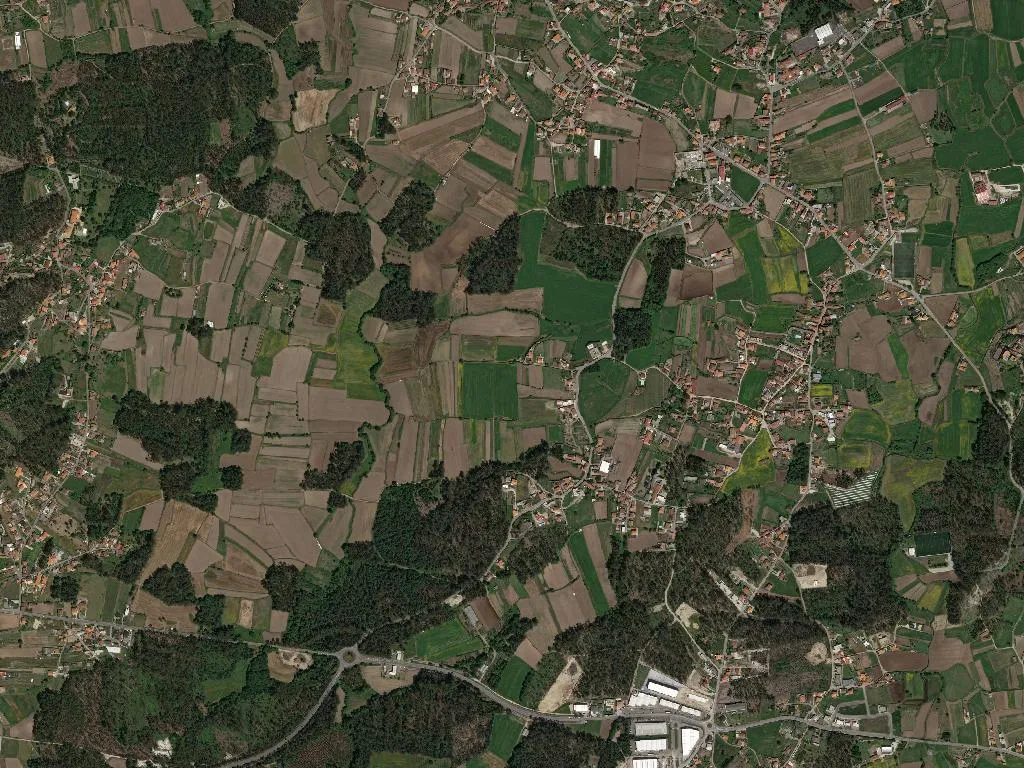
The bell in the tower of Vila Cova’s mother church delivers three unhurried strokes that roll down the Cávado valley and expire in the dawn haze. Maize terraces glow an almost aggressive green; above them the vineyards show a paler, milky tone. As the mist lifts the fields reveal themselves like pieces of a jigsaw cut by hand—no straight lines, only the logic of slopes and water. Wood-smoke drifts in, sweet and acrid at once: oak, almost certainly, from last winter’s felled trees, still smouldering in hearths built four centuries ago.
This is the largest civil parish within Barcelos—1,295 hectares stitched together in 2013 from the former Vila Cova and Feitos. The name remembers water: cova signals the spring that once drew Roman surveyors. Their villae—stone footprints traced at what locals still call Paço de Vila Cova—prove the granite was being quarried and the hillsides planted long before the first medieval charter.
Stone, prayer and the daily round
The Paço itself squats on a ridge like a grey bulldog: narrow Romanesque windows, corners rounded off by weather, a solidity that makes the clear Minho light feel almost frivolous. Across the lane the parish church does what it has done since the 13th century—pulls the community into orbit. Inside, 18th-century gilt wood still smells of beeswax and incense; outside, processional routes are worn into the cobbles. On the first Sunday in May the Festa das Cruzes rewires the calendar: shoulder-borne biers sway through the lanes, hymn lines answered from doorway to doorway, the air thickened by the creak of old pews and the faint tang of fireworks that will linger for days.
Flavours drawn from demarcated ground
In village kitchens caldo verde is blitzed with a hand-held pica-galho, the potatoes collapsed to velvet, the shredded couve-galega added at the last second so the chlorophyll keeps its bite. Arroz de sarrabulho darkens in the pan—pig’s blood, cumin, clove, a dash of the same vinho verde that will accompany the meal. The wine itself, bottled just up the road, carries the Minho’s signature: low alcohol, a prickle of natural CO₂, an Atlantic salinity that makes the next sip inevitable. In cool larders toucinho-do-céu—literally “bacon from heaven”—sets to a custard of yolks and sugar, a recipe smuggled out of convents when religious orders were dissolved in 1834. Hams and chouriços hang over oak smoke, their surfaces slowly oxidising to the colour of antique mahogany.
Between river and motorway
Ten kilometres south-east lies Barcelos with its weekly market; eight kilometres west, Esposende and the Atlantic. The A28 is a five-minute drive, close enough for fibre-optic cables and next-day deliveries, distant enough for night skies untainted by sodium glare. Waymarked trails thread the parish, crossing stone-paved muleteer roads that once carried salt cod to the interior. Dry-stone walls terrace the valleys, each slab laid without mortar yet refusing to budge through nine months of rain. Small streams—Ribeira de Mereces, Ribeira de Silvares—provide a constant watery metronome for walkers.
A health centre, primary school and day-care occupy a single low-rise complex built from the same local granite; they serve four neighbouring parishes, a reminder that “remoteness” here is measured in administrative imagination rather than kilometres. Dusk gilds the maize stalks, shadows pool in the valley bottoms, and once again the smoke rises. Someone throws another log on, someone else sets a pot of water for coffee. The bell sounds the Angelus, its last vibration hanging in the moist air like a visitor who knows he will be asked to stay for dinner.