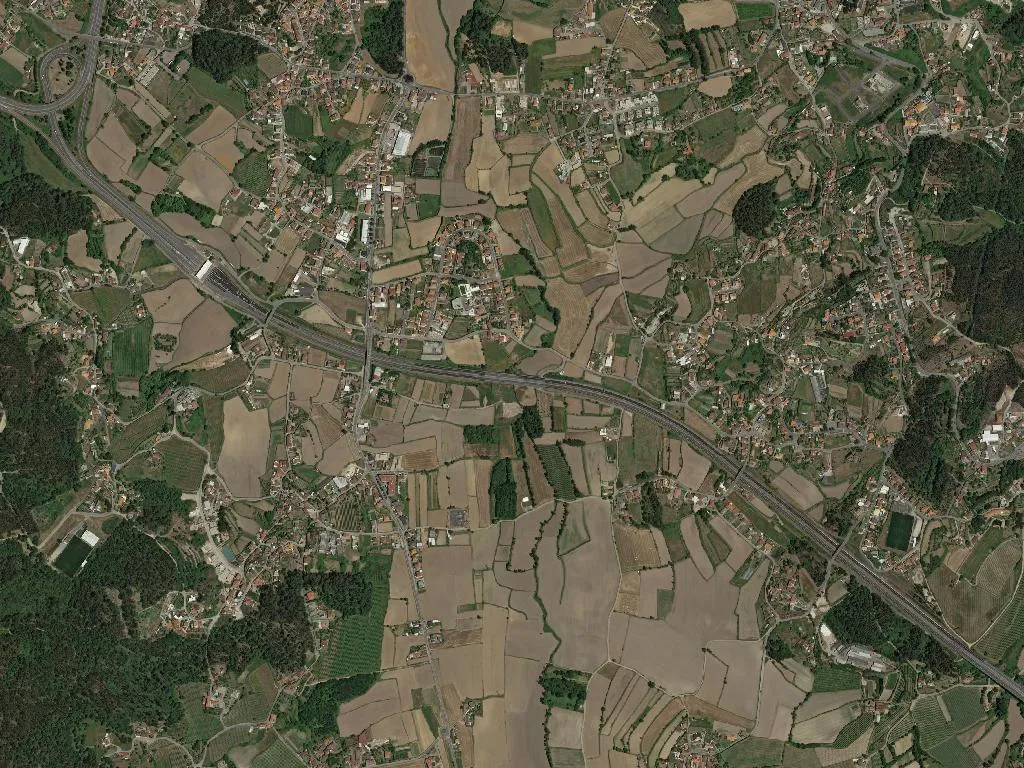
Full article about Lamas
Maize rows, stone-age tomb and three Camino trails fit inside 0.9 km²
Hide article Read full article
Dawn through the maize
Morning light slides across the maize rows like a windscreen being wiped. In the middle of Lamas, two strides from the parish council that doubles as the village café, a ring of black granite blocks stands in the grass: the Mamoa de Lamas, a dolmen old enough to pre-date double-yellow lines. Five millennia on, it is still the only megalith in the Braga district with its own street number. The whole parish occupies 0.9 km²—smaller than most London parks—yet somehow time itself fits inside.
Stone that talks
A JCB found it in 1993, doing what JCBs do—scraping earth sideways. The bucket uncovered a polygonal chamber, flint blades and a polished stone axe that looked faintly Swiss-Army. Archaeologists from Braga’s D. Diogo de Sousa Museum boxed up the grave goods; the stones were re-stacked on site, a 3-D jigsaw with no picture on the lid. Touch them now and the quartz veins feel cold as fridge glass. An interpretation board fills in the rest, but the place-name has already told the story: Lamas—water below, mud above. The Cávado slips past a kilometre away, reminding everyone the land is only on loan.
Pocket-sized farmland
Lamas is officially a village, but it is really two: the cluster of houses and the one spread across the fields. One hundred and twenty-five hectares in total—enough for 125 Wembley pitches or a thousand narrow strips of allotment. Maize, low-trained vines, pear and apple orchards colour the OS map; the soundtrack is a two-stroke cultivator on Sunday morning and a neighbour’s dog auditioning for mayor. The demographic ledger is neatly balanced: 126 children, 126 pensioners—like the café scales that weigh out one steak, two eggs, perfect equilibrium.
Pilgrim roundabouts
Three separate Santiago routes intersect here, turning Lamas into a medieval roundabout. Backpackers emerge with salt-ringed T-shirts, unsure whether they are still in Braga or already in Galicia. Some pause at the dolmen for the obligatory selfie, refill bottles at the spring, then ask, “Coffee?”—directing themselves to the council-café. June brings São João with basil-scented processions; July, the romaria to São Vicente. Miss those and there is always the three-kilometre hike to Santa Marta da Falperra, because a vow is a vow. Church pews fill, sardines are stuffed into crusty rolls, and Vinho Verde—grapes so lightly pressed they barely notice—goes down like a promise kept.
Granite tables and heather honey
What is served comes from what is tilled or herded downhill. Rojões à Minhota for the hurried, kale-and-potato soup for the chilled, cornbread that rescues forgotten wallets. The local Vinho Verde clocks in at nine per cent, slipping down like an apology: “Just the one, then.” Honey is sold from reused jam jars; the price is whatever you agree on after two glasses. No label, no bar-code—flavour is the business card.
The church bell strikes six and the tractor returns, windscreen daubed with river mud. Beside the five-thousand-year-old stones a child circles the globe in ten square metres of dust. Granite still stores the day’s heat like a range cooker that refuses to cool. In Lamas time does not pass; it sits on the wall, legs swinging, waiting for someone to buy it another coffee.