Full article about Basto: where the Tâmega valley keeps its own slow time
Woodsmoke, maize fields and a single bell set the tempo in Cabeceiras de Basto’s mountain cradle
Hide article Read full article
Woodsmoke rises in a perfect plumb-line while the morning still carries the mountain chill. In the parish of Basto, 234 metres above the Tâmega valley, daybreak smells of split oak and the soft murmur of neighbours heading to the communal oven or the vegetable plot. A single bell tolls the hour without hurry. Eight hundred and ninety-three people live scattered across 557 undulating hectares—room enough for every child to be known by name, every dog to nap undisturbed in the middle of the lane, every cornfield to alternate with thickets of chestnut and eucalyptus.
What you see, what you breathe
Population density here is 160 souls per square kilometre, a figure that translates into greetings exchanged across stone walls and primary-school pupils whose French or Swiss accents betray summer holidays with returning grandparents. The maize is already shoulder-high by June; by October the stalks have been stripped for livestock bedding and the cycle begins again. On still afternoons the air carries both the resin of eucalyptus and the faint iron tang of river water drifting up from the Tâmega.
Four feasts, four seasons
January’s Festa das Papas honours Saint Sebastian, but the real ritual unfolds in the parish hall where grandmothers husk corn and trade gossip—who has married, who has died, who is expecting—while pork fat sizzles in wide aluminium pans. Come August, the Festa de Nossa Senhora dos Remédios turns the church square into a car park for French-plated hatchbacks. Emigrants home for a fortnight parade bilingual grandchildren, order another bottle of vinho verde, and linger until the café owner stacks the plastic chairs and the moon has cleared the ridge of the Marão.
Tastes that come from here
Barrosã beef carries DOP status, but in Basto the label is less interesting than the animal itself—long-horned, slow-eyed, grazing the upland commons. When a steer is slaughtered the news travels by scent: blood and offal at dawn, morcelas hung to drip in kitchen doorways by lunchtime. José da Oliveira’s honey is midnight-dark, the colour of mahogany, with a heather bitterness that clings to the throat; he collects it at three in the morning while bees drowse and mountain fog erases the paths. The local red is not the prettified stuff of airport duty-free; it arrives in clay garrafões, drawn from Jorge’s cellar where the temperature stays a constant fourteen degrees and the wine bites thirst before it warms the stomach.
Where to stay
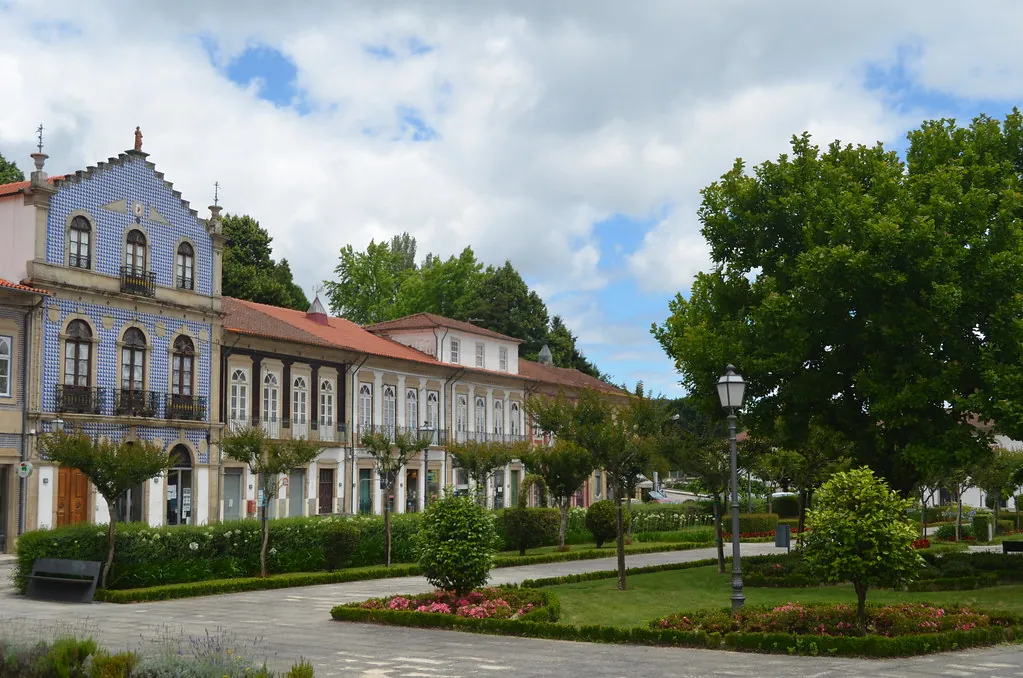
Two guest rooms exist. Dona Laura’s house still wears its 1950s azulejos and crochet bedspreads; breakfast is broa baked that dawn and butter she churns while you sip coffee. Manuel’s son returned from architecture school in Lisbon with Wi-Fi and a rainfall shower, but he kept the granite hearth for roasting chestnuts on autumn nights. Both houses are five minutes from the municipal road where a bus passes at seven and again at five—nothing more is needed.
When the sun drops behind Marão the stone walls glow the colour of burnt sugar. Chickens are shooed into their coop, a chain-saw idles in the middle distance, a mother’s voice carries across the lane calling a child to supper. The day closes as it began: with woodsmoke, with soil cooling under bare feet, with the certainty that tomorrow the bell will ring at seven and the maize will have grown another finger’s width.