Full article about União das freguesias de Gondiães e Vilar de Cunhas
Stone hamlets on 815-metre ledges, frost-silvered calvaries and oak-shaded card tables in Portugal’s
Hide article Read full article
Where the mountain sets the tempo
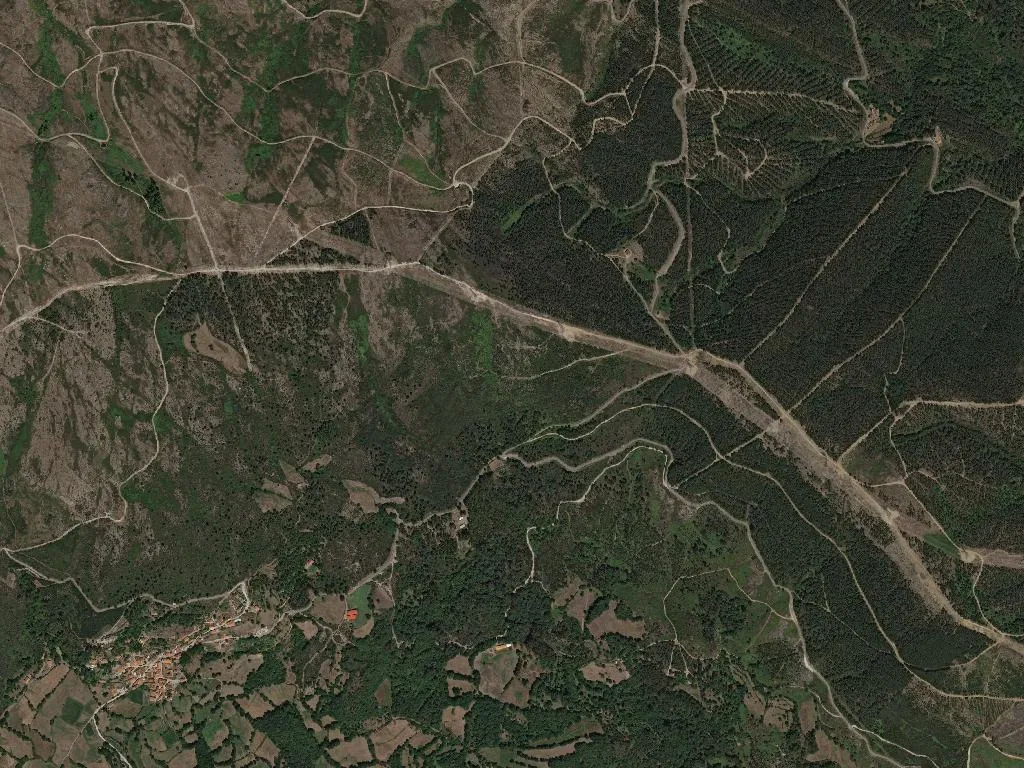
Woodsmoke rises dead-straight from schist chimneys, thinning into the 815-metre air. Beyond the last slate roof, the Serra da Cabreira stacks its colours like bolt cloth: pine bottle-green, oak almost black, gorse blooming into mauve. Between the hamlets of Gondiães and Vilar de Cunhas, silence has body – wind combs the branches, the Cavez stream whispers over granite, and the bell of São Tiago’s mother church tolls the hour without hurry.
The civil parish was stitched together in 2013, but its four settlements – Gondiães, Vilar, Samão, Cunhas – predate any paperwork. Three hundred and forty-seven people share more than 4,000 hectares; the gaps between houses are measured in views, not metres. Place names still carry their medieval rent books: Gondiães honours the land-owning Gondã family recorded in 1357, while Vilar de Cunhas couples the old Portuguese word for ‘hamlet’ with the arms-bearing Cunha lineage. This is the southern edge of the Terras de Basto, continuously occupied since the Iron Age, though the most eloquent archaeology is the way the land is farmed – narrow terraces held up by drystone walls that turn every slope into a stair.
Up here, the altitude edits life
January’s frost plates the Cruzeiro de Gondiães – a 17th-century calvary cross – with a skin of silver. August’s light leaches the colour from the grass in São Sebastião’s chapel yard. Natural balconies – the Largo do Cruzeiro in Cunhas, Vilar’s Rua do Alto, the track to Poço Negro in Samão – let the eye leap south-east to the Tâmega valley and the distant blade of the Touvedo dam. At Moinhos de Rei, granite picnic tables sit under oak canopies where card games begin after lunch and dissolve into dusk. Waymarked footpaths follow the levada do Carvalhal, an irrigation channel cut in the 1920s, then climb to the São Marcos plateau; red deer, reintroduced by the local hunting association in 2009, bark across the hollows each October.
Mountain meat and high-altitude honey
Menus obey altitude and latitude. Cattle of the Barrosã and Maronesa breeds – both PDO-protected – still climb to summer pastures at Quinta da Serra and Monte de São Gonçalo. On 15 August, the Feast of Our Lady of Remedies turns the church square into a pop-up canteen: papas de sarrabulho (a cinnamon-dark pork-and-blood stew) from O Cantinho de S. Tiago, rojões – belly-pork nuggets fried in lard – from A Paragem, and caldo verde thick enough to hold a spoon upright, ladled out by Dona Fernanda. Honey from the high Minho carries the imprint of heather, sweet chestnut and wild bramble; pour it over fresh queijo da serra and the flavour opens like a lens on the hillside. The local loureiro-based vinho verde from Quinta das Quintãs, bottled with a prickle of residual CO₂, slices cleanly through the fat and invites a refill.
What the fire wrote
At 14:30 on 15 October 2017, Alberto Espinheira saw the first plume rising above Valverde’s chestnut grove. Within an hour, flames driven by a northeasterly levante were licking the school gates in Samão as children filed out. The EN 206 became a firebreak; villagers and bombeiros from Cabeceiras held the line through the night. When the smoke cleared, 600 hectares had turned to carbon. Walk the Cepo path today and you pass a forest of charcoal obelisks; heather has regrown shin-high, and the Civil Protection ‘Safe Villages’ programme now keeps water tanks and beaters stationed at every entrance. In the padaria, Dona Alice still keeps her birth certificate in the washing machine – the safest box she could think of when the sirens sounded.
Dusk tilts the light, gilding the Marseille-tiled roofs of Vilar. Woodsmoke lifts again, straight as a plumb-line, and the only sound that refuses to dim is the Cavez water slipping under the snake-named bridge – constant, cold, indifferent to calendars.