Full article about Pedraça: where church bells echo seven seconds late
Granite walls, cork smoke and thyme-scented sarrabulho in Cabeceiras de Basto’s hill village
Hide article Read full article
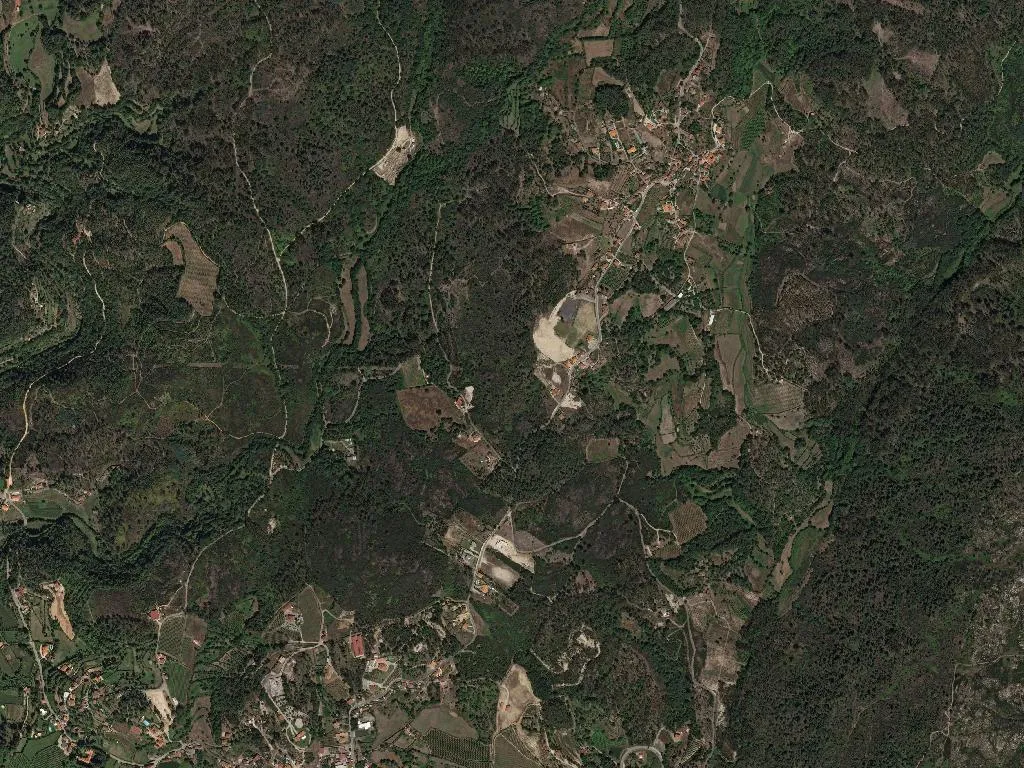
The church bell strikes at half past ten – never on the hour, never on the quarter – and the sound needs exactly seven seconds to reach the primary school. Locals swear the echo takes a short-cut up the Cotovia footpath, startling Senhor Aníbal’s dogs that never bark for nothing. Autumn mud still sucks at boot treads, yet the granite house-walls have already dried, their backs blotched with moss that winter will bleach away. There is no oak in the wood-piles: only cork and eucalyptus, felled in March and stacked against the wall that still remembers the smell of Dona Aurélia’s bread from the days when the village baked communally. At 379 m the air is more than humidity; it is scorched pine resin and, after the first rains, freshly-turned soil revealing worms.
Stone that names, stone that holds
Scholars mutter petra and Latin roots, but no-one in Sr. Fausto’s café is convinced: “Stone is stone, full stop.” The parish church, raised in 1673, has a front door that lists two degrees to the right – check the left jamb. Inside, the painted rosary figure is missing the little finger of her right hand; daily worshippers insist St. Peter snapped it off during the thunderstorm of 1926. In the chapels of Cavez and Macieira-a-Velha the vigil candles are not honey-coloured but supermarket scarlet, bought in bulk at Agrobasto, their wax bleeding down the granite like capillaries.
Calendar of processions and pork fat
The Festa das Papas begins not with Mass but on the preceding Friday, when Albertino fetches the pig from the sty and Bruno’s father judges whether the wine is ready to tap the first barrel. The sarrabulho rice is scented with thyme from Dona Guida’s yard – only she decides the dosage, no one argues. During the August procession of São Bartolomeu the litter creaks at the same bend by the spring where the tarmac is still missing: “That’s how the grace slides down,” they say. The elderly women do not sing out of tune; they duel over who can recite the entire litany from memory.
A plate that tastes of parish boundaries
Barrosã beef never sees a butcher’s hook; it walks from pasture straight on to Zé Carlos’s brick barbecue, mortared with sand from the River Tâmega. The greens are the leftovers from last week’s rabbit stew, potatoes arrive in a net sack from grandfather’s plot, soil still clinging to their eyes. Sr. Albano’s honey carries no PDO stamp, but its lemon-thyme note turns a piece of toast into something you eat in contemplative silence. The white wine is served from five-litre plastic carafes that the tasca owner pulls from under the counter only after nine o’clock; before that you get the house litre-and-a-half with a photocopied label.
Between vineyards and wordless paths
The trail to Cabeço da Velha is unsigned: you know you’ve arrived when you meet the dry-stone walls Zeca’s father built to keep sheep out of the vines. The stream below is the Rego de Valborda; stand still and you hear the dry gulp of vine roots drinking. There is no viewpoint, only a slab where Sr. Américo rests before descending, looking back at his birthplace now crowned with a solar panel his son installed without consultation.
When the sun drops behind the chestnut, chimney smoke no longer rises straight; it bends, nudged by the draught that carries the scent of smoked bacon down to the road. In Dona Alda’s kitchen the broth thickens – she has thrown in an extra turnip so the grandson eats without complaint. In Pedraça the day does not end; it unthreads like bread in soup, and by dawn it knits itself together again, the same, yet not quite.