Full article about Refojos de Basto: Porridge, Palaces & Emerald Vines
Share free papas porridge beneath a 1758 abbey, sip mineral Vinho Verde from black bowls
Hide article Read full article
Woodsmoke and Free Stew
January in Refojos de Basto smells of beech logs and chouriço drifting through granite alleys. Behind the parish church, six women in woollen scarves stir clay pots the size of cartwheels. For twelve hours the papas de São Sebastião—shredded pork reduced to a velvet porridge—have bubbled quietly; by eleven o’clock the queue stretches past the war memorial, yet no money changes hands. Steam folds into the cold air, wooden spoons clack against earthenware, and conversation moves in the same rhythm it has since the 1750s. The feast is not performance; it is parish maintenance, done because it has always been done.
The Abbot Who Was Judge, Soldier and Landlord
In 1758, the Benedictine monastery that dominates the square was still a semi-sovereign “couto”. The abbot collected tithes, presided over the law court, kept a militia and, on feast days, blessed the same animals his tenants would later eat. The crown granted these rights in 1131; the building you see today rose after the 1755 earthquake, its twin towers, bulbous spire and stone saints crowning a rebuilt baroque shell. When religious orders were abolished in 1834, the monks left, the library was scattered, and the cells became first a courtroom, then a tax office. Since 1975 the granite complex has housed the town hall, but the church remains consecrated: gilt carving glints above the high altar, and an 18th-century organ—installed by Francisco António Solha—still speaks during Sunday mass.
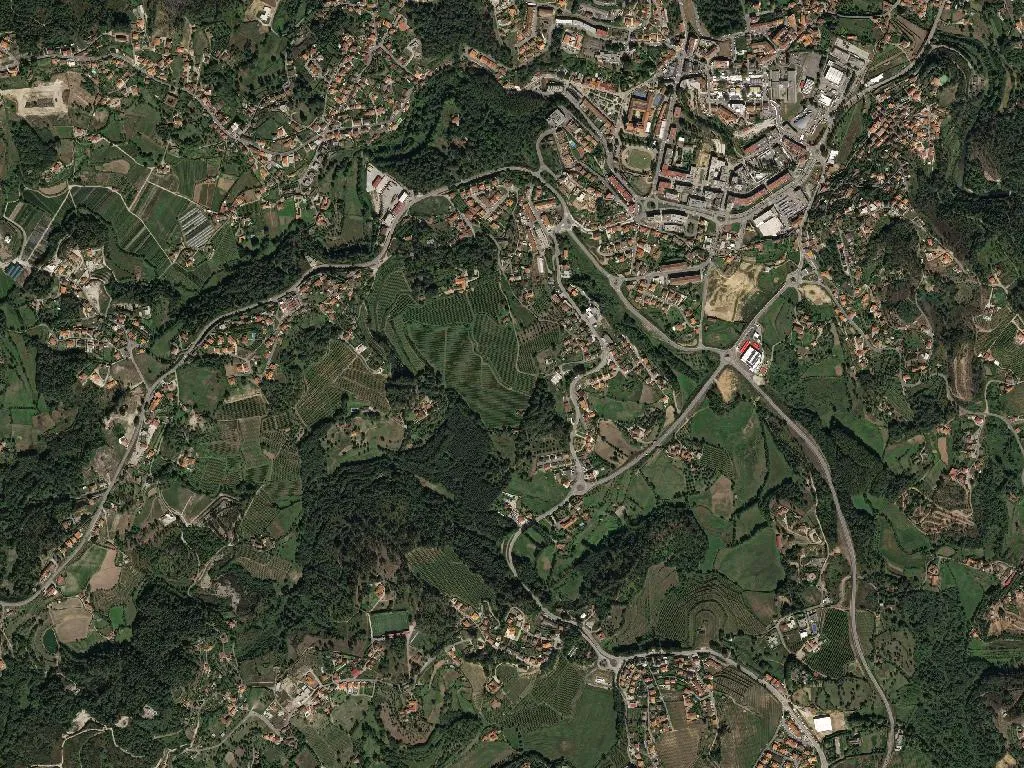
Refojos spreads across a sequence of gentle ridges—“refojos”, the old word for water-filled hollows—between 250 m and 500 m. The Ave River scissors the southern border; its tributaries (Cavez, Outeiro, Painzela) keep the meadows emerald even in August. Vines grow on terraces so narrow the plough is useless; the resulting white is bottled as Basto, the lightest, most mineral sub-region of Vinho Verde, traditionally drunk from black clay bowls that blunt its acidity.
Thirteen Hermitages and a War-Cry That Named a District
At its medieval height the parish maintained thirteen hermitages, an extraordinary density for what is now a scatter of hamlets. Three survive: Nossa Senhora da Orada, São Lourenço and Santo Amaro, white rectangles visible for miles across rye fields. On Corpus Christi, villagers follow a dirt track between schist walls to Orada; at São Lourenço and Santo Amaro, night-long vigils end with call-and-response songs around chestnut-log fires. The refrain “Até ali, por São Miguel, até ali, basto eu!”—supposedly shouted by a Lusitanian chieftain—gave the entire region its name. The same cry echoed in 1809 when Wellington’s officers commandeered the monastery cloisters; their graffiti, faint pencil lines recording billets and bets, is still visible beneath later whitewash.
Barrosã Beef, Highland Honey and a Five-Kilometre Pilgrimage
Beef comes from Barrosã and Maronesa cattle, both DOP-protected breeds that graze the surrounding uplands. Order it simply grilled, or in a clay casserole of chanfana, the meat slow-braised with red wine, garlic and bay. Breakfast might be rojões—cubed pork shoulder fried in lard with cumin and blood pudding—followed by broa, a corn-and-rye loaf sweetened with Mel das Terras Altas do Minho, a honey so delicate it carries hints of heather and wild lavender. The convent legacy survives in sponge-rich pão-de-ló, goat’s-milk queijadas and toucinho-do-céu, an almond-and-egg-yolk tart that uses no bacon despite the name.
A five-kilometre footpath, the Caminho das Ermitas, links the monastery to the outlying shrines, threading through vineyards, irrigation channels and chestnut groves. The longer Rota do Vinho Verde (12 km) connects three quintas where you can taste Basto white and buy comb honey; both routes are way-marked but telephone ahead—farm gates are locked when the owners are in the fields. On the first Monday of each month, the open-air market beside the town hall sells hand-tied willow baskets, goat cheeses still imprinted with straw matting, and chouriço twisted into horseshoes. Arrive before seven: by eight the farmers are already packing up, lettuce roots dripping dew into car boots.
Late afternoon, the monastery bell tolls a low B-flat that rolls across the ridges. Workers straighten among the vines, listening; the note seems older than the tower it issues from, older than the bell itself. In Refojos de Basto history is not shelved in archives—it hangs in cold air, vibrating long after bronze has stopped moving.